
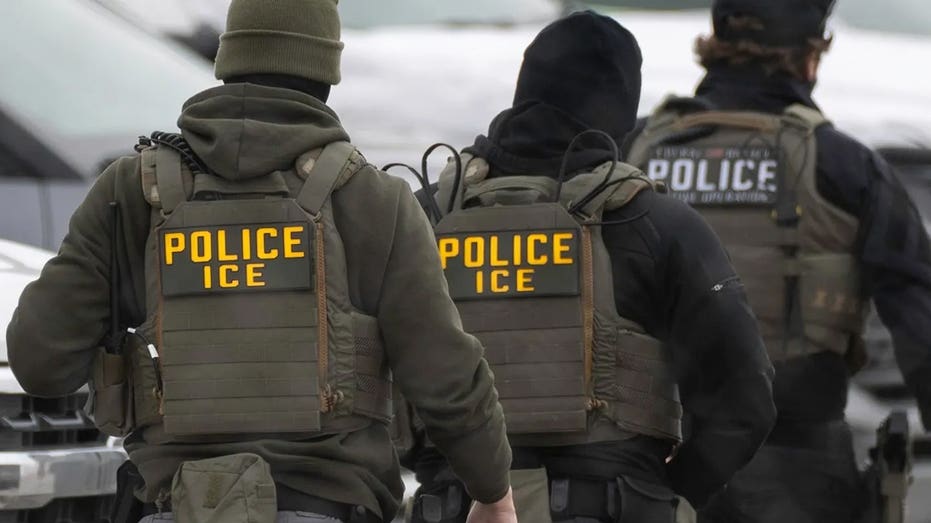
U.S. Immigration and Customs Enforcement is considering a purchase of thousands of electric shock gloves that could cost up to $20 million. New York Gov. Kathy Hochul and Attorney General Letitia James warned that officers could face legal consequences if the devices are used in the state. The equipment, known as the G.L.O.V.E., is described in federal procurement records as a conductive distraction and de-escalation device. The dispute comes amid wider efforts by New York officials to limit cooperation between local law enforcement agencies and federal immigration authorities.
| 1) | ICE weighs a major purchase of electric shock gloves |
| 2) | The G.L.O.V.E. is designed for contact-based electrical discharge |
| 3) | New York officials threaten legal scrutiny and possible action |
| 4) | ICE says equipment decisions will follow safety standards |
| 5) | The equipment dispute unfolds alongside a broader state-federal clash |
ICE weighs a major purchase of electric shock gloves
The Department of Homeland Security is moving toward acquiring thousands of devices for possible use by ICE officers in the field. Federal procurement records describe the equipment as conductive distraction and de-escalation devices, and the potential spending could reach $20 million. The records indicate that the federal government is evaluating the technology, but they do not establish that a completed purchase or nationwide deployment has occurred.
The proposal has drawn attention because the devices would add a contact-based electrical tool to the equipment available to federal immigration officers. The issue emerged in New York on Wednesday, August 12, 2026, as state leaders questioned whether the technology could be used lawfully during arrests and other enforcement operations.
The G.L.O.V.E. is designed for contact-based electrical discharge
The device is called the G.L.O.V.E., an acronym for Generated Low Output Voltage Emitter. It is designed to deliver an electrical charge through physical contact with another person, distinguishing it from equipment that operates at a distance.
The gloves are manufactured by Compliant Technologies, a company based in Lexington, Kentucky. Demonstration videos released by the manufacturer show test subjects falling to the ground after contact with a person wearing the gloves. Company founder and chief executive Jeff Niklaus declined to discuss the potential federal purchase, writing in an email that the company was unable to comment on the subject.
New York officials threaten legal scrutiny and possible action
Kathy Hochul said New York’s recently enacted protections could expose ICE officers to legal consequences if the gloves were used in the state. She argued that constitutional rights and protections against undue harm must remain in effect during federal enforcement operations.
“You cannot trample on someone’s constitutional rights, and you cannot cause them undo harm. You will be held accountable,” Kathy Hochul said.
Letitia James said her office was reviewing the DHS proposal and assessing whether use of the technology could violate New York law. She said the plan appeared to conflict with several laws, including the State Administrative Procedure Act, and indicated that her office could pursue legal action if someone in New York were injured by the devices.
“You can best be assured of that,” Letitia James said when asked whether her office would take legal action after an injury.
ICE says equipment decisions will follow safety standards
ICE defended its process for assessing new equipment, saying the agency considers officer safety, applicable law and established law enforcement standards. A DHS spokesperson said the agency continually evaluates the needs of officers who arrest and remove people subject to federal immigration enforcement.
“Every decision is made with careful consideration and appropriately reviewed to ensure that any technology ICE utilizes is consistent with all applicable law enforcement policies and standards,” the spokesperson said.
The agency also said its officers receive training in de-escalation tactics and ongoing use-of-force instruction. The statement did not confirm that the gloves had been approved for operational deployment or specify when a procurement decision might be completed.
The equipment dispute unfolds alongside a broader state-federal clash
The debate over the gloves is part of a larger conflict between New York officials and the federal government over immigration enforcement. Kathy Hochul and Letitia James are also seeking to reduce cooperation between local law enforcement agencies and ICE.
New York law enforcement agencies have until August 24 to end civil immigration enforcement agreements with ICE or potentially face legal consequences. As of July, about a dozen agencies in the state reportedly maintained such agreements, including Nassau County. The dispute follows a federal judge’s decision to block state regulations that sought to require federal ICE agents to wear identification, adding another layer to the disagreement over the limits of state authority.
| Number | Key Point |
|---|---|
| 1 | ICE is considering thousands of G.L.O.V.E. devices in a potential purchase worth up to $20 million. |
| 2 | The gloves deliver an electrical charge through direct contact. |
| 3 | New York officials are reviewing whether use of the devices could violate state law. |
| 4 | DHS says equipment reviews account for training, safety and law enforcement standards. |
Summary
The possible purchase places a relatively new use-of-force technology at the center of an ongoing dispute over federal immigration enforcement in New York. ICE says any equipment would be reviewed under existing policies and standards, while state officials are examining whether deployment could trigger violations of New York law or legal claims following an injury. No final purchase or operational rollout has been confirmed.
Frequently Asked Questions
What is the G.L.O.V.E.?
The G.L.O.V.E. is a device marketed as a Generated Low Output Voltage Emitter. It is designed to deliver an electrical charge through contact with another person.
How much could ICE spend on the equipment?
Federal procurement records indicate that the potential purchase could cost up to $20 million and involve thousands of devices.
Why are New York officials reviewing the proposal?
Gov. Kathy Hochul and Attorney General Letitia James said use of the gloves in New York could violate state protections or expose officers and the federal government to legal consequences, particularly if someone were injured.