
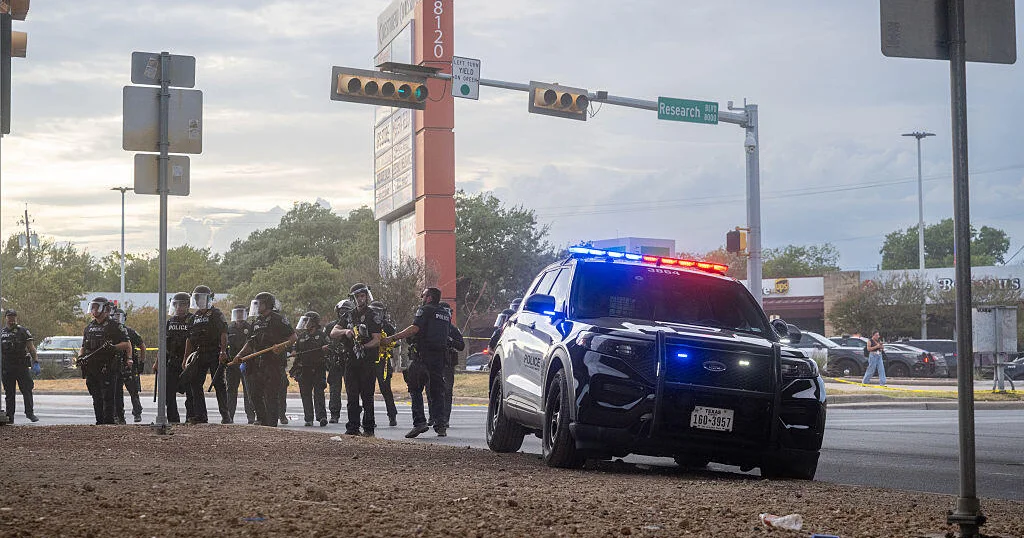
In a disturbing incident that has ignited public outcry in Austin, Texas, an officer from the Immigration and Customs Enforcement (ICE) shot a Venezuelan delivery driver named Wilber Rafael Garces Perez. The shooting occurred on Sunday afternoon while Garces Perez was fulfilling his work duties for DoorDash. Eyewitnesses and officials have expressed concerns over the lack of body camera footage from the shooting officer, raising questions about accountability and transparency in the enforcement of immigration laws.
| Article Subheadings |
|---|
| 1) Details of the Shooting Incident |
| 2) Lack of Accountability and Body Camera Policies |
| 3) Garces Perez’s Medical Condition |
| 4) Community Response and Political Reactions |
| 5) Legal Proceedings and Future Implications |
Details of the Shooting Incident
The incident took place on Sunday afternoon when Wilber Rafael Garces Perez, a 28-year-old native of Venezuela, was working for DoorDash in Austin. According to local law enforcement and Garces Perez’s attorney, an ICE officer shot him in the upper torso. Reports indicate that Garces Perez reportedly had an active deportation order against him. The officer involved, who joined ICE just a year ago after working as a border patrol agent, has yet to be publicly identified.
The circumstances surrounding this shooting have not only shocked the local community but also caught the attention of advocacy groups who are pushing for reforms in immigration enforcement policies. The incident is viewed as part of a broader series of confrontations between federal immigration enforcement agents and individuals they may be pursuing under current immigration policies.
Lack of Accountability and Body Camera Policies
One of the most contentious aspects of this case is the revelation that the ICE officer involved in the shooting was not wearing a body camera at the time of the incident. While the Austin Police Department has released dash and body cam footage from officers who responded to the scene, neither piece of footage captures the moments leading up to the shooting.
“The relevant agencies should make all available footage public so there can be a clear and complete understanding of what happened,”
asserted Kate Lincoln-Goldfinch, Garces Perez’s attorney.
This issue of missing body camera footage comes at a time when the Secretary of Homeland Security, Markwayne Mullin, had previously committed to equipping all ICE officers with body cameras by the end of September. Mullin claimed during a press conference that the department was “getting close” to fulfilling this promise, but the absence of body cameras in this instance has raised serious questions among community leaders and advocates.
Garces Perez’s Medical Condition
After the shooting, Garces Perez was hospitalized due to his injuries. Reports indicate that he was placed into ICE custody shortly after. Allegations have surfaced that he initially complained about losing feeling on the left side of his body, leading him to believe that the bullet may still be lodged in his spine. Texas Representative Joaquin Castro voiced concerns about Garces Perez’s medical treatment, stating that he was transferred back to the hospital after expressing these worrying symptoms.
Official treatment within ICE custody has sparked controversy, with Garces Perez reportedly receiving nothing more than over-the-counter medications for pain relief, such as Tylenol and ibuprofen. His attorney has emphasized that he is being kept in isolation and lacks communication means, which raises additional ethical questions regarding the treatment of individuals in ICE custody.
Community Response and Political Reactions
The shooting of Garces Perez has sparked significant backlash in the Austin community, leading to protests aimed at highlighting the need for more humane immigration enforcement practices. Local activists and community leaders have taken to the streets, calling for greater accountability and transparency in how immigration laws are enforced. Demonstrators have expressed deep concern regarding the perceived potential for violence in immigration enforcement actions.
Among political leaders, representatives from various political affiliations have reached out to express their disapproval of the circumstances surrounding the incident. Concerns have also been raised about the broader implications this shooting may have on public sentiment regarding immigration policy and federal law enforcement practices. The community’s fear and anger have coalesced around calls for substantial reforms in immigration enforcement strategies.
Legal Proceedings and Future Implications
In light of the shooting and his subsequent detention, Garces Perez’s legal team is actively pursuing avenues to challenge his detention. A habeas petition has been filed, contesting the legality of his current incarceration. Following this, U.S. District Court Judge Orlando Garcia ordered Garces Perez to appear for an in-person hearing regarding his habeas corpus petition. This judicial intervention effectively prevents ICE from deporting him until the hearing can take place.
The decision to hold a habeas corpus hearing is seen as a crucial step for Garces Perez and his legal counsel. Notably, this case may set a precedent regarding the treatment of individuals in ICE custody after an incident involving the use of force by its officers. The outcome may not only influence Garces Perez’s legal standing but also shape the discourse around immigration policy and law enforcement practices more broadly.
| No. | Key Points |
|---|---|
| 1 | An ICE officer shot Venezuelan delivery driver Wilber Rafael Garces Perez in Austin, Texas. |
| 2 | The officer involved was not wearing a body camera at the time of the shooting, raising accountability concerns. |
| 3 | Garces Perez’s medical condition following the shooting raises significant ethical questions about his treatment in custody. |
| 4 | Protests have erupted in the community, calling for reforms in immigration enforcement practices. |
| 5 | Legal proceedings have been initiated to prevent ICE from deporting Garces Perez until a hearing can occur. |
Summary
The shooting of Wilber Rafael Garces Perez by an ICE officer highlights significant tensions surrounding immigration enforcement in the U.S., particularly following the implementation of stricter immigration policies. The absence of body camera footage has intensified calls for accountability, while Garces Perez’s precarious medical situation has raised alarms over the treatment of individuals in ICE custody. As community members protest and political leaders react, this incident may serve as a pivotal moment in discussions surrounding immigration enforcement and human rights in America.
Frequently Asked Questions
Question: Who was Wilber Rafael Garces Perez?
He was a 28-year-old Venezuelan delivery driver shot by an ICE officer during his work with DoorDash.
Question: What is the significance of body cameras in this incident?
The lack of body camera footage from the shooting officer raises questions about accountability and transparency in law enforcement actions, especially in immigration enforcement.
Question: What legal actions are being taken following the shooting?
Garces Perez’s legal team has filed a habeas petition contesting his detention and is seeking a hearing to prevent his deportation by ICE.