
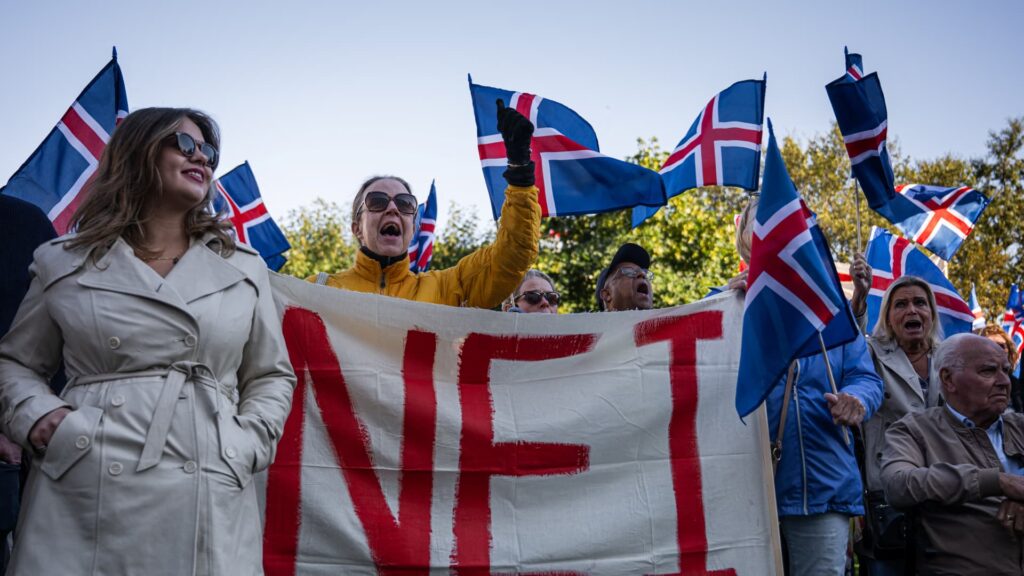
In a significant decision that reflects Iceland’s national sentiments, voters have emphatically rejected a proposal to resume negotiations for European Union membership. The national referendum, held on August 29, 2026, saw 52.8% of participants voting against the government’s call to reopen discussions, which were first initiated in 2009 but halted in 2015. Concerns over national sovereignty, especially regarding Iceland’s control over its fishing resources, outweighed geopolitical considerations, highlighting a complex relationship with Europe and broader international dynamics.
| Article Subheadings |
|---|
| 1) Voter Sentiment and Results |
| 2) Economic Implications of the Decision |
| 3) Historical Context of EU Membership Attempts |
| 4) Geopolitical Considerations and National Identity |
| 5) The Future of Iceland’s International Relations |
Voter Sentiment and Results
The recent referendum saw a split opinion among Icelanders regarding the country’s bid to rejoin the European Union. Approximately 52.8% of voters opted against resuming negotiations, while 47.2% were in favor. This decision was not merely a reflection of political allegiance but was deeply rooted in a shared national sentiment regarding sovereignty and self-governance. The ballot posed a clear question: Should Iceland resume accession negotiations with the EU? A favorable vote would have led to a negotiated agreement that would require additional approval through another referendum.
The campaign opposing EU membership effectively resonated with the populace’s desire to preserve national control over vital resources, particularly fisheries. The “No” campaign emphasized the intrinsic value of Iceland’s independence and the risks associated with losing control over its natural resources to EU regulation. According to observers and analysts, this sentiment significantly influenced the referendum results, demonstrating a preference for maintaining domestic autonomy over entertaining broader geopolitical affiliations.
Economic Implications of the Decision
Economically, the outcome of the referendum carries substantial implications for Iceland’s status in global markets, particularly in the seafood industry. Marine products, which account for nearly 47% of Iceland’s exports for the period between August 2025 and July 2026, underscore the importance of maintaining control over local industries. With fishing historically being a cornerstone of Iceland’s economy, voters feared that resuming negotiations could lead to EU policies adversely affecting their fishing sectors.
In previous years, Iceland’s fishing production has seen a significant decline, halving from 2.2 million tons in 1997 to approximately 1.1 million tons in 2024. This trend raises questions about the sustainability of its fishing industry and its ability to compete effectively without the autonomy that currently exists. Furthermore, the fishing sector’s contribution to the Gross Domestic Product (GDP) has decreased from 9.1% in 1995 to only 3.7% in 2025, suggesting a shift towards other economic sectors, but the emotional and cultural ties to fishing remain strong.
Historical Context of EU Membership Attempts
Iceland’s relationship with the European Union has been fraught with challenges and changes. Initially applying for EU membership in 2009 during the aftermath of the financial crisis, the process was halted by a euroskeptic government in 2013, ultimately resulting in a formal cessation in 2015. The varying political climates and public sentiments over the years have forged a complex landscape where EU integration remains divisive.
Despite the halted negotiations, Iceland remains integrated into European frameworks through its membership in the European Economic Area, which grants access to the EU single market without full membership. Moreover, Iceland is a participant in the Schengen Area, allowing for visa-free travel. These associations indicate that while Iceland has not pursued EU membership, it remains interconnected with European policies, raising questions about the extent to which it could benefit from closer ties while preserving its autonomy.
Geopolitical Considerations and National Identity
The geopolitical landscape surrounding Iceland has evolved dramatically, particularly in the context of security concerns associated with U.S. President Donald Trump’s rhetoric and actions concerning Arctic sovereignty. Iceland has been positioned strategically within NATO but does not possess its own military forces, making it reliant on allies for national defense. Its geographical position, located in the GIUK Gap – a naval passage between Greenland, Iceland, and the U.K. that connects the Arctic to the Atlantic – amplifies its importance in global security discussions.
Nonetheless, according to political analysts like Eiríkur Bergmann, a professor at Bifröst University, the ‘No’ sentiment has become synonymous with Icelandic national identity. Concerns around sovereignty, especially given the historical context of fisheries management, underscore a deep-rooted desire to safeguard Iceland’s national interests amidst shifting geopolitical discussions. The emotional appeal to maintain an independent stance, rather than aligning with EU policies, highlights the Icelandic populace’s prioritization of self-governance over external political pressures.
The Future of Iceland’s International Relations
Looking ahead, Iceland’s international relations may continue to evolve in response to local and global political dynamics. The recent referendum outcome suggests that any future dialogue about EU relations must deeply engage public sentiment and address national interests that matter most to Icelanders. As the Foreign Minister, Thorgerdur Gunnarsdottir, has indicated previously, reinforcing closer ties with the EU could prove beneficial for Iceland’s economic interests, especially considering the uncertain international landscape following the post-World War II order.
Future discussions surrounding Iceland’s position on EU relations will likely need to incorporate the views articulated during the referendum. As geopolitical tensions increasingly dominate international discourse, the need for a cohesive strategy that reflects public sentiment, national identity, and economic necessity will become crucial for Iceland’s political leaders. The complexity of balancing national interests with the reality of international collaboration will shape how Iceland navigates its relationships moving forward.
| No. | Key Points |
|---|---|
| 1 | Icelanders voted 52.8% against resuming EU membership negotiations in a recent referendum. |
| 2 | Concerns over loss of fisheries control and national identity influenced voter sentiment significantly. |
| 3 | Fishing remains crucial to Iceland’s economy, contributing heavily to exports and national pride. |
| 4 | Iceland’s historical attempts to join the EU have been complicated by political shifts and public sentiment. |
| 5 | Future international relations strategies must align with Icelanders’ desires for sovereignty and self-governance. |
Summary
The rejection of the EU membership negotiation proposal reflects a deeper sentiment among Icelanders about their national identity and economic sovereignty. As discussions continue about trade and international relations, the emphasis on maintaining control over essential resources remains a priority for the population. The referendum’s results challenge political leaders to address these concerns and navigate future dialogues that respect the interplay between local interests and global affiliations, marking a critical juncture in Iceland’s political landscape.
Frequently Asked Questions
Question: Why did Iceland vote against resuming EU membership negotiations?
The vote against resuming EU membership negotiations was largely driven by concerns over national sovereignty and control over vital resources, particularly fisheries, which many Icelanders felt would be jeopardized by EU regulations.
Question: What is the current economic significance of the fishing industry in Iceland?
The fishing industry remains significant, comprising nearly 47% of the country’s exports. However, its contribution to GDP has declined, reflecting a broader economic shift as Iceland diversifies its economy.
Question: How does Iceland’s current relationship with the EU affect its international standing?
Iceland remains integrated into the European framework through the European Economic Area and the Schengen Area, which allow access to the EU single market and facilitate travel. Its future relations may depend on public sentiment around sovereignty and cooperation with neighboring countries.