
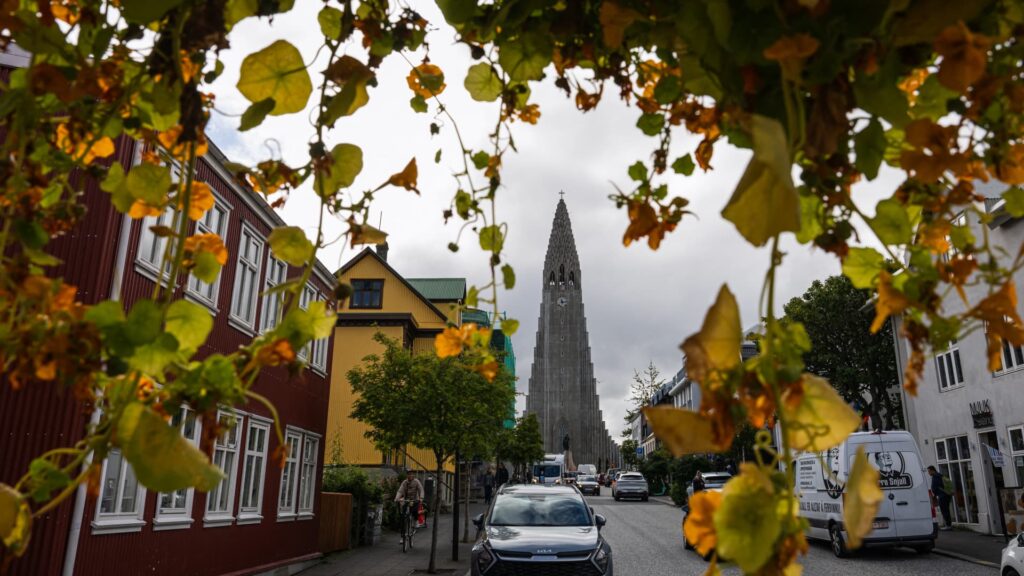
Iceland is poised to engage in a pivotal referendum on Saturday, where the nation of nearly 400,000 will decide whether to resume negotiations for European Union (EU) membership. This vote comes amidst heightened international scrutiny and geopolitical developments, particularly in relation to security dynamics in the Arctic region. With public opinion sharply divided, the outcome could significantly reshape Iceland’s economic and political landscape, as well as its relationship with the EU and the United States.
| Article Subheadings |
|---|
| 1) Background of the Referendum |
| 2) Economic Implications and Sovereignty Concerns |
| 3) Security Perspectives in a Changing World |
| 4) The Future of Iceland’s EU Membership Bid |
| 5) Key Takeaways from the Upcoming Vote |
Background of the Referendum
The referendum scheduled for August 29, 2026, poses a straightforward question to the Icelandic populace: “Should Iceland resume accession negotiations with the European Union?” This inquiry emerges from a historical context in which Iceland first applied for EU membership back in 2009 as a response to the global financial crisis. However, the momentum for this endeavor dissipated in 2013 due to the rise of a euroskeptic coalition government, resulting in a hiatus of discussions.
As the Arctic gains significance for its wealth of critical minerals and strategic shipping routes, the debate over EU membership has taken on renewed importance. Iceland’s geographic proximity to potential geopolitical tensions, particularly related to U.S. foreign policy aspirations, adds another layer to this complex equation. Leaders like Eiríkur Bergmann of Bifröst University highlight the implications of U.S. President Donald Trump‘s interest in Greenland, suggesting that similar justifications for control and influence could apply to Iceland.
Current opinion polls suggest that the public is deeply divided on the issue, with insights revealing that the outcome could hinge on each voter’s priorities regarding national identity, economic stability, and security. If a majority supports the yes vote, formal negotiations to join the EU would follow, culminating in further local approval through a second referendum.
Economic Implications and Sovereignty Concerns
The question of EU membership is not purely political for Icelanders; it is deeply intertwined with economic realities. Notably, the fishing industry is of paramount importance to the nation’s economy and its cultural identity. Historically, Iceland has battled EU member states over fishing rights—a sensitive issue reflecting not only economic interests but also sovereignty.
“For many Icelanders, the key questions surrounding EU accession center on economic stability and access to the euro,” says Jon Danielsson, a finance expert at the London School of Economics. Icelanders have sought to escape the volatility of their domestic currency, which has imposed high interest rates. The euro, therefore, stands as an appealing alternative. However, uncertainties remain about the EU’s willingness to accommodate Iceland’s fishing interests, with many skeptical about the conditions that might come with EU membership.
As discussions intensify, former Prime Minister Katrín Jakobsdóttir has articulated her skepticism regarding the EU’s advantages, reinforcing the argument that Iceland already enjoys substantial economic collaboration with the bloc. Her perspective encapsulates the broader divide in public opinion: while some see EU membership as a safety net, others perceive it as a potential compromise of national interests.
Security Perspectives in a Changing World
The interplay between security and international alliances is another significant dimension of the Icelandic referendum. Iceland, a NATO founding member, relies heavily on its bilateral defense agreement with the United States, established in 1951. However, diminishing trust in the U.S. as a reliable security partner poses critical questions as Iceland debates its future relations with Europe.
As tensions in the Arctic grow due to geopolitical maneuvering—especially with U.S. ambitions concerning Greenland—Icelanders are reevaluating the significance of their military arrangements. As Eiríkur Bergmann notes, “the validity of our defense agreement is being reconsidered.” This concern has naturally influenced discussions around EU membership, where Iceland could seek both assured security and the economic benefits of integration.
The Future of Iceland’s EU Membership Bid
On the governmental front, Iceland’s current administration has reignited discussions about EU membership. Officials recognize that pending decisions will impact future governance and societal cohesion. The coalition government, which originally initiated Iceland’s EU application, is determined to address this “unfinished business” as it approaches its next electoral deadline in August 2028.
Political analysts indicate that a favorable outcome for the yes campaign could considerably streamline the negotiation process, offering Iceland the chance to become an EU member relatively swiftly. The EU, in turn, could view Iceland’s potential membership as a success story in the wake of Brexit, highlighting the benefits of unity amidst growing global uncertainties.
Key Takeaways from the Upcoming Vote
As Iceland prepares for this consequential referendum, several critical points emerge. First, public sentiment remains deeply split—reflective of both historical issues related to national identity and modern geopolitical considerations. Second, the economy plays a central role, with serious implications tied to the fishing industry and the desire for economic stability. Third, the evolving security landscape underscores the urgency of evaluating Iceland’s defense agreements in a changing world.
Ultimately, the referendum serves as a litmus test for Iceland’s national priorities at a time of global change. The outcome will determine the path forward for Iceland and its relationship with not only Europe but also the broader geopolitical context influenced by U.S. policies in the Arctic.
| No. | Key Points |
|---|---|
| 1 | Iceland is conducting a referendum on resuming EU accession negotiations after a long hiatus since 2013. |
| 2 | Public opinion on EU membership is sharply divided, reflecting deep economic and national identity concerns. |
| 3 | The fishing industry and economic stability are critical factors affecting the membership debate. |
| 4 | Geopolitical tensions in the Arctic add urgency to discussions regarding security and international alliances. |
| 5 | A favorable outcome in the referendum could hasten Iceland’s path toward EU integration while influencing broader EU dynamics post-Brexit. |
Summary
As Iceland stands on the brink of a pivotal decision regarding EU membership, the implications reach far beyond the immediate economic context. This referendum will not only shape Iceland’s national identity but also redefine its role within critical geopolitical conversations as global dynamics shift. Ultimately, the choice made by the Icelandic electorate will resonate through its relationship with both the EU and international partners, particularly the United States.
Frequently Asked Questions
Question: What is the rationale behind Iceland’s EU membership bid?
The rationale for pursuing EU membership includes economic stability, access to the EU’s single market, and the desire to mitigate currency volatility that Iceland currently faces.
Question: How significant is the fishing industry in the EU membership debate?
The fishing industry is vital to Icelandic culture and economics, and any negotiations with the EU are likely to strongly consider the protection of these fishing rights, making the industry a pivotal topic in the membership discussions.
Question: What security concerns are influencing the referendum?
Concerns about diminishing trust in the U.S. as a security partner, coupled with geopolitical tensions in the Arctic, are prompting Icelanders to reconsider the validity of their current defense agreements and explore new alliances, potentially through EU membership.