
In the context of an intense conflict involving Hamas, the Israeli Defense Forces (IDF) have implemented innovative battlefield medical technologies and strategies that have significantly improved medical care for soldiers. These advancements are not only aiding Israeli soldiers but are also contributing valuable insights for the U.S. military, highlighting a cooperative approach to enhancing battlefield medicine. The rapid evolution of medical response, particularly in traumatic injury care, emphasizes the commitment of the IDF to reducing casualty rates and improving emergency care effectiveness.
| Article Subheadings |
|---|
| 1) Overview of Battlefield Medical Advances |
| 2) Innovations in Casualty Evacuation Procedures |
| 3) Integration of Medical Personnel on the Frontlines |
| 4) The Role of Technology in Emergency Response |
| 5) Impact of U.S.-Israeli Collaboration on Battlefield Medicine |
Overview of Battlefield Medical Advances
The recent escalation of conflicts involving Hamas has prompted the IDF to adapt rapidly and implement sophisticated medical techniques aimed at improving the survival rates of injured soldiers. Since the onset of hostilities on October 7, 2023, the medical response landscape has experienced a drastic transformation. According to an IDF medical specialist, procedures that previously took 15 to 20 minutes to reach casualties have been reduced to as little as four minutes. This emphasis on rapid response is critical given the high stakes involved in such high-intensity conflicts.
The IDF’s innovative approaches focus not just on treating wounds but also on integrating access to advanced medical equipment and better operational strategies. This new medical paradigm includes the deployment of advanced life support capabilities directly to the battlefield, a move that has proven vital in significantly reducing the time to treatment. The importance of saving lives during conflicts cannot be overstated, as the emotional and psychological effects of soldier fatalities ripple through families and communities.
The conflict has also highlighted the need for ongoing evolution in medical practice under combat conditions, leveraging emerging technologies. The commitment to training medical personnel in trauma care has been ramped up, ensuring that every soldier is capable of providing immediate assistance while awaiting advanced medical support.
Innovations in Casualty Evacuation Procedures
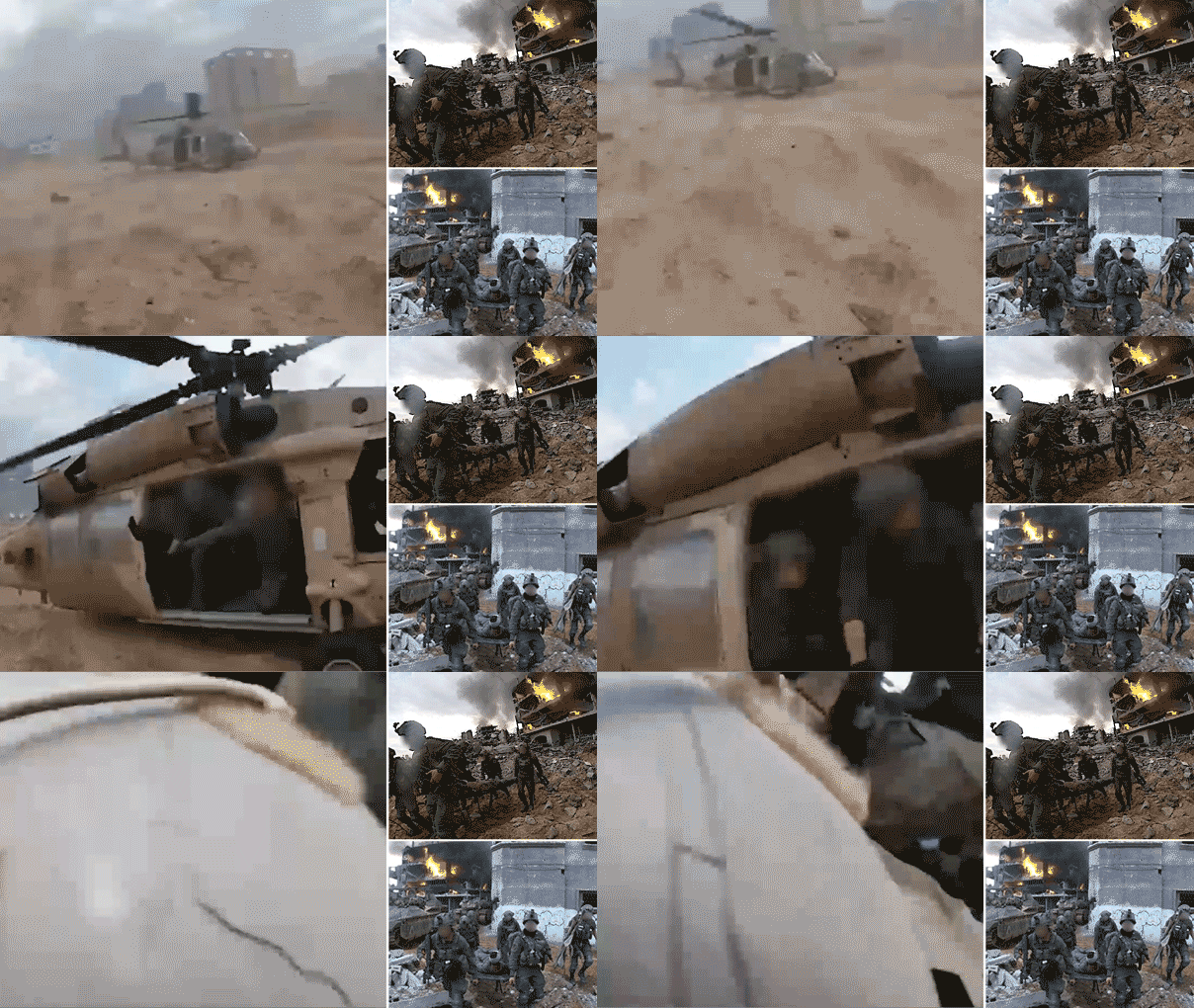
One of the standout innovations during the current conflict is the restructured casualty evacuation process, enhancing the speed and efficiency of getting injured troops from the battlefield to medical facilities. Enhanced helicopter evacuation has become a pivotal aspect of this strategy, allowing rapid transport of soldiers in critical condition to hospitals. IDF officials have pointed out that this not only saves lives but also minimizes the chances of complications associated with delayed treatment.
The IDF medical specialist emphasized the “rapid evacuation” strategy, which enables medical teams to transport casualties “to Israeli hospitals rapidly,” significantly increasing the chances of survival. Video footage released during the conflict has showcased dedicated efforts of military medical teams engaged in these swift rescue operations.
These enhancements are essential not only operationally but also psychologically, as they bolster the morale of troops who feel ensured of immediate medical intervention. Consequently, the structure of military operations has adapted to facilitate these evacuations, signifying a comprehensive approach to battlefield medicine that values the life of each soldier.
Integration of Medical Personnel on the Frontlines
Another critical innovation has been the strategic placement of medical personnel directly within combat units, a move designed to enhance immediate care capabilities. According to IDF medical experts, having a doctor embedded in every company allows for instantaneous medical assessments and interventions. This proactive measure enables frontline units to make rapid decisions about the treatment pathways for injured soldiers.
This system of having doctors deployed in direct proximity to combat scenarios contrasts sharply with previous operational standards that placed medical personnel far from the front lines. As the IDF medical expert explained, this adjustment allows for “critical decisions early on during the care process,” thereby enhancing the likelihood of positive outcomes for injured service members. Access to trained medical professionals on the battlefield can significantly minimize the impacts of traumatic injuries when immediate decisions are required.
Moreover, this integration of medical staff recognizes a fundamental aspect of contemporary warfare, where quick response times can mean the difference between life and death. The model focuses on a holistic view of soldier wellness, ensuring that mental, psychological, and physical needs are addressed promptly.
The Role of Technology in Emergency Response
Technological advancements have played a pivotal role in revolutionizing battlefield medicine within the IDF. One significant development involves the use of advanced data transmission systems that allow medical information to be shared in real-time. With every medical officer along the treatment chain able to access patient data, care can be adjusted and tailored to meet evolving circumstances.
This digital approach provides comprehensive insights into patient conditions and facilitates better-informed decision-making by medical personnel. Furthermore, the use of blood products and innovative treatments, such as immediate plasma application on injuries instead of saline solutions, is gaining traction within IDF protocol. These methodologies, developed based on lessons learned from earlier conflicts, demonstrate a commitment to evolving practices in trauma care.
As battlefield scenarios become increasingly complex, integrating technology ensures that the medical responses are not only timely but also effective in stabilizing patients before more extensive treatment can be administered at hospitals. This commitment to embracing technology is reflective of a broader commitment within military medicine to pursue excellence in care outcomes.
Impact of U.S.-Israeli Collaboration on Battlefield Medicine
The collaborative efforts between the U.S. and Israeli military medical branches have led to significant advancements in battlefield care. This partnership focuses on sharing invaluable lessons from both the IDF’s experiences and American military medical practices, ultimately striving to improve outcomes for wounded personnel in both military forces.
According to recent U.S. military reports, there is a pressing need to integrate Israeli medical advances into American military health strategies. Insights derived from the Swords of Iron War have provided the U.S. military with a valuable case study on effective medical interventions and the necessity of rapid response procedures. By observing the operational efficacy displayed by the IDF, U.S. officers aim to mitigate the realization of similar challenges faced during their engagements.
Moreover, mutual training sessions ensure that both nations benefit from innovative solutions to combat casualty care. The constant exchange of medical knowledge positions both militaries to adapt quickly to the evolving demands of modern warfare.
| No. | Key Points |
|---|---|
| 1 | IDF has implemented advanced medical tactics during ongoing conflict with Hamas. |
| 2 | Casualty evacuation times have dramatically decreased, enhancing survival rates. |
| 3 | Medical personnel are now embedded in frontline units for immediate care. |
| 4 | Technological integrations have improved real-time patient care tracking. |
| 5 | Collaboration with U.S. military seeks to incorporate lessons learned in battlefield medicine. |
Summary
The medical advancements observed within the Israeli military during the ongoing conflict with Hamas demonstrate a proactive approach to battlefield medicine. The implementation of rapid response techniques, enhanced evacuation protocols, and integration of technology reflect a conscious effort to improve the survival and health outcomes of injured soldiers. Moreover, the collaboration with U.S. forces signifies not only the sharing of practices and strategies but also underscores the importance of adaptability in the face of evolving warfare landscapes.
Frequently Asked Questions
Question: How has the IDF improved response times for medical emergencies?
The IDF has significantly reduced response times from 15-20 minutes to as little as four minutes by deploying advanced life support and embedding medical staff directly on the battlefield.
Question: What role does technology play in IDF battlefield medicine?
Technology facilitates real-time data sharing among medical personnel, enabling informed decisions and immediate adjustments to patient care during conflicts.
Question: How does U.S.-Israeli collaboration enhance battlefield medicine?
The collaboration allows both militaries to share lessons learned from their respective experiences, adapt best practices in trauma care, and improve operational health measures.