
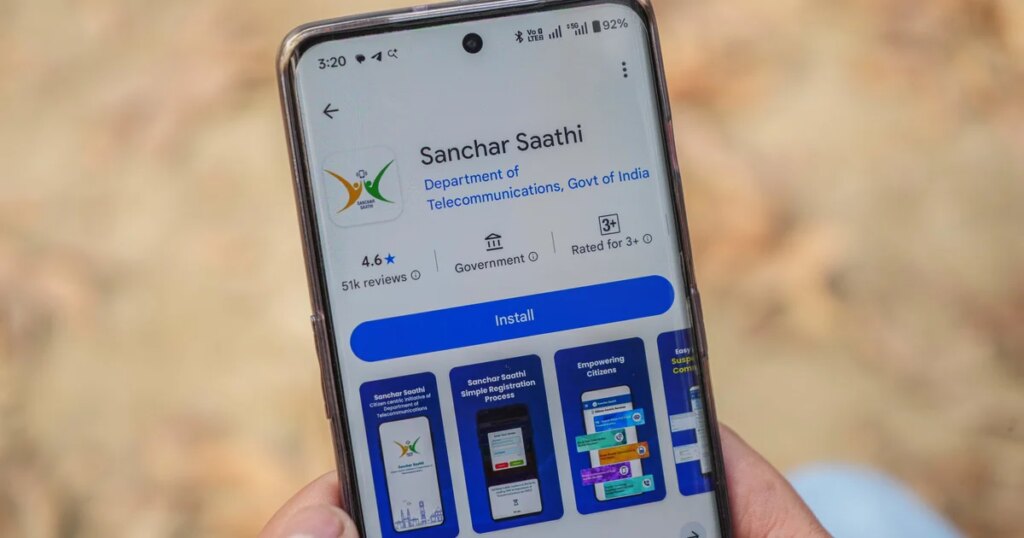
In a significant policy shift, the Indian government has retracted its mandate requiring smartphone manufacturers, including major players such as Apple and Samsung, to pre-install a state-developed security application known as Sanchar Saathi on all new devices. This announcement came after mounting backlash from opposition parties and privacy advocates, who labeled the app as a potential surveillance tool aiming to violate citizens’ privacy rights. With the initial order being revoked just two days after it became public, the move has reignited discussions concerning privacy, security, and government oversight in the digital age.
| Article Subheadings |
|---|
| 1) Revocation of the Pre-installation Mandate |
| 2) Criticism from Opposition Parties |
| 3) Government’s Defense of the App |
| 4) Public Reactions and Digital Privacy Concerns |
| 5) Features of the Sanchar Saathi App |
Revocation of the Pre-installation Mandate
On Wednesday, officials from India’s Ministry of Communications announced that the previously mandated installation of the Sanchar Saathi app on smartphones would no longer be compulsory. “Government has decided not to make the pre-installation mandatory for mobile manufacturers,” they stated, just days after the initial directive was leaked to media sources. The Sanchar Saathi app, which translates to “Communication Partner” in Hindi, was originally intended to be installed within 90 days on all new devices, including older models through software updates. This abrupt change marks a considerable pivot in government policy and reflects the sensitive nature of technology and privacy in today’s society.
Criticism from Opposition Parties
The backlash that prompted the government’s decision was immediate and intense. Representatives from various opposition parties openly labeled the Sanchar Saathi app a “snooping tool,” drawing alarming comparisons to known surveillance technologies such as Pegasus spyware. Opposition leader Priyanka Gandhi expressed her concerns, arguing, “Citizens have the right to privacy. Everyone must have the right to send messages to family, friends, without the government looking at everything.” Furthermore, fellow Congress party member Renuka Chowdhury expressed frustration over the apparent infringement on basic rights, stating, “The real violation of National Security” was taking away citizens’ rights to privacy.
Government’s Defense of the App
While repealing the mandatory installation order, the government defended the Sanchar Saathi app as a critical tool for enhancing cybersecurity among Indian citizens. Jyotiraditya Scindia, India’s Minister of Communications, clarified that participation in utilizing the app was voluntary and that users could delete it from their devices if they chose. He emphasized the app’s aims, claiming, “neither is snooping possible, nor it will be done” through the software, emphasizing its benefits for citizens and aligning the app’s features with democratic principles.
Public Reactions and Digital Privacy Concerns
Despite the government’s reassurances, skepticism remained prevalent among digital rights advocates and the general public. Prasanto K. Roy, a prominent technology analyst, remarked, “A government statement alone is not adequate to inspire confidence in this.” He called for transparency regarding the app’s data permissions, arguing for the app to be open-source so security experts could freely examine its code. Moreover, the organization Internet for Freedom voiced concerns over the government’s ability to access private data across all smartphones, potentially compromising the integrity of digital privacy for over 1.2 billion cell phone users in India.
Features of the Sanchar Saathi App
Despite the controversy surrounding it, the government maintained that the Sanchar Saathi app had substantial utility. The application is designed to track lost or stolen mobile devices using their unique International Mobile Equipment Identity (IMEI) numbers and can help users report fraudulent calls. In multiple official statements, the government touted that the app had already been downloaded 14 million times and had contributed to the recovery of 2.6 million lost smartphones. Additionally, it assisted in disconnecting over 4 million fraudulent connections, benefiting citizens by making it easier to combat scams and ensuring enhanced digital safety.
| No. | Key Points |
|---|---|
| 1 | The Indian government revoked its mandate for the pre-installation of the Sanchar Saathi app on smartphones. |
| 2 | Opposition parties criticized the app as a potential surveillance tool infringing on privacy rights. |
| 3 | The government defended the app’s intent to enhance cybersecurity without infringing on personal privacy. |
| 4 | Digital rights advocates expressed distrust regarding the app’s capabilities and data access. |
| 5 | The Sanchar Saathi app is designed to assist with tracking lost devices and reporting scams. |
Summary
The revocation of the Sanchar Saathi pre-installation mandate reflects a growing awareness of the balance required between technological advancement and individual privacy rights. As the Indian government seeks to enhance digital security, it faces intense scrutiny from both political opposition and civil society. This incident underscores the ongoing dialogue about governmental transparency and the significance of protecting personal data in an increasingly interconnected world.
Frequently Asked Questions
Question: What was the purpose of the Sanchar Saathi app?
The Sanchar Saathi app was intended to enhance cybersecurity by allowing users to track lost or stolen smartphones and report fraudulent activity.
Question: Why did the government revoke the pre-installation mandate?
The government revoked the mandate due to public backlash and criticism from opposition parties, who raised concerns about privacy and surveillance.
Question: How did the public and opposition react to the initial order?
Opposition politicians labeled the app as a “snooping tool,” expressing fears that it infringed on citizens’ rights to privacy and freedom.