
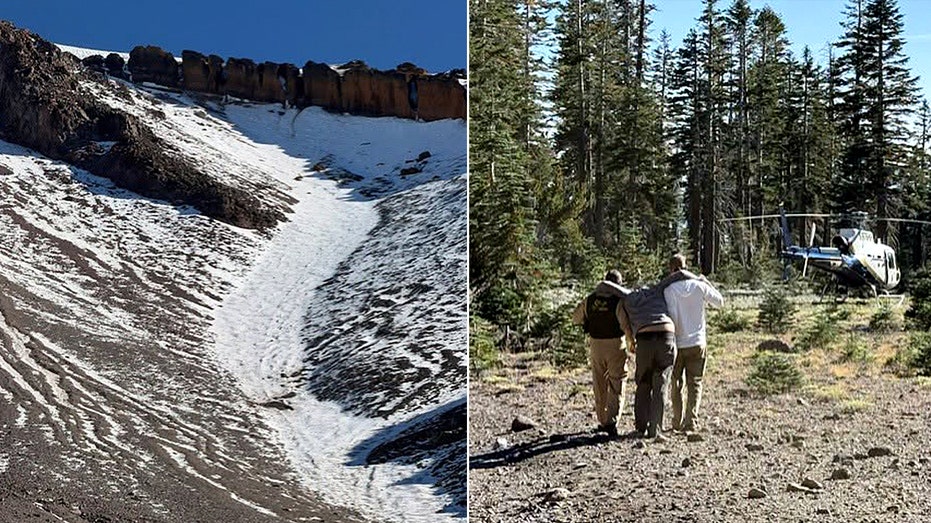
A San Jose climber crawled through the night to reach safety after falling approximately 500 feet on Mount Shasta in Northern California. The climber was injured while attempting to glissade down the mountain’s steep Avalanche Gulch route after reaching the summit. He was found at Horse Camp Cabin the following day after friends reported him missing and a multi-agency search began.
Forest officials said the climber suffered several significant lacerations and injuries to his feet. His cellphone died shortly after he reached the summit, leaving him unable to call for help. Officials credited his route knowledge, preparation and decision to inform friends of his plans with helping him survive and be located.
| Article Subheadings | |
|---|---|
| 1) | Fall during descent |
| 2) | Overnight crawl to shelter |
| 3) | Search and discovery |
| 4) | Lessons from the rescue |
| 5) | Mount Shasta route risks |
Fall during descent
The unidentified San Jose man reached the summit of Mount Shasta before losing control Thursday night while attempting to glissade down Avalanche Gulch. Glissading involves sliding down snow or ice, and the route is known for its steep and demanding terrain.
According to forest officials, the climber slid approximately 500 feet. During the fall, he sustained several significant lacerations and injuries to his feet. The swelling and pain that followed made continued travel difficult. His cellphone died shortly after the summit, so he could not use it to call authorities or request immediate assistance.
Overnight crawl to shelter
After the fall, the climber removed his boots because of painful swelling in his feet. He then began moving down the remainder of Avalanche Gulch on his hands and knees, continuing through the night toward Horse Camp Cabin.
The cabin provided a known destination along his route and became the place where he could wait for help. Officials said he was able to navigate without a map because he knew the route. His decision to continue toward shelter represented an effort to self-rescue despite significant injuries and the loss of phone service.
Search and discovery
By the following day, the climber’s friends could no longer contact him. They notified the Siskiyou County Sheriff’s Office that he was missing, and also traveled to assist with the search effort.
Rescue teams and air support from several agencies were mobilized by 2 p.m. Friday to search the Avalanche Gulch area. About two hours later, authorities learned that a hiker had entered Horse Camp Cabin and found the climber inside. The response included Mount Shasta Climbing Rangers, Siskiyou County Sheriff’s Search and Rescue, and a California Highway Patrol helicopter crew.
Lessons from the rescue
Forest officials said the incident highlights the importance of planning for changing conditions and emergencies in mountainous terrain. They advised hikers to allow sufficient daylight, establish a turnaround time around noon, carry backup electronic devices and prepare to self-rescue when possible.
Never rely solely on a GPS or phone to navigate. If those devices stop working, your own navigation skills will be critical in ensuring a safe return home.
Officials also praised the climber for telling friends about his itinerary and providing progress updates. That communication allowed his friends to recognize that he was overdue and contact law enforcement promptly.
Mount Shasta route risks
Avalanche Gulch is a steep, snow and ice-covered route to the Mount Shasta summit. The mountain’s route information states that reaching the summit through the gulch requires proper equipment and snow-travel skills.
The rescue was the latest response in the Shasta-Trinity National Forest, where teams handle numerous incidents each year. The case shows how rapidly a descent can become dangerous when a climber loses control, suffers injuries and loses access to electronic communication.
| Number | Key Point |
|---|---|
| 1 | A San Jose climber fell about 500 feet while glissading down Avalanche Gulch. |
| 2 | He suffered lacerations and foot injuries and crawled overnight to Horse Camp Cabin. |
| 3 | Friends reported him missing after he failed to check in. |
| 4 | A multi-agency search located him inside the cabin on Friday. |
| 5 | Officials urged hikers to carry backup electronics, know their route and share itineraries. |
Summary
The climber’s overnight effort to reach Horse Camp Cabin helped bridge the gap between the accident and the organized search. His experience also underscored the need for route knowledge, daylight planning, backup equipment and reliable communication with people on the ground.
Frequently Asked Questions
Where did the climber fall?
He fell approximately 500 feet while attempting to glissade down Avalanche Gulch on Mount Shasta in Northern California.
How did he reach safety?
After removing his boots because of swelling and pain in his injured feet, he crawled through the night to Horse Camp Cabin.
How was the climber found?
His friends reported him missing after he failed to check in. Rescue teams began searching Friday, and a hiker later found him inside Horse Camp Cabin.
What safety advice did officials provide?
Officials advised hikers to allow enough daylight, set a turnaround time, carry backup electronics, develop navigation skills and tell someone their itinerary.