
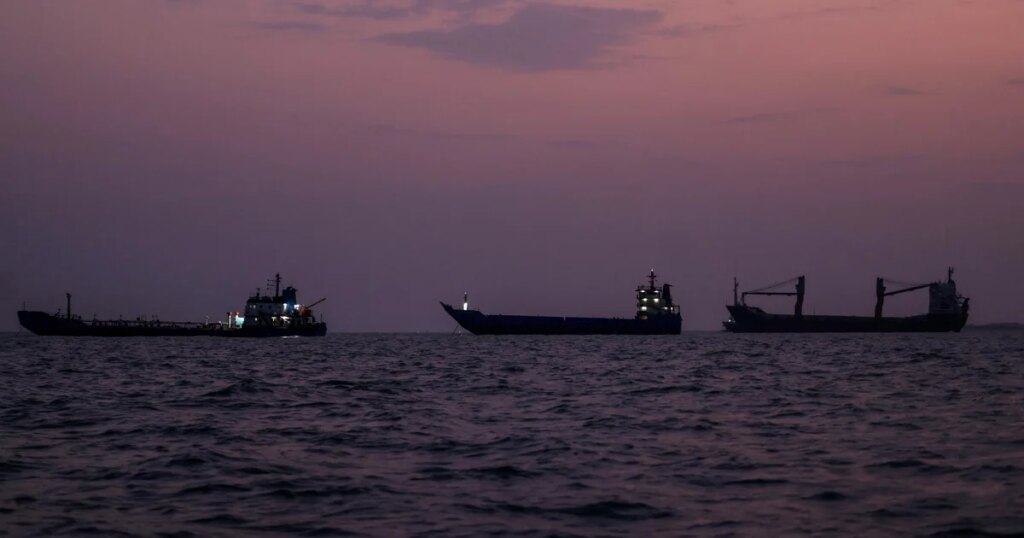
In a series of escalating tensions in the Persian Gulf, Iran has announced its intention to establish a new “exclusion zone” in the Strait of Hormuz. This declaration comes on the heels of recent U.S. military actions targeting Iranian oil tankers in response to Iran’s missile launches toward U.S. warships. As global oil prices surge, Iranian officials have warned of a potential “intense” and “painful” response to American aggression, signaling a significant downturn in already fraught U.S.-Iran relations.
| Article Subheadings |
|---|
| 1) Iran’s Planned “Exclusion Zone” |
| 2) U.S. Military Actions Spark Tensions |
| 3) Rising Oil Prices Amidst Conflict |
| 4) Iran’s Response to U.S. Actions |
| 5) Implications for Global Dynamics |
Iran’s Planned “Exclusion Zone”
Iran’s announcement of a new “exclusion zone” was made by the head of the Supreme National Security Council, Mohsen Rezaei, during an interview with state media. The specific parameters of this exclusion zone have yet to be disclosed, but it is reportedly intended to extend from the U.S. naval blockade toward the Strait of Hormuz and into the Persian Gulf. Such a move signifies Iran’s efforts to assert control over vital shipping lanes and respond assertively to perceived threats from foreign naval operations in the area.
The timing of this announcement is particularly poignant, given the heightened military provocations that have characterized recent months. As tension between Iran and the U.S. flares, the intention behind creating this exclusion zone may serve as both a protective measure for Iranian interests and a demonstration of defiance against U.S. military presence in the region.
U.S. Military Actions Spark Tensions
The escalation of conflict started with a series of U.S. airstrikes on Iranian oil tankers, which were described as a necessary response to Iran’s missile launches aimed at U.S. naval forces. These incidents have resulted in significant military engagement in the region and have raised questions about the U.S.’s strategic objectives in the Persian Gulf. Furthermore, U.S. Central Command confirmed that three Iranian oil tankers were “permanently disabled” following these strikes, highlighting the extent of military involvement in retaliation against attacks on U.S. interests.
What remains to be seen is how Iran will respond to the U.S.’s military maneuvers in the coming days and weeks. The U.S. military’s assertion that it will defend its operations and safeguard its resources raises the stakes significantly, as both nations find themselves amidst an all-encompassing standoff.
Rising Oil Prices Amidst Conflict
The rise in tensions has had immediate repercussions on global oil markets. Brent crude oil prices have surged to $96.95 per barrel, a direct impact of the ongoing conflict. The average price of regular gasoline is also experiencing significant inflation, hitting approximately $4.14 per gallon, nearly a dollar more than during the last Labor Day weekend. Such price increases highlight the interconnectedness of political events and economic outcomes, especially in the energy sector.
The conflict has led to decreased oil traffic through the crucial Strait of Hormuz, a key shipping lane through which a significant proportion of the world’s oil passes. Iran’s refusal to reopen the waterway reflects its strategy of leveraging economic pressure as a means of achieving strategic aims against adversaries while underscoring the stakes tied to these international water routes.
Iran’s Response to U.S. Actions
In light of the recent military actions, Iranian officials are preparing for a forceful response. Mohammad Bagher Ghalibaf, the speaker of Iran’s Parliament, indicated that any further aggression from the U.S. would be met with a swift, decisive reaction. He stated, “The Americans must have understood that the era of proportionate responses has come to an end,” emphasizing a shift toward more aggressive posturing against U.S. actions that threaten Iranian national interests.
The tensions surrounding U.S.-Iran relations could escalate further, especially if diplomatic dialogues are not prioritized in the aftermath of these military actions. The Iranian leadership’s rhetoric suggests that they are willing to escalate responses to protect what they perceive as their sovereignty and territorial integrity.
Implications for Global Dynamics
The implications of these developments extend beyond the immediate U.S.-Iran narrative, impacting global stability and economic conditions. As oil prices continue to climb, nations dependent on oil imports may feel significant pressure, potentially leading to a ripple effect across international markets. The instability in this vital region could also catalyze a realignment of alliances and partnerships, with global powers re-evaluating their strategic positions in response to Iran’s increasing defiance and U.S. military assertiveness.
Moreover, the situation may provoke neighboring countries to reconsider their security arrangements, and there could be a resurgence in military presence from other international actors in the region. The consistent volatility in the Persian Gulf underscores a broader narrative of geopolitical tensions that continue to evolve in an increasingly interconnected world.
| No. | Key Points |
|---|---|
| 1 | Iran plans to establish an “exclusion zone” in the Strait of Hormuz, targeting foreign vessels. |
| 2 | U.S. military actions have targeted Iranian oil tankers as part of ongoing retaliatory efforts. |
| 3 | Oil prices are experiencing significant increases, with Brent crude surpassing $96 per barrel. |
| 4 | Iranian officials threaten severe repercussions in response to U.S. military actions. |
| 5 | Rising tensions could lead to significant shifts in global alliances and economic conditions. |
Summary
The recent announcements from Iran regarding a new exclusion zone in the Strait of Hormuz, combined with escalating military engagements with the United States, signal an alarming period for geopolitical relationships in the Persian Gulf. As both nations assert their military capabilities, the global oil market is feeling the strain from heightened tensions. This situation not only poses risks for the regional stability but also has the potential to affect international economic dynamics significantly.
Frequently Asked Questions
Question: What is the significance of the Strait of Hormuz?
The Strait of Hormuz is a critical maritime corridor, through which approximately 20% of the world’s oil supply is transported. It serves as a strategic chokepoint, making it essential for global energy security.
Question: How do U.S. military actions impact oil prices?
U.S. military actions in the Gulf can create uncertainty in oil supply chains, often leading to increased prices as markets react to potential disruptions in oil transport.
Question: What might be the consequences of Iran’s threatened responses?
If Iran follows through on its threats, it could lead to further military escalation, worsening the conflict and increasing instability in the region, potentially drawing in other countries into the fray.