
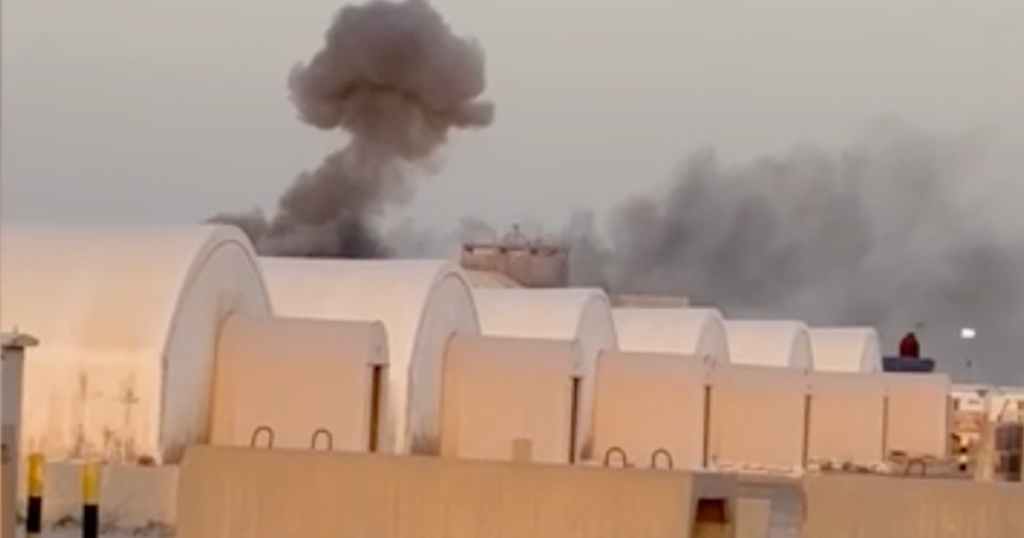
Newly released videos have brought to light the intensity of Iranian attacks on a major U.S. military base in Kuwait as the conflict with Iran has escalated over the past several months. These videos, obtained exclusively by a media outlet, show images of ballistic missiles, drones, and reportedly Iranian F-5 fighter jets striking Camp Buehring. Witnesses have described the chaotic aftermath of the attacks, revealing that American forces faced critical challenges during these assaults, which marked some of the early days of the ongoing hostilities.
This report sheds light on the operational strain that these attacks placed on U.S. forces, including alarming shortages of ammunition as soldiers were moved to less vulnerable positions. High-ranking officials, while not providing detailed comments, have acknowledged the dangerous circumstances surrounding U.S. troops and the implications of the escalating conflict for military strategy in the region.
| Article Subheadings |
|---|
| 1) Background of the Conflict |
| 2) Details of the Iranian Attacks |
| 3) Challenges Faced by U.S. Forces |
| 4) Official Responses and Investigations |
| 5) The Geopolitical Consequences |
Background of the Conflict
The ongoing conflict with Iran has roots that extend far beyond the recent escalation, involving numerous geopolitical tensions and policy decisions made over the years. The recent hostilities were ignited by a series of aggressive acts by Iran, which included support for militant groups in the region, as well as direct confrontations with U.S. interests. The conflict escalated dramatically approximately seven months ago, as the Iranian military began launching attacks against U.S. installations in the Gulf region, asserting its influence in a volatile area prone to military engagement.
The strategic significance of Kuwait has made it a focal point for U.S. military operations in the Middle East, with Camp Buehring serving as a key staging ground for troops deployed across the region. The presence of American forces has historically been viewed as a deterrent against Iranian aggression; however, the recent assaults illustrate a shift in the dynamics between the two countries. Analysts suggest that these aggressive actions may be attributed to Iran’s desire to assert its authority in the region amid an increasingly complex international landscape.
Details of the Iranian Attacks
The recently obtained videos depict the Iranian attacks with harrowing clarity, showing ballistic missiles and drones targeting U.S. facilities, including Camp Buehring. The authenticity of the footage has been validated through metadata analysis, confirming the substantial impact and damage caused by the strikes. Soldiers stationed at the base reported a range of threats, including low-flying Iranian F-5 fighter jets, which reportedly engaged in direct attacks on the compound. Witnesses recounted feeling the nearby explosions and expressed concern for their safety as the assaults unfolded.
Eyewitness accounts indicate that some soldiers were forced into bunkers during the strikes, highlighting the intense pressure faced by those defending the installation. Video evidence shows not only the moment of impact but also the chaotic aftermath, with extensive damage to buildings and military equipment visible in the footage. This alarming situation underscores the extent to which American forces have been subjected to repeated assaults, with the Pentagon attempting to address these challenges through logistical adjustments and strategic withdrawals.
Challenges Faced by U.S. Forces
As the attacks intensified, American forces stationed at Camp Buehring confronted logistical challenges that exacerbated the dangerous circumstances. Reports indicate that soldiers experienced critical shortages of vital ammunition, specifically .50-caliber rounds, leading to concerns over their ability to defend against sustained assaults. Despite efforts to reposition troops into safer areas—weighing heavily on the “get off the X” strategy—the operational capabilities of those remaining in the area were significantly compromised.
The prevailing atmosphere was one of uncertainty and danger, as further reports emerged of injuries among soldiers, including two individuals struck by lightning amid the chaos created by desert storms. The conditions forced military leaders to assess their strategic options, with commanders ultimately deciding to evacuate troops to form forward operating bases (FOBs) in the nearby desert, establishing a more secure location to continue operations.
Official Responses and Investigations
In light of the disturbing revelations surrounding the attacks on Camp Buehring, both military officials and investigative bodies have begun to assess the efficacy of responses to Iranian aggression. High-ranking officials from U.S. Central Command have been tight-lipped regarding specific details of the attacks, but the Pentagon has acknowledged that strategic decisions were made in real-time to mitigate risks to personnel. Defense Secretary Pete Hegseth previously commented on troop movements and defensive measures, citing a proactive approach to limit exposure to Iranian fire.
There have been calls for a thorough investigation into the circumstances surrounding the attacks, with concerns raised about the military’s preparedness and the adequacy of support for troops stationed at Camp Buehring. Recent reports by the Defense Department’s inspector general have highlighted the scale of losses incurred due to the conflict, including a staggering $3.7 billion worth of equipment. These findings indicate a pressing need for a reassessment of U.S. military strategies in the region to safeguard against future threats, as officials ponder how best to reinforce vulnerable positions.
The Geopolitical Consequences
The ongoing conflict between Iran and U.S. forces represents a significant development in regional geopolitics, raising questions about the future of U.S. military presence in the Middle East. As Iranian attacks escalate, there is growing concern about the viability of U.S. operational strategies and the potential for wider conflict that could draw in other regional players. Congressional reports have noted that Iranian strikes against U.S. bases are not isolated occurrences, extending to installations in multiple countries including Bahrain, Qatar, Saudi Arabia, and Iraq.
The implications of these hostilities are profound, shaping not only military tactics but also diplomatic relations. As the United States grapples with evolving threats in the region, it must balance the need to maintain a significant military presence with the imperative of reducing the risk faced by its troops. The complexity of Iranian aggression necessitates a nuanced approach—one that includes military preparedness but also diplomatic avenues to de-escalate tensions before they spiral further out of control.
| No. | Key Points |
|---|---|
| 1 | New videos reveal the extent of Iranian attacks on U.S. Camp Buehring in Kuwait. |
| 2 | The attacks involved missiles, drones, and fighter jets, highlighting the threats faced by U.S. forces. |
| 3 | U.S. forces faced significant ammunition shortages during the conflict, affecting defense capabilities. |
| 4 | Calls for investigation into military responses to Iranian aggression and safeguard measures have intensified. |
| 5 | The geopolitical ramifications of the conflict suggest a critical reassessment of U.S. military strategy in the region. |
Summary
The ongoing situation between Iranian forces and U.S. troops in Kuwait reflects a deepening crisis that necessitates urgent attention from military and governmental leaders. As hostilities escalate, it is imperative to understand the underlying dynamics shaping this conflict, the experiences of service members on the ground, and the broader implications for regional stability and U.S. strategic interests. The findings from the recent attacks at Camp Buehring echo a call for increased readiness and effective military strategy, ensuring that American servicemen and women are adequately supported in this volatile environment.
Frequently Asked Questions
Question: What triggered the recent conflict with Iran?
The recent conflict was triggered by a series of aggressive acts from Iran, including military provocations and direct confrontations with U.S. interests in the region, culminating in launched attacks against American military installations.
Question: How did U.S. forces respond to the Iranian attacks?
U.S. forces attempted to reposition personnel and resources to enhance defensive capabilities while addressing critical shortages of ammunition. Troops were moved to safer locations, including several forward operating bases in the Kuwaiti desert.
Question: What are the geopolitical implications of the Iranian attacks?
The attacks have raised alarms regarding U.S. military strategy, prompting a critical reassessment of the presence and operational tactics of American forces in the Middle East, while also straining diplomatic relations in the region.