
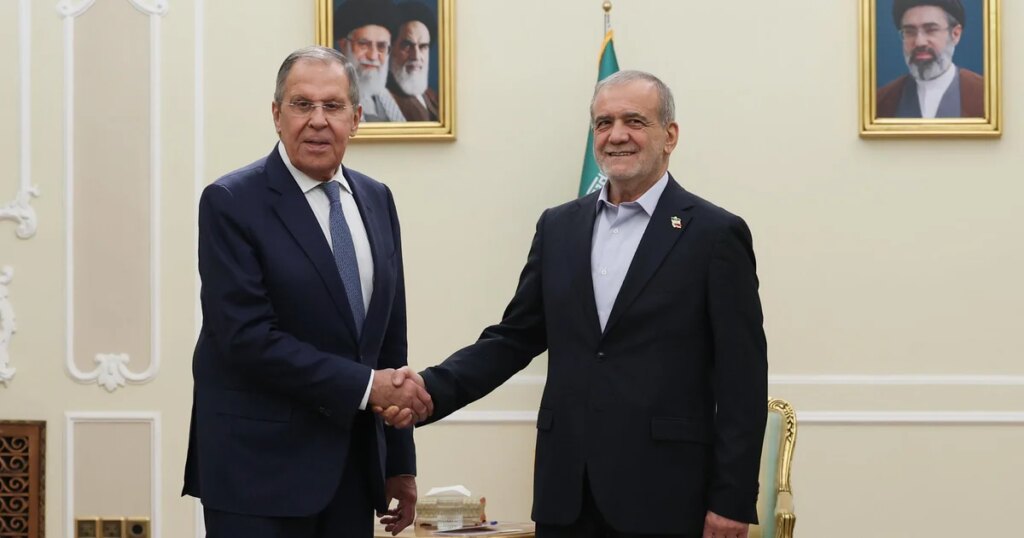
In the backdrop of escalating tensions in the Middle East, Iranian and Russian officials have underscored their intent to enhance cooperation amidst ongoing conflicts involving the United States and its allies. With a notable visit by Russian Foreign Minister Sergey Lavrov to Tehran, both countries have signaled an alignment in their strategic objectives concerning regional security and economic collaboration. Meanwhile, Israeli Prime Minister Benjamin Netanyahu and former President Donald Trump have reaffirmed their commitment to counter Iran’s influence in the region, further complicating the intricate web of relationships in this volatile area.
| Article Subheadings |
|---|
| 1) Iran’s Collaboration with Russia Amid U.S. Sanctions |
| 2) Lavrov’s Visit: A Strategic Move |
| 3) Escalation of Military Operations in Yemen |
| 4) Trump’s Military Strategy Against Iran |
| 5) Regional Security: The Role of International Cooperation |
Iran’s Collaboration with Russia Amid U.S. Sanctions
In recent weeks, Abbas Araghchi, the Iranian Foreign Minister, has emphasized the unprecedented level of collaboration between Iran and Russia, especially as both nations face continued sanctions and pressures from the United States. Araghchi publicly stated that the two countries have established a partnership that is more robust than ever, particularly in light of international geopolitical shifts following the war that erupted due to U.S. and Israeli interventions in Iran.
This partnership is being manifested through discussions extending beyond bilateral interests, covering issues from economic cooperation to nuclear energy collaboration. The Iranian government sees Russia as a crucial ally in its resistance against Western sanctions, particularly those imposed after its nuclear program came under scrutiny. The focus on economic collaboration is particularly relevant, given Iran’s need to diversify its economy in the face of crippling sanctions.
Iranian and Russian leaders are discussing strategies to bolster their economies through joint projects, particularly in energy and infrastructure sectors. Such initiatives are critical as both nations seek to mitigate the economic fallout resulting from sanctions. Russia, in particular, views its relationship with Iran as a means to extend its influence in the Middle East, counterbalancing U.S. interests and fostering an axis of resistance against common foes.
Lavrov’s Visit: A Strategic Move
The visit by Sergey Lavrov to Iran marked his first official trip since the onset of the conflict between Iran and the U.S. and its allies. During his time in Tehran, Lavrov expressed Moscow’s commitment to preventing a larger-scale conflict in the region, a statement that resonates with Iran’s aspirations to quell hostilities while negotiating its interests more effectively with global powers. This diplomatic outreach was timely, as it happened amidst ongoing military confrontations on multiple fronts.
Lavrov’s engagement with Iranian officials included discussions on a variety of pressing issues, including the security situation in the Middle East and the ongoing war in Yemen, where Russian interests align with Iranian support for the Houthis. This visit solidifies Russia’s role as a mediator while also portraying its capability to leverage diplomatic ties in contentious circumstances. Moscow’s involvement in this arena reflects its broader strategy of enhancing its geopolitical standing through alliances with countries marginalized by the West.
Furthermore, Lavrov’s statements during the visit emphasized a shared desire to stabilize the region and explore potential resolutions to the ongoing crises. The collaboration between Iran and Russia has potentially far-reaching implications for U.S. interests in the Middle East, as both countries continue to strengthen their military and economic ties.
Escalation of Military Operations in Yemen
The conflict in Yemen has intensified recently, with Iranian-backed Houthi forces employing aggressive military tactics against Saudi-led coalition forces. A recent report indicated that Houthi officials claimed responsibility for a series of missile strikes targeting Yemeni government forces, resulting in high casualties. These actions are perceived as retaliation against ongoing Saudi airstrikes and military support.
The Houthi military spokesperson, Yahya Saree, reported that their strikes were aimed at military installations, airports, and critical infrastructure, showcasing their capacity to inflict damage deep within Saudi territory. This escalation aligns with Iran’s strategy of exerting its influence through proxy groups, thereby weakening the Saudi-led coalition’s efforts to stabilize Yemen.
The significant military escalations have drawn condemnation from various global actors and prompted renewed calls for dialogue to address the humanitarian crisis. The situation in Yemen remains dire, with reports of civilian casualties and widespread suffering among the population caught in the crossfire of international power struggles.
Trump’s Military Strategy Against Iran
Amidst these developments, former President Donald Trump has reiterated his willingness to adopt a hardline approach towards Iran, signaling a potential resurgence of U.S. military operations in the region following the upcoming midterm elections. Trump’s rhetoric emphasizes a united front with Israel against Iranian influence, suggesting collaborations that may include coordinated military actions.
In a recent communication with Benjamin Netanyahu, Trump expressed support for renewed military efforts against Iran, reinforcing the narrative that the U.S.-Israeli alliance remains a cornerstone of foreign policy in addressing threats posed by Tehran. Trump’s comments echo a broader strategy that emphasizes military deterrence as a critical element in combating Iranian aspirations in the Middle East.
Trump’s return to the political arena and his willingness to engage with military options against Iran could dramatically shift the dynamics in the region. The prospect of a renewed U.S. military presence or interventions could provoke destabilizing countermeasures from Tehran, further complicating an already precarious security landscape.
Regional Security: The Role of International Cooperation
Amid the complexities brought by heightened military actions and political maneuvers, the role of international cooperation remains crucial. Countries in the region, including Egypt, are debating military support for Saudi Arabia as it faces increasing attacks from Houthis. The Egyptian parliament recently delayed discussions on military assistance, underscoring the cautious approach many nations are taking as they navigate geopolitical tensions.
Egypt’s deliberations reflect broader apprehensions about engaging in direct military confrontations that could entail significant risks. Discussions within the Egyptian parliament reveal a mix of support and apprehension concerning military intervention, signaling the need for thorough evaluations of the potential consequences of any military undertaking.
Involvement by external powers like Russia, which seeks to position itself as a peace broker, introduces additional variables into the regional security framework. Initiatives that push for diplomatic engagement, rather than military escalation, may emerge as preferable strategies for addressing the strained relationships between Middle Eastern states and great powers like the U.S. and Russia.
| No. | Key Points |
|---|---|
| 1 | Iran and Russia are enhancing their strategic collaboration amidst ongoing international sanctions. |
| 2 | Sergey Lavrov’s visit to Iran highlights Russia’s role in mediating conflicts in the Middle East. |
| 3 | Escalation of military operations in Yemen reflects the broader proxy battles affecting regional stability. |
| 4 | Trump’s potential military strategies against Iran may shift alliances and provoke further conflict. |
| 5 | The situation in the Middle East calls for enhanced international cooperation to mitigate escalating tensions. |
Summary
As tensions in the Middle East escalate, the deepening ties between Iran and Russia—alongside ongoing political maneuvers by U.S. leaders—underscore the complex interplay of alliances and conflicts shaping the region. The visit of Russian Foreign Minister Sergey Lavrov signifies a potential pivot towards increased collaboration between Tehran and Moscow, while escalating military actions in Yemen illustrate the urgent need for diplomatic efforts to restore stability. In this precarious landscape, the actions of global powers and their strategies will play pivotal roles in determining the future of peace and security in the Middle East.
Frequently Asked Questions
Question: What is the significance of Lavrov’s visit to Iran?
Lavrov’s visit underscores Russia’s strategic engagement with Iran amid U.S. sanctions, highlighting their intent to collaborate on regional security and economic initiatives.
Question: How do the military operations in Yemen impact regional stability?
The military operations between Houthis and Saudi-backed forces exacerbate tensions, complicating efforts for a peaceful resolution and worsening humanitarian crises.
Question: What role does international cooperation play in addressing Middle Eastern tensions?
International cooperation is essential in mitigating conflicts, as seen in Egypt’s cautious approach to military support for Saudi Arabia, aiming to prevent further escalation of violence.