
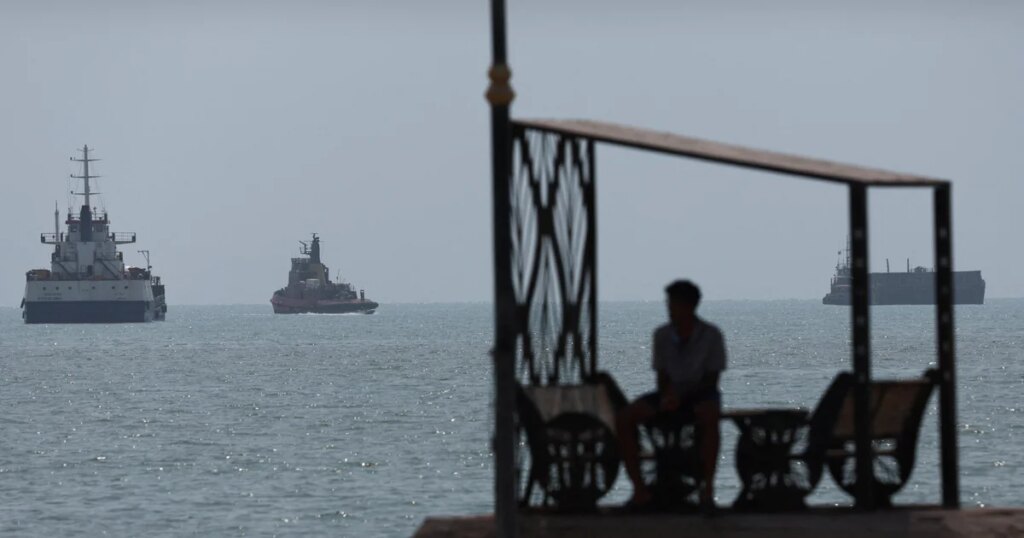
In a significant update regarding maritime security, Adm. Brad Cooper, the head of the U.S. military’s Central Command, reiterated President Trump’s assertion that shipping lanes in the Strait of Hormuz are free of sea mines. Despite this, many commercial shippers express hesitancy to navigate these vital waters without direct U.S. military protection, reflecting an ongoing tension stemming from the joint U.S.-Israel military operations against Iran, which have influenced global oil prices significantly. Reports indicate that while 24 oil tankers successfully transited the strait, this number contrasts sharply with the typical flow of about 120 vessels, illustrating the heightened caution among shippers amidst threats from Iran.
| Article Subheadings |
|---|
| 1) Security Status of the Strait of Hormuz |
| 2) U.S. Military Operations and Naval Presence |
| 3) Iran’s Response and Threats |
| 4) Impact on Global Oil Prices |
| 5) Future Outlook and Implications |
Security Status of the Strait of Hormuz
The Strait of Hormuz, a crucial maritime passage for global oil transportation, has been under intense scrutiny due to recent tensions involving Iran. Adm. Brad Cooper stated emphatically that the strait is “open” and has been cleared of Iranian mines, a claim that echoes President Trump’s previous assertions. The statement aims to reassure international stakeholders of the safety in navigating this vital waterway, which sees an average of 20% of the world’s petroleum pass through daily.
However, despite these claims, numerous commercial shipping companies remain apprehensive about transiting the strait. The backdrop of escalating military operations has created an environment of uncertainty, leading many vessels to seek U.S. military protection as a precautionary measure. This ongoing wariness underscores the challenges of ensuring maritime safety in a region historically fraught with conflict and geopolitical strife.
U.S. Military Operations and Naval Presence
The United States has been proactive in conducting naval operations to safeguard shipping lanes in the Persian Gulf. Adm. Cooper revealed that U.S. forces have provided coordinated protection for nearly 1,500 commercial vessels in the region. He highlighted the successful facilitation of approximately 750 million barrels of crude oil transit from the Gulf.
These efforts reflect a robust commitment to maritime security in the face of Iran’s aggressive posturing. The military’s operations are characterized as “meticulously and quietly” executing changes to the region’s security landscape, thereby ensuring that international shipping lanes remain accessible. Nonetheless, direct U.S. assistance continues to play a pivotal role in easing commercial concerns about navigating these waters.
Iran’s Response and Threats
The Iranian government has responded to recent developments with clear hostility, maintaining its threats to vessels that do not coordinate passage with Tehran. This perilous environment has deterred many shippers from entering the strait, despite U.S. assurances concerning mine clearance. A report from Bloomberg cited skepticism from U.S. allies about the overall safety of the strait, suggesting that not all mines have been cleared, further exacerbating fears among shipping companies.
Moreover, Iranian officials, including Oil Minister Mohsen Paknejad, admitted that their oil exports have decreased significantly since the onset of U.S. naval blockades. However, they assert that oil deliveries to distant markets continue, revealing Iran’s intent to adapt to the changing geopolitical climate while resisting U.S. pressure. This persistent threat of retaliation keeps commercial traffic at a minimum and raises concerns about potential confrontations with naval forces.
Impact on Global Oil Prices
The regional tensions resulting from the U.S.-Iran conflict have had a notable impact on global oil prices, which have surged approximately 30% compared to pre-war levels. This rise is attributed not only to direct disruptions in oil supply but also to the psychological effects of potential conflict in a region vital to energy markets. As such, market analysts are closely monitoring developments in the Strait of Hormuz as an indicator of broader economic implications.
Consumers and businesses across the globe are feeling the pinch from escalating fuel prices, fueled by fears surrounding the security of one of the most important maritime routes. The increased cost of oil can lead to higher prices for consumer goods, thereby trickling down to affect households and businesses alike.
Future Outlook and Implications
Looking ahead, the navigation of the Strait of Hormuz remains uncertain amid ongoing tensions between the U.S. and Iran. The potential for increased military confrontations, coupled with Iran’s assertive stance and threats to maritime traffic, suggests that the strait could remain a flashpoint for the foreseeable future. This situation calls for careful diplomatic considerations and strategic planning to ensure safe passage for vessels while mitigating the risk of conflict.
Continued military presence and vigilance will be essential for the U.S. and its allies to maintain control over shipping lanes and mitigate risks associated with Iranian aggressiveness. Moreover, as global oil prices fluctuate, countries reliant on these energy supplies will need to adapt to the changing landscape, exploring alternative sources and methods of supply to ensure energy security.
| No. | Key Points |
|---|---|
| 1 | Adm. Cooper affirmed the Strait of Hormuz is considered clear of sea mines. |
| 2 | Many shippers remain cautious, opting for U.S. military protection when transiting. |
| 3 | Reports indicated skepticism from U.S. allies regarding mine clearance in the strait. |
| 4 | Global oil prices have surged by 30% since the beginning of U.S.-Iran tensions. |
| 5 | The situation suggests continued volatility in maritime security and global oil supply. |
Summary
The current state of the Strait of Hormuz encompasses a complex interplay of maritime security, geopolitical tensions, and economic impact. As the U.S. military reassures the international community regarding shipping safety, persistent threats from Iran complicate the operational environment for commercial vessels. Additionally, the ripple effects on global oil prices underscore the far-reaching implications of this ongoing conflict. Continued vigilance and strategic military involvement will be crucial in addressing the challenges posed by this significant maritime route.
Frequently Asked Questions
Question: Why is the Strait of Hormuz significant?
The Strait of Hormuz is one of the world’s most critical maritime chokepoints, through which about 20% of global oil supply travels, making it vital for energy security and international trade.
Question: What actions is the U.S. taking to secure the Strait of Hormuz?
The U.S. military has been actively providing coordinated protection for commercial vessels transiting the strait and has executed naval operations aimed at deterring threats from Iran.
Question: How has the U.S.-Iran conflict influenced oil prices?
The tensions have led to a significant increase in global oil prices, attributed to fears of supply disruptions and instability in a region critical to energy transportation.