
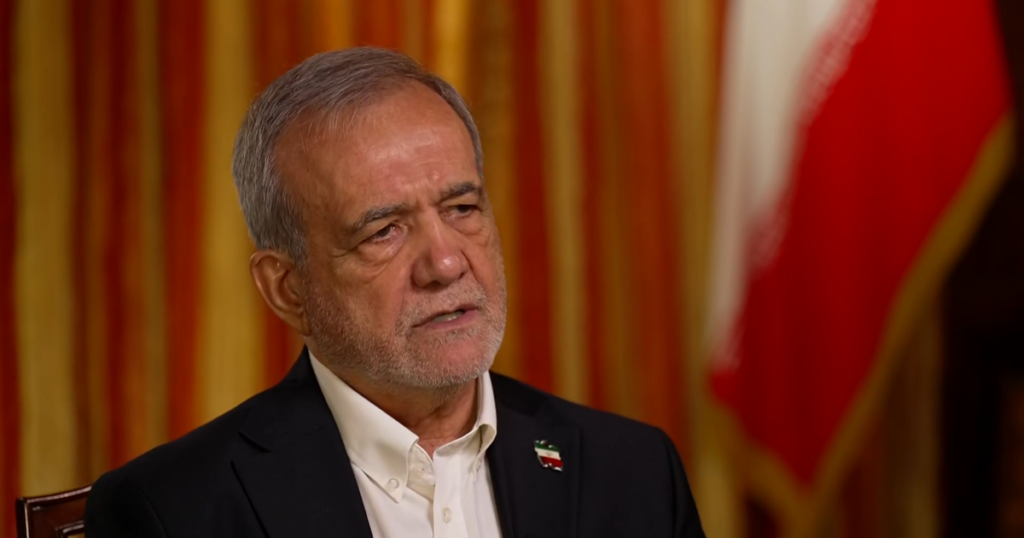
In a significant interview, Iranian President Masoud Pezeshkian addressed the current state of affairs between Iran and the United States, particularly focusing on the complexities surrounding the Strait of Hormuz and the ongoing conflict. With a proposal for reopening the strait contingent upon certain conditions, Pezeshkian elaborated on the necessity for trust and cooperation to achieve lasting peace. The interview, conducted against the backdrop of heightened tensions between the two nations, underlines the critical need for dialogue and understanding as both countries navigate this intricate geopolitical landscape.
| Article Subheadings |
|---|
| 1) Proposal to Reopen the Strait of Hormuz |
| 2) The Role of Dialogue in Conflict Resolution |
| 3) Trust Issues and Military Guarantees |
| 4) Impacts of Sanctions and Human Rights Concerns |
| 5) The Path Forward: Diplomacy and International Law |
Proposal to Reopen the Strait of Hormuz
During the interview, President Pezeshkian presented a proposal to the United States that aims to reopen the strategic Strait of Hormuz within seven days, provided that specific conditions are fulfilled. The strait is a crucial artery for global oil transit, and its closure significantly impacts international oil markets. Pezeshkian indicated that the conditions previously laid out in a Memorandum of Understanding (MOU) signed in Pakistan between Iran and the United States must be observed for the reopening to take place. He emphasized that both parties need to move past their current confrontational stances to facilitate meaningful negotiations.
The Iranian president pointed out that the process of reopening the strait hinges upon mutual cooperation, stating, “Right now, it’s the United States that has blocked our way, and naturally, Iran has also blocked the way from its side.” This dual blockage underlines the importance of collaborative diplomacy and implies that both nations must work towards de-escalation. The call for dialogue emerges as a critical theme in his statements, signaling Iran’s willingness to resolve its grievances through discussions rather than hostilities.
The Role of Dialogue in Conflict Resolution
President Pezeshkian highlighted the significance of dialogue in addressing ongoing tensions, particularly the disputes surrounding the Strait of Hormuz. He acknowledged that previous understandings had stalled due to a breakdown in communication and commitment. The president noted, “The issue that we had reached an understanding on should, in principle, have been handled according to that understanding.” He underscored the importance of adhering to agreements made in the past and expressed disappointment in the inability of both parties to sustain momentum in negotiations.
He further elaborated on the challenges of reconciling the myriad of issues that have arisen between the U.S. and Iran, suggesting that a considerate, patient approach is necessary for lasting peace. “Any process of conflict resolution needs to proceed through dialogue, with some patience and tolerance,” Pezeshkian stated. His emphasis on patience reflects a recognition that immediate solutions are unlikely amidst the deep-rooted distrust that characterizes U.S.-Iran relations today.
Trust Issues and Military Guarantees
A significant point of contention during the dialogue was the issue of trust, particularly regarding military commitments. When questioned about the reliability of Iranian military forces to abide by agreements should President Trump accept the proposal, Pezeshkian asserted, “Obviously, we will abide by whatever we commit to.” He expressed concerns regarding past breaches of trust and the discrepancies between what was agreed upon and the actions taken subsequently.
The complexities surrounding the military aspects of the Iran-U.S. relationship illustrate a broader challenge: building a foundation of credibility. Pezeshkian warned that a lack of adherence to previous agreements has led to heightened tensions and hostilities. For dialogue to be effective moving forward, he indicated that both sides must demonstrate a commitment to honoring their responsibilities, thus restoring confidence in the peace process.
Impacts of Sanctions and Human Rights Concerns
The humanitarian implications of ongoing sanctions were integral to the conversation. President Pezeshkian condemned the U.S. sanctions as inhumane, highlighting their detrimental effects on the Iranian populace, particularly the most vulnerable groups. He stated, “With the imposed sanctions, if they block access to food and medication, who are they truly targeting?” This rhetorical question emphasizes the ethical dilemma surrounding wartime sanctions, which disproportionately affect civilians.
The Iranian president also responded to global criticism of human rights practices within Iran, asserting that such concerns are often hypocritical and politically motivated. He argued that while Iran is held accountable for its actions, the international community often overlooks the ramifications of U.S. military actions, including airstrikes that have claimed numerous civilian lives. His comments underline the need for a balanced dialogue that considers both parties’ narratives and acknowledges the multifaceted nature of the conflict.
The Path Forward: Diplomacy and International Law
In concluding the interview, President Pezeshkian outlined his vision for the way forward, rooted in diplomacy and adherence to international law. He reiterated that Iran is committed to its obligations under the Non-Proliferation Treaty (NPT) and expressed openness to negotiations that respect its sovereignty. He acknowledged the necessity of addressing nuclear concerns but positioned Iran’s stance as aligned with global diplomacy rather than defiance.
The Iranian president called for the United States to abandon its aggressive posture and to respect the agreements previously established. “We’re not seeking war,” he stated. Instead, he urged for “peace to be established in the region” through mutual respect and cooperation. This call serves as an appeal not only to the U.S. but to the broader international community to foster an environment conducive to constructive dialogue and the restoration of diplomatic relations.
| No. | Key Points |
|---|---|
| 1 | President Pezeshkian proposed a conditional reopening of the Strait of Hormuz. |
| 2 | Dialogue is essential for conflict resolution, emphasizing past misunderstandings. |
| 3 | Trust issues persist, impacting military commitments between Iran and the U.S. |
| 4 | Sanctions have severe humanitarian impacts on Iranian civilians. |
| 5 | A call for diplomacy rooted in international law was emphasized as a path forward. |
Summary
The interview with President Masoud Pezeshkian serves as a critical reminder of the intricate diplomatic landscape between Iran and the United States. His proposals for reopening the Strait of Hormuz and the acknowledgment of trust deficits underscore the challenges that both nations face in pursuing peace. The conversation highlighted the humanitarian consequences of ongoing sanctions and reinforced the necessity for a dialogue that respects human rights and international law. Both countries stand at a crossroads, with the potential for significant growth and resolution dependent on their willingness to engage in constructive conversation.
Frequently Asked Questions
Question: What is the significance of the Strait of Hormuz in international trade?
The Strait of Hormuz is a vital maritime corridor through which a significant portion of the world’s oil supply is transported. Control and access to this strait directly impact global oil markets and, consequently, international economic stability.
Question: What are the main obstacles to U.S.-Iran negotiations?
Key obstacles include mutual distrust stemming from past negotiations, military actions affecting civilian populations, differing interpretations of agreements, and tensions surrounding Iran’s nuclear program.
Question: How do sanctions affect ordinary Iranians?
Sanctions often lead to shortages of essential goods, including food and medicine, disproportionately affecting vulnerable populations such as the elderly and children, and exacerbating poverty and health issues in Iran.