
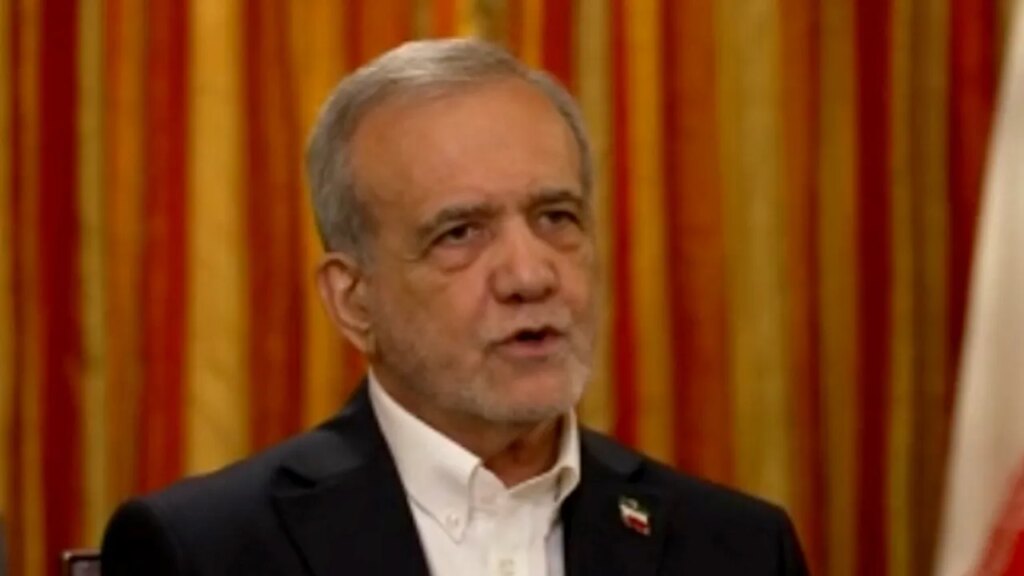
In a recent exclusive interview, Iranian President Masoud Pezeshkian categorically rejected allegations that Iran seeks a nuclear bomb, emphasizing the nation’s willingness to make its nuclear program subject to international scrutiny. He attributed ongoing tensions to U.S. actions and criticized Washington’s approach to diplomacy, particularly amid the backdrop of prolonged conflict in the Middle East. Pezeshkian expressed a desire for dialogue to resolve grievances while maintaining that Iran would resist external pressures.
| Article Subheadings |
|---|
| 1) Iranian Denial of Nuclear Ambition |
| 2) Diplomatic Offers and Accusations |
| 3) Impacts of U.S. Foreign Policy on Iran |
| 4) Iran’s Domestic Conditions and Resilience |
| 5) The Future of U.S.-Iran Relations |
Iranian Denial of Nuclear Ambition
During the interview, President Pezeshkian firmly denied that Iran had any intentions of developing nuclear weapons, stating, “Not at all. Not at all.” He emphasized that religious edicts from Iran’s leadership prohibit the pursuit of weapons of mass destruction, framing their nuclear efforts as focused solely on peaceful purposes. This assertion aligns with Iran’s long-standing stance on its nuclear program, which officials argue is aimed at generating energy rather than developing armaments.
Diplomatic Offers and Accusations
Pezeshkian indicated a potential openness to reducing uranium enrichment levels and allowing international verification of Iran’s nuclear program. Such a move appears aimed at alleviating tensions that have escalated due to ongoing military actions in the region. “So, that weapon’s mass destruction. We said we’re willing to dilute them. It’s not a big deal. We are willing to submit ourselves to verification,” he claimed. He also pointed to a previously signed memorandum of understanding with the U.S. to halt hostilities, indicating that Iran is prepared to honor agreements if the U.S. reciprocates. “We’re ready to move forward,” he stated, despite external pressures establishing barriers to dialogue.
Impacts of U.S. Foreign Policy on Iran
Pezeshkian placed significant blame on the U.S. for the current state of relations, asserting that Washington’s military actions have hindered diplomatic solutions. He criticized American bombings and sanctions as counterproductive to peace efforts in the Middle East. “The problem is that America, instead of conducting dialog, they descend into the arena by bombing us first,” he said. Moreover, he mentioned military strategies employed during tensions, like Operation Epic Fury, which he claims have exacerbated the conflict and led to further hostility.
Iran’s Domestic Conditions and Resilience
While addressing Iran’s various challenges, including economic hardships aggravated by sanctions, Pezeshkian noted that the Iranian populace remains resilient against external pressures. He declared, “Yes, we do have economic issues, certainly. But in order to remain, we will go through any hardship and endure.” This statement suggests a determination to maintain national integrity and sovereignty despite the challenges posed by U.S. policies and the ongoing geopolitical situation, highlighting the complexities of Iran’s domestic landscape amidst international relations.
The Future of U.S.-Iran Relations
Moving forward, Pezeshkian insisted that the future of U.S.-Iran relations hinges on the willingness of both parties to engage constructively. “We will not seek war… It’s America that must choose whether it wants to end this or not,” he stated, reflecting a desire for both stability and diplomacy. His comments underscore the fragility of the current situation and the potential for future negotiations, contingent upon shifts in U.S. policy and approaches to the region.
| No. | Key Points |
|---|---|
| 1 | President Pezeshkian adamantly denies Iran’s intentions to develop nuclear weapons. |
| 2 | Iran expresses willingness to lower uranium enrichment levels and allow international inspections. |
| 3 | Pezeshkian criticizes U.S. military actions and sanctions as detrimental to diplomatic relations. |
| 4 | Iran’s domestic resilience is discussed despite economic hardships from international sanctions. |
| 5 | The future of U.S.-Iran relations remains uncertain, depending on constructive dialogue. |
Summary
The interview with President Masoud Pezeshkian reveals the complexities surrounding Iran’s nuclear program and its diplomatic relations with the U.S. While firmly denying any intent to develop nuclear weapons, he stresses Iran’s readiness to engage in dialogue and potential concessions aimed at easing tensions. The Iranian leader’s criticism of U.S. foreign policy highlights the obstacles facing any meaningful negotiations, with the future of bilateral relations dependent on both nations’ willingness to engage without pretext. This situation continues to unfold against a backdrop of military conflict and economic challenges.
Frequently Asked Questions
Question: What is Iran’s official stance on its nuclear program?
Iran maintains that its nuclear program is intended for peaceful purposes, denying any intentions to develop nuclear weapons.
Question: How does Iran respond to U.S. military actions in the region?
Iran condemns U.S. military actions as provocations that undermine diplomatic efforts and insists on its right to self-defense against such attacks.
Question: What are the implications of U.S. sanctions on Iran?
U.S. sanctions have significantly impacted Iran’s economy, leading to hardships that the government states it will endure in pursuit of national sovereignty.