
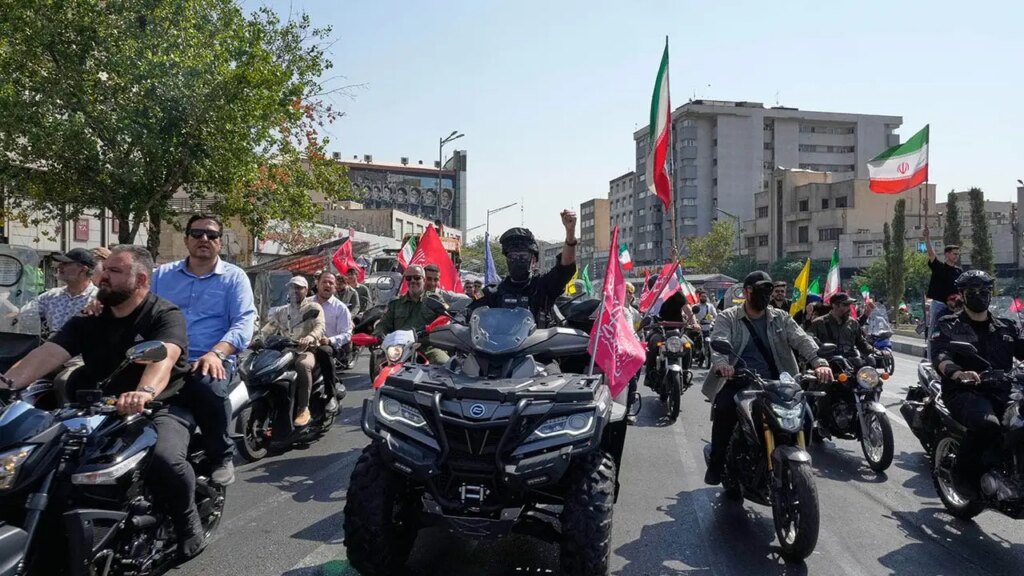
Iran is currently experiencing a significant surge in security measures amid a resurgence of protests, predominantly among university students. The Iranian government is deploying motorcycle patrols and setting up checkpoints in major cities, including Tehran, in anticipation of potential unrest following widespread dissatisfaction over issues such as compulsory hijab laws, rising education costs, and political repression. Local sources indicate that these stepped-up security efforts coincide with the annual “Sacred Defense Week,” during which military readiness is reportedly at its peak.
| Article Subheadings |
|---|
| 1) Increased Security Measures in Urban Centers |
| 2) Reports of Public Unrest and Military Readiness |
| 3) Protests Sparked by Economic and Political Concerns |
| 4) The Role of Law Enforcement and Military Units |
| 5) Future Implications Amidst Rising Tensions |
Increased Security Measures in Urban Centers
In recent days, the Iranian government has ramped up security operations across major cities, with a particular focus on Tehran. This increased presence includes motorcycle patrols and checkpoints established at key locations. The deployment of security personnel is largely aimed at preventing any potential outbreaks of unrest as various protests are gaining momentum. The government has reportedly positioned members of the Islamic Revolutionary Guard Corps (IRGC), Basij forces, and local law enforcement in sensitive areas to maintain order.
The situation has drawn considerable concern among citizens, many of whom feel the tightening grip of governmental authority. Eyewitness accounts indicate that security personnel are actively stopping pedestrians, conducting searches, and scrutinizing mobile phones for content deemed anti-government. This heightened sense of surveillance is perceived as an intimidation tactic, as authorities strive to suppress dissent before it can evolve into widespread unrest.
Reports of Public Unrest and Military Readiness
Sources inside Iran have indicated that the government’s preparations include a complete state of military readiness, particularly for the IRGC and Basij forces. According to reports from the National Council of Resistance of Iran (NCRI), 51,000 personnel have been deployed in Greater Tehran, with about 30,000 belonging to the IRGC and Basij, and 21,000 from law enforcement agencies. The NCRI claims that all leaves for military and law enforcement personnel have been suspended, suggesting that authorities are preparing for the worst amidst rising tensions.
The escalated military presence coincides with newfound public protests on university campuses across the country, leading to speculation regarding the potential for a larger wave of unrest. Local observers note that the government is not only increasing visible presence but is also performing preemptive detentions and investigations into people suspected of organizing or participating in protests.
Protests Sparked by Economic and Political Concerns
Recent protests have erupted primarily among university students, triggered by dissatisfaction with education costs, compulsory hijab regulations, and broader political repression. On various occasions, students have gathered at institutions like Allameh Tabataba’i University to voice their grievances, demanding change regarding what they see as stifling conditions imposed by the government.
According to reports, the protests began over issues related to rising tuition fees, dormitory expenses, and food costs. However, they rapidly grew into a larger critique of government policies, culminating in chants against the morality police and calls for political reforms. Disturbingly, accounts indicate that Basij members attempted to control these gatherings, highlighting the tense interaction between protesters and security forces. This showcases growing frustration among the youth, who are increasingly intolerant of the status quo and repressive governance.
The Role of Law Enforcement and Military Units
The current climate in Iran highlights the contentious relationship between the state and its citizens, particularly in how security forces react to dissent. Reports suggest that alongside regular police forces, members of the Basij have been mobilized and put on alert for possible disturbances. Many of these members were previously trained for civil repression and are now being called back into service to address rising protest activity.
Inside major cities like Tehran, plainclothes officers are increasingly visible, engaging with the public while attempting to maintain a facade of everyday normalcy. In contrast, in smaller towns, the focus of law enforcement appears more clandestine as they deploy agents who operate from the shadows. This dual approach underscores the regime’s concern that unrest could escalate beyond their control and emphasizes the importance of preemptive action against dissent.
Future Implications Amidst Rising Tensions
As the Iranian government ramps up its security and military posture, many observers question what this means for the future of civil unrest in the country. Internally, there is a palpable tension between citizen frustration and governmental repression, which could erupt into violence if left unaddressed. Recent events have shown that dissatisfaction over economic and political issues remains a potent catalyst for protest in a nation whose citizens are increasingly unwilling to accept repressive conditions.
Iranian journalist Mehdi Ghadimi, who has reported extensively on the situation, notes that people are aware that the current measures cannot sustain long-term stability. “The reality is that nobody knows what’s going to happen,” Ghadimi stated. “Everyone I talk to says that this situation cannot continue and that, somehow, it has to come to an end.” His assessment reflects a growing belief that continued suppression could lead to an inevitable eruption of broader unrest.
| No. | Key Points |
|---|---|
| 1 | Increased security measures have been implemented in response to rising public dissent in Iran. |
| 2 | Reports indicate a heightened military readiness among Iranian forces amid fears of unrest. |
| 3 | Student protests are rooted in frustration over economic conditions and political repression. |
| 4 | Basij and IRGC units are actively prepared to quell protests and maintain order. |
| 5 | The current situation could evolve into significant unrest if public grievances continue to be overlooked. |
Summary
The ongoing situation in Iran is indicative of a country grappling with internal pressures and public dissatisfaction. As protests emerge, reflecting deep-rooted grievances regarding political policies and economic hardships, the government’s heavy-handed response raises concerns about escalating violence. Current events suggest that the Iranian populace, particularly the youth, is unwilling to remain silent amid increasing repression, which could lead to heightened unrest if their demands for change are not met.
Frequently Asked Questions
Question: What are the main reasons for the current protests in Iran?
The primary reasons include frustration over compulsory hijab laws, rising education costs, and general political repression affecting citizens, particularly students.
Question: What measures is the Iranian government implementing in response to the protests?
The government is significantly increasing security measures, including deploying motorcycle patrols, establishing checkpoints, and maintaining a high military readiness to quash any potential unrest.
Question: How are citizens responding to the increased security presence in cities?
Many citizens are expressing heightened anxiety and resentment towards the government’s repressive measures. There is also a growing concern among the populace that the government’s crackdown on dissent could lead to more severe unrest.