
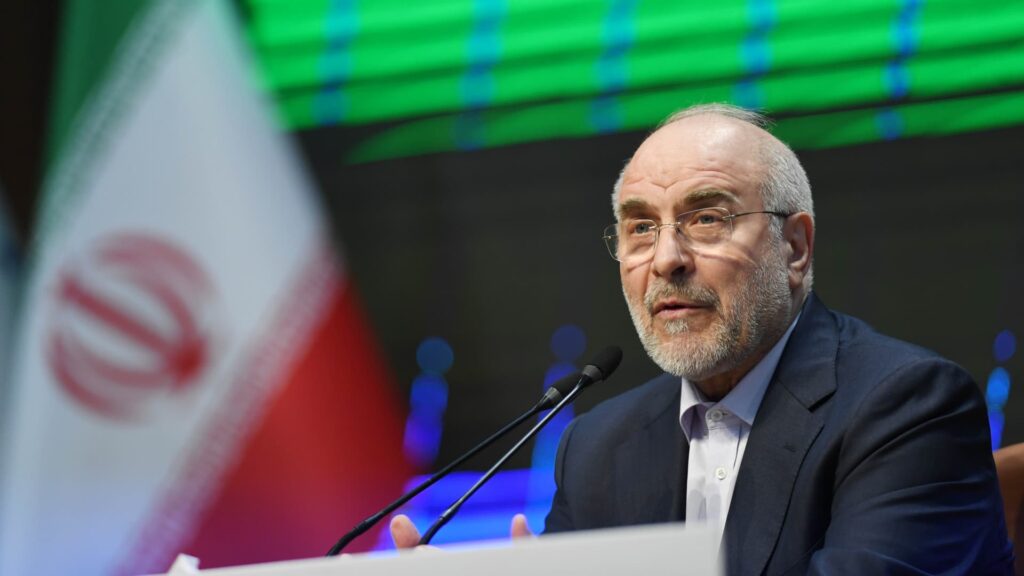
Tensions between the United States and Iran are escalating as conflicting narratives emerge regarding their diplomatic interactions aimed at resolving months of hostilities. Mohammad Bagher Ghalibaf, the Iranian Parliament Speaker, has openly criticized U.S. President Donald Trump’s approach, labeling it “theater diplomacy.” Amid threats to Gulf energy infrastructure and key shipping routes, recent intelligence indicates looming coordinated attacks planned by Iran-backed factions against Saudi Arabia, adding urgency to the situation.
| Article Subheadings |
|---|
| 1) Iranian Accusations Against U.S. Diplomatic Strategies |
| 2) Heightened Threats to Gulf Region |
| 3) Impact on Shipping and Energy Markets |
| 4) The Role of Iran and Oman in Regional Diplomacy |
| 5) U.S. Military Readiness and Public Perceptions |
Iranian Accusations Against U.S. Diplomatic Strategies
In a recent commentary posted on social media, Mohammad Bagher Ghalibaf criticized the strategies employed by U.S. President Donald Trump, suggesting they resemble a contrived performance rather than genuine diplomacy. Ghalibaf’s statements came after Trump called off planned military strikes against Iran, claiming that discussions about a potential deal were already underway. However, Iranian officials dismissed Trump’s assertions, stating emphatically that no negotiations were taking place. Ghalibaf’s commentary reflects a growing skepticism in Tehran about Washington’s intentions, with remarks suggesting that the U.S. is merely cycling through threats and offers in a display of strategic ambiguity.
Heightened Threats to Gulf Region
Tensions have further escalated in the Gulf region, with reports indicating that Saudi Arabia is under significant threat from coordinated attacks. A Saudi official disclosed to reporters that various militia factions from Iraq, which are linked to Iranian interests, are orchestrating plans that could soon target the Kingdom. Intelligence assessments from both Saudi Arabia and neighboring countries suggest that these groups, guided by Iran’s Islamic Revolutionary Guard Corps, are preparing for imminent military actions against key Saudi installations. This development intensifies fears of widespread instability in a region that plays a vital role in global energy supply.
Impact on Shipping and Energy Markets
The escalating hostilities have led to a marked decline in shipping traffic through critical maritime chokepoints in the region. Data from vessel tracking services revealed that traffic through the Strait of Hormuz plummeted significantly, with only two vessels making the crossing on a recent Wednesday, compared to an average of 130 to 140 daily transits pre-conflict. The situation is similarly dire at the Bab el-Mandeb Strait, where the movement of bulk carriers fell dramatically as threats of military action loomed. Moreover, oil prices have been reacting to these developments, with Brent crude futures rising amidst fears of heightened supply disruptions.
The Role of Iran and Oman in Regional Diplomacy
In response to these escalating tensions, discussions between Iran and Oman are gaining momentum, focusing on establishing a framework to manage maritime traffic through Iranian territory. While preliminary agreements suggest a structured approach to inbound and outbound vessel movements, it remains uncertain whether this arrangement will effectively mitigate the risks presented by ongoing hostilities. Reports indicate that terms may include prohibitions against U.S. and Israeli vessels transiting the Strait of Hormuz, reflecting Iran’s tough stance on foreign military presence in the region.
U.S. Military Readiness and Public Perceptions
Amid the complexities of these diplomatic efforts, concerns have emerged regarding the readiness of U.S. military resources. In a post shared on social media, President Trump countered claims that U.S. munitions were running low, insisting that the country has adequate supplies available. Yet, following public scrutiny, he later acknowledged that certain types of munitions are in tighter supply. These statements highlight the delicate balance the U.S. government must maintain in managing public sentiment while preparing for potential military engagements in a volatile geopolitical landscape.
| No. | Key Points |
|---|---|
| 1 | Iranian leaders criticize U.S. diplomatic tactics, labeling them as “theater diplomacy.” |
| 2 | Rising threats from Iranian-backed militias pose risks to Saudi Arabia and Gulf security. |
| 3 | Shipping traffic through vital Gulf transit points has sharply declined amidst fears of conflict. |
| 4 | Iran and Oman are working on a deal to regulate maritime movements in the Strait of Hormuz. |
| 5 | Questions arise regarding the U.S. military’s readiness and its munitions stock amid rising tensions. |
Summary
The ongoing diplomatic standoff between the U.S. and Iran underscores the fragility of regional stability in the Gulf. As accusations fly and military threats escalate, the situation raises serious concerns about the safety of maritime commerce and energy supplies. The developments also highlight the complexity of international relations, revealing the difficulties in navigating a path to peace amidst conflicting narratives and strategic posturing.
Frequently Asked Questions
Question: What is the significance of the Strait of Hormuz in global trade?
The Strait of Hormuz is a critical maritime passage through which a significant portion of the world’s oil supply is transported, making it vital for global energy security.
Question: Why are the Iranian-backed militias threatening Saudi Arabia?
These militias are perceived as acting in support of Iran’s broader strategic goals in the region, seeking to exert pressure on Saudi Arabia and demonstrate resistance to U.S. influence.
Question: How could a potential agreement between Iran and Oman affect shipping traffic?
A framework agreement could establish stricter controls and regulations on shipping movements, potentially improving safety and predictability for vessels navigating through the Strait of Hormuz.