
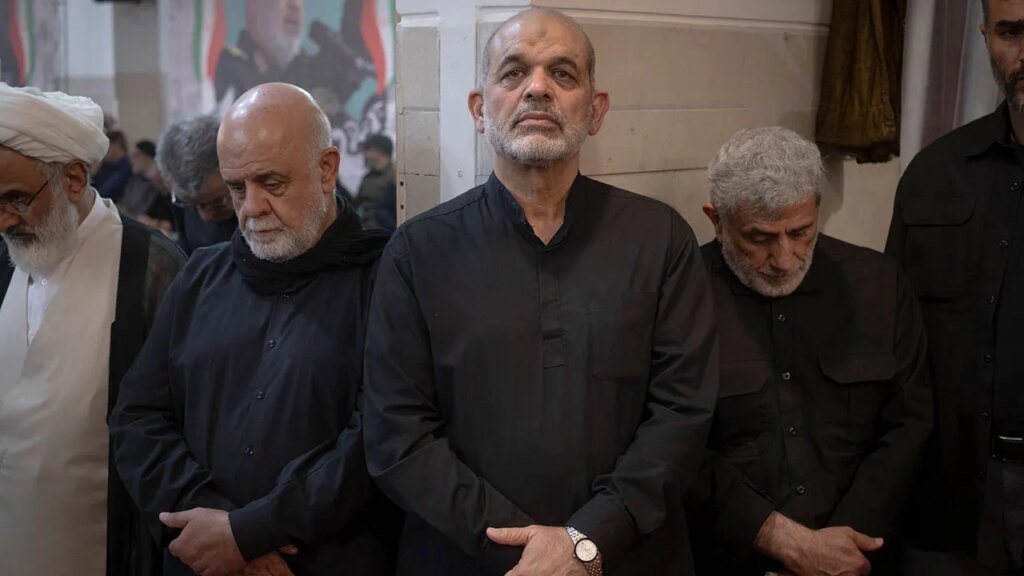
Recent developments in Iran signal a significant reshuffling of military leadership amid ongoing regional tensions. Iranian Supreme Leader Mojtaba Khamenei has appointed six senior military commanders, a move that appears aimed at consolidating power within the Islamic Revolutionary Guard Corps (IRGC) and preparing for prolonged confrontations with adversaries, particularly the United States. Analysts have raised concerns about the implications of this appointment, particularly the role of Ahmad Vahidi, a controversial figure linked to various terror incidents. These strategic decisions coincide with the accidental deaths of prominent military leaders in recent skirmishes.
| Article Subheadings |
|---|
| 1) Overview of the Military Reshuffle in Iran |
| 2) Ahmad Vahidi: A Controversial Figure |
| 3) Iran’s Strategic Military Objectives |
| 4) Responses from International Observers |
| 5) Implications for Regional Stability |
Overview of the Military Reshuffle in Iran
The Iranian government has recently announced the appointment of six senior commanders within its military hierarchy, marking a significant shift in leadership during an ongoing period of tension with the West. This strategic reshuffle, announced by the office of Mojtaba Khamenei, aims to stabilize the Islamic Revolutionary Guard Corps (IRGC) amidst continuous U.S. and Israeli military efforts targeting Iranian interests.
In the statements released, it became clear that this military restructuring is designed not only to reinforce Iran’s military capabilities but also to prepare for what some analysts believe may be an extended conflict. Experts highlight that such appointments were made public strategically in English and disseminated through social media, indicating that the Iranian regime is attempting to project strength and resolve internationally.
The appointments fill critical positions across multiple branches of Iran’s armed forces, indicating a comprehensive approach to national security amidst perceived threats. In particular, the involvement of counterterrorism experts like Ali Abdollahi shows Iran’s intention to bolster its tactical operations while simultaneously signaling to adversaries that it remains militarily agile.
Ahmad Vahidi: A Controversial Figure
Among the newly appointed leaders, Ahmad Vahidi stands out as both a significant and contentious figure. He holds a reputation as a radical hardliner, evidenced by his historic ties to multiple terrorist incidents, including the 1983 Beirut bombing and the 1994 attack in Argentina, which resulted in numerous casualties. His appointment as commander-in-chief of the IRGC further solidifies his influence within the military establishment.
Vahidi’s existing ties to past conflicts raise alarm among international observers, particularly given his alleged connection to violent actions against perceived enemies of the Iranian state. His leadership role now places him in a crucial position to shape Iran’s military strategies, particularly regarding foreign encounters that may escalate into armed confrontations.
Furthermore, the presence of Vahidi in military leadership encapsulates the complexities surrounding Iran’s security operations. As a person under an Interpol Red Notice for his alleged role in terrorist activities, his leadership role raises questions about Iran’s commitment to combating terrorism while simultaneously being accused of perpetrating acts of violence globally.
Iran’s Strategic Military Objectives
The reshuffle also appears to align with specific strategic military objectives as articulated by the Supreme Leader. In his new role, Vahidi has been instructed to maintain readiness for powerful offensive operations against perceived enemies. This explicitly signals a doctrine of aggression rather than diplomacy, further intensifying international concerns regarding Iran’s military intentions.
Analysts suggest that the timing of these appointments correlates with ongoing geopolitical dynamics, particularly the nearing completion of negotiations involving shipping routes through the critical Strait of Hormuz. As said by Dr. Omar Mohammed, an expert in extremism studies, the announcements were sequenced to affirm military readiness at a time when diplomatic discussions between Iran and negotiating parties are ongoing.
Tehran’s objectives are multifaceted. Aside from reinforcing internal power structures, it aims to bolster Iran’s position in regional conflicts and a potential re-targeting of its military assets toward any future adversaries, especially after significant losses earlier in the year.
Responses from International Observers
The recent military appointments sparked immediate concern among international observers and foreign governments. Experts stress that these shifts represent a clear indication that Iran is prepared for a “prolonged confrontation” as opposed to seeking any form of diplomatic resolution with the U.S. Ongoing sanctions and military strategies continue to shape how Iran interacts with the broader international community.
Official statements from Washington express grave concern over the appointments, particularly in relation to individuals with documented records of human rights abuses and terrorism. The inclusion of commanders who have faced sanctions in the past has raised alarm bells, signaling that military reinforcements may not only impact regional stability but could also incite further aggressive behaviors by the Iranian state.
The language used in formal appointment communications, particularly an emphasis on opposition to the “Zionist-American enemy,” suggests an entrenchment of hostile rhetoric, reinforcing fears of impending escalations in military confrontations around the region. The international community must closely monitor this evolving situation to assess its broader implications.
Implications for Regional Stability
The implications of Iran’s military reshuffle cannot be understated; they portend potentially destabilizing effects across the Middle East. With commanders like Mostafa Izadi and Kioumars Heydari at the helm, both of whom have been sanctioned by the U.S. for their involvement in lethal crackdowns, the international security landscape may rapidly shift.
The comprehensive rebuilding of Iran’s military command structure could signal a move away from reconciliation efforts in favor of escalating tensions with adversarial states. The actions could also potentially provoke military responses from neighboring countries wary of Iran’s growing military potency, further complicating already fraught bilateral relationships.
As this dynamic unfolds, local populations and refugees suffering from prior conflicts may face fresh calamities. The iron grip of the state’s military infrastructure may tighten, emboldening hardliners while simultaneously stifling moderate political voices quieter than ever amid a systemic crackdown.
| No. | Key Points |
|---|---|
| 1 | Mojtaba Khamenei’s recent military appointments signal a strategy focused on prolonged conflict. |
| 2 | Ahmad Vahidi’s controversial history raises concerns over Iran’s commitment to counterterrorism. |
| 3 | Iran’s military objectives appear to favor aggression over diplomacy. |
| 4 | International observers view the military reshuffle with alarm, highlighting potential escalations. |
| 5 | The implications of these appointments could destabilize the region further and provoke military responses. |
Summary
The recent military restructuring in Iran underlines a critical shift toward assertive military posturing led by figures like Ahmad Vahidi, a leader with a controversial history. As Tehran prepares for escalating conflicts, the implications of these leadership changes are far-reaching, potentially destabilizing the region and bringing Iran into more direct confrontation with its adversaries. Awareness and active monitoring by the international community are essential to understand the ramifications of these internal developments in Iran’s political and military landscape.
Frequently Asked Questions
Question: Who is Ahmad Vahidi?
Ahmad Vahidi is the newly appointed commander-in-chief of the Islamic Revolutionary Guard Corps (IRGC) in Iran. He is a controversial figure linked to previous terror attacks, including the 1994 bombing in Argentina.
Question: What does the military reshuffle indicate about Iran’s intentions?
The military reshuffle indicates that Iran is preparing for a prolonged confrontation with adversaries, particularly the United States, as indicated by the leadership appointments aimed at strengthening military capabilities.
Question: How do international observers view Iran’s new military appointments?
International observers express concern over Iran’s new military appointments, particularly regarding commanders with histories of human rights abuses and terrorism, suggesting these changes could provoke further regional instability.