
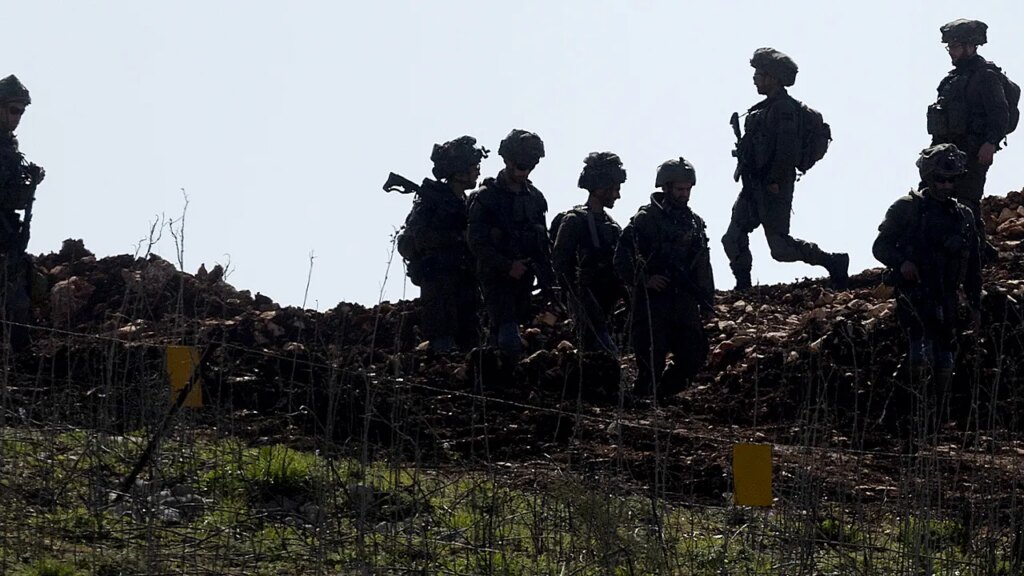
In response to heightened regional tensions, the Israeli military has initiated extensive domestic military exercises aimed at countering potential surprise attacks and border infiltrations. This operation, which is set to last for 48 hours, mobilizes multiple divisions and air assets, aligning closely with lessons learned from recent conflicts, particularly the October 7, 2023 assaults by Hamas. With upcoming elections on October 27, the Israeli Defense Forces (IDF) emphasize the critical nature of these exercises to bolster security and readiness in the face of evolving threats.
| Article Subheadings |
|---|
| 1) Overview of Military Exercises and Objectives |
| 2) Historical Context and Security Expert Insights |
| 3) Implications for Regional Stability and Election Day |
| 4) Iranian Activity and Broader Military Context |
| 5) The Risks of Military Drills and Potential Miscalculations |
Overview of Military Exercises and Objectives
The IDF has initiated one of its most significant military exercises in recent years, focusing on defensive capabilities against ground and aerial attacks. These exercises specifically involve the Northern Command’s 210th Division, the Central Command’s 98th and 96th Divisions, alongside air assets from the Israeli Air Force. The IDF stated that the principal aim is to ensure that forces remain alert and fully prepared to defend communities against potential threats originating from adjacent regions. Such preparations are deemed essential not only for internal security but also for sustaining national morale and confidence in the military’s ability to respond swiftly to emerging crises.
Historical Context and Security Expert Insights
The recent maneuvers by Israeli forces are reminiscent of historical military drills, particularly reflecting on the 1973 Yom Kippur War when Egypt and Syria staged exercises that disguised preparations for an actual attack. Israeli security analysts, including experts such as Dr. Ehud Eilam, caution that the ongoing military actions might be misconstrued as provocations, potentially leading to miscalculations by adversarial forces. According to Dr. Eilam, these exercises signal to neighboring adversaries that heightened military readiness is not merely a deterrent but a preemptive measure against possible incursions supported by Iran or its proxies.
Implications for Regional Stability and Election Day
As Israel approaches its electoral date of October 27, the military exercises carry significant implications for both domestic and international players. Analysts suggest the timing is strategic; the military’s increased operational tempo serves to demonstrate Israel’s defensive measures while simultaneously sending a clear message to Iran and its allies. The IDF asserts that these drills ensure community safety and deterrence against any untoward actions during the election period. The potential for escalation is real, and the military is committed to ensuring that any foreign intervention during this politically sensitive time is met with robust resilience.
Iranian Activity and Broader Military Context
In the context of these military exercises, Iranian provocations, particularly during recent displays of missile capabilities by the Islamic Revolutionary Guard Corps (IRGC), have escalated tensions. Observers note that Iran’s ballistic missile tests and military parades aim to showcase its readiness and deterrent capabilities against Israel. This complex calculus underscores ongoing rivalries in the region; the IDF’s measures aim not solely at traditional state actors but also address threats posed by non-state actors throughout Syria, Lebanon, and Jordan. These dynamics necessitate a continual reassessment of military readiness and international coordination to counter potential aggressions.
The Risks of Military Drills and Potential Miscalculations
While showcasing military readiness, the IDF’s large-scale exercises also come with inherent risks. Military analysts warn that such high-visibility drills can lead to misinterpretations by rival states, potentially prompting preemptive strikes based on perceived threats. Historical instances where military exercises were used to cloak actual troop movements contribute to this fear of miscalculation. The critical lesson drawn from past conflicts emphasizes the need for clear communications and intelligence-sharing among military commanders to mitigate the possibility of escalatory spirals driven by misunderstandings.
| No. | Key Points |
|---|---|
| 1 | The Israeli military is conducting extensive exercises focusing on defense against infiltration and surprise attacks. |
| 2 | Security experts draw parallels with the Yom Kippur War, warning of the potential for miscalculations by adversaries. |
| 3 | These drills are seen as crucial for maintaining public confidence and security during Israel’s upcoming elections. |
| 4 | Iran’s recent military demonstrations contribute to heightened regional tensions and may provoke defensive reactions from Israel. |
| 5 | The risk of misinterpretation of military exercises could lead to unintended escalation between Israel and its adversaries. |
Summary
The large-scale military exercises conducted by the IDF serve as a vital demonstration of Israel’s readiness to respond to evolving threats amid a backdrop of regional tensions. With significant historical context influencing current security dynamics, these maneuvers emphasize the critical balance between deterrence and the risk of miscast intentions. As Israel prepares for upcoming elections, military robustness appears not only essential for national defense but as a means to assure both the public and international observers of Israel’s commitment to maintaining stability within its borders and deterring external aggression.
Frequently Asked Questions
Question: What are the main objectives of the IDF’s recent military exercises?
The main objectives are to enhance the IDF’s readiness against potential surprise attacks and border infiltrations while ensuring community safety and demonstrating military capabilities to deter adversaries.
Question: How do historical events influence current military strategies?
Historical events, like the 1973 Yom Kippur War, remind military analysts that exercises can sometimes mask genuine preparations for offensive operations, making awareness and clear communication crucial to prevent misunderstandings.
Question: What role does Iranian activity play in Israel’s military planning?
Iranian military maneuvers and demonstrations of missile capabilities significantly influence Israeli military planning, necessitating continuous operational readiness against both state and non-state threats in the region.