
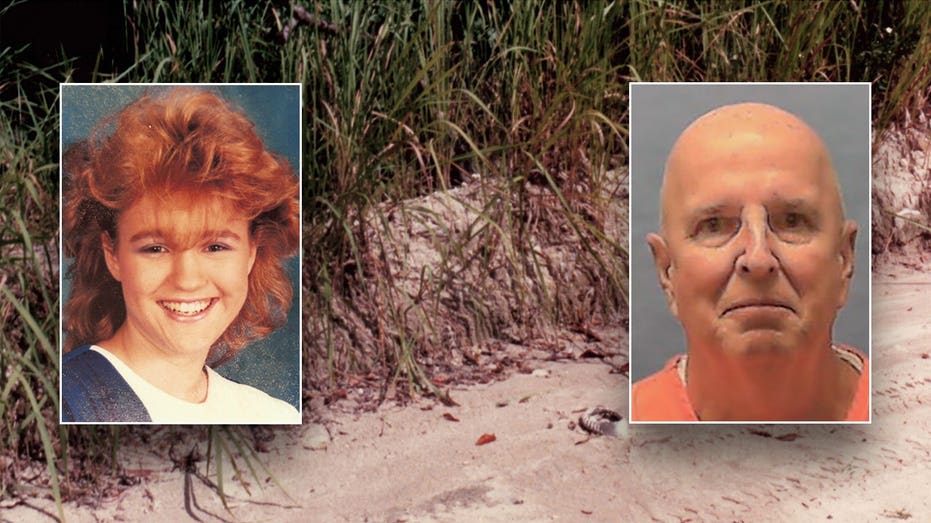
James Duckett, a former Florida police officer, was executed by lethal injection on July 28, 2026, for the 1987 rape and murder of 11-year-old Teresa McAbee. Investigators also believed he killed 14-year-old Jeanifer Weldon four months later, although he was never convicted in that case. DNA and fingerprint evidence supported the McAbee conviction, while the Weldon investigation relied largely on circumstantial clues. Families from both cases attended the execution at Florida State Prison in Raiford.
| 1) | Execution follows conviction |
| 2) | McAbee case and DNA evidence |
| 3) | Weldon disappearance and discovery |
| 4) | Circumstantial clues and investigative decision |
| 5) | Closure and surveillance debate |
Execution follows conviction
James Duckett, 68, was executed at Florida State Prison in Raiford on July 28 after spending 38 years subject to multiple appeals. He was sentenced to death for the rape and murder of Teresa McAbee, who disappeared in May 1987. Her family attended the execution, along with relatives and friends of Jeanifer Weldon, whose family believed Duckett was responsible for her death.
Duckett was the only officer on patrol for the Mascotte Police Department when McAbee was last seen with him in his police car. He was fired about a month later after becoming a suspect. Polk County Sheriff Grady Judd said the execution brought accountability for McAbee’s killing, although it did not produce a separate conviction in the Weldon case.
McAbee case and DNA evidence
McAbee was 11 when she vanished from Central Florida. When her body was recovered, court records indicated that she had been sexually assaulted, strangled and drowned. Investigators developed a case against Duckett using what Sheriff Judd described as very strong fingerprint and DNA evidence, linking the former officer to the crime scene and supporting his conviction.
His position gave him access to a patrol vehicle and the appearance of official authority. After his arrest for McAbee’s killing and sexual battery, investigators examined whether he had committed another child murder in the same region later that year.
Weldon disappearance and discovery
Jeanifer Weldon disappeared in Polk County on September 19, 1987, three days before her 15th birthday. She had spent the day with friends in Tampa, where she bought a stuffed kitten. At about 9 p.m., she began walking roughly two miles home while carrying the kitten in a green plastic bag. She never arrived.
Authorities searched for 13 days before a phosphate miner noticed shoes beside a road in Fort Meade, about an hour south of the town where Duckett had worked. Weldon’s skeletonized remains were found behind tall grass and a berm in a wooded area away from the road. Sheriff Judd said she died by strangulation and that investigators suspected she had been raped.
Circumstantial clues and investigative decision
Investigators believed Duckett may have used his former police uniform to persuade Weldon that he could safely drive her home. On the night she disappeared, Duckett left for a new mining job five hours early and traveled along the highway where she would have been walking. He arrived sweaty and two hours late, saying his car had broken down, but investigators said his hands were not greasy or dirty.
The next day, he brought his children a stuffed kitten in a green plastic bag matching the one Weldon had purchased. Investigators also noted scratches on his back, which he attributed to climbing under a barbed-wire fence at work. Authorities spent tens of thousands of hours pursuing the case and continued searching for DNA evidence, but the evidence remained primarily circumstantial.
Sheriff Judd said officials eventually stopped trying to secure a conviction because a new prosecution could have delayed Duckett’s execution or created additional legal arguments. Duckett declined to confess during interviews before his death.
Closure and surveillance debate
Although Duckett was never convicted of killing Weldon, her family said the execution provided some measure of closure. Her younger sister, Amy Weldon, said she was certain the correct person had been executed, while expressing frustration over the time it took to reach that point.
“I’m confident the right person was executed. I don’t like how long it took, but I am confident 100% that the right person died.”
Sheriff Judd also argued that modern roadway surveillance cameras might have helped investigators locate Weldon within hours and potentially prevented the killing. His comments came amid debate over cameras that record license plates and vehicle colors on public rights of way.
| Number | Key Point |
|---|---|
| 1 | Duckett was executed on July 28, 2026, for McAbee’s rape and murder. |
| 2 | DNA and fingerprint evidence supported the McAbee conviction. |
| 3 | Investigators linked Duckett to Weldon’s disappearance through circumstantial evidence. |
| 4 | Weldon’s remains were found near Fort Meade after a 13-day search. |
| 5 | Her family received a degree of closure despite the lack of a second conviction. |
Summary
The execution of James Duckett concluded the legal case surrounding Teresa McAbee‘s 1987 murder. Investigators and Weldon’s relatives also regard him as responsible for Jeanifer Weldon‘s death, based on circumstantial clues and the broader pattern of the two cases. Because Duckett was not prosecuted for Weldon’s killing, important legal questions remain unresolved, but the execution ended decades of appeals and gave her family a measure of closure.
Frequently Asked Questions
Why was James Duckett executed?
Duckett was executed for the 1987 rape and murder of 11-year-old Teresa McAbee in Florida.
Why did investigators connect Duckett to Jeanifer Weldon’s death?
Investigators cited his route and unexplained delay, a matching stuffed kitten, scratches on his back and the belief that he used his former police status to gain her trust.
Was Duckett convicted of killing Weldon?
No. Authorities believed he was responsible, but they did not pursue a conviction because the evidence was largely circumstantial and a prosecution could delay his execution.