
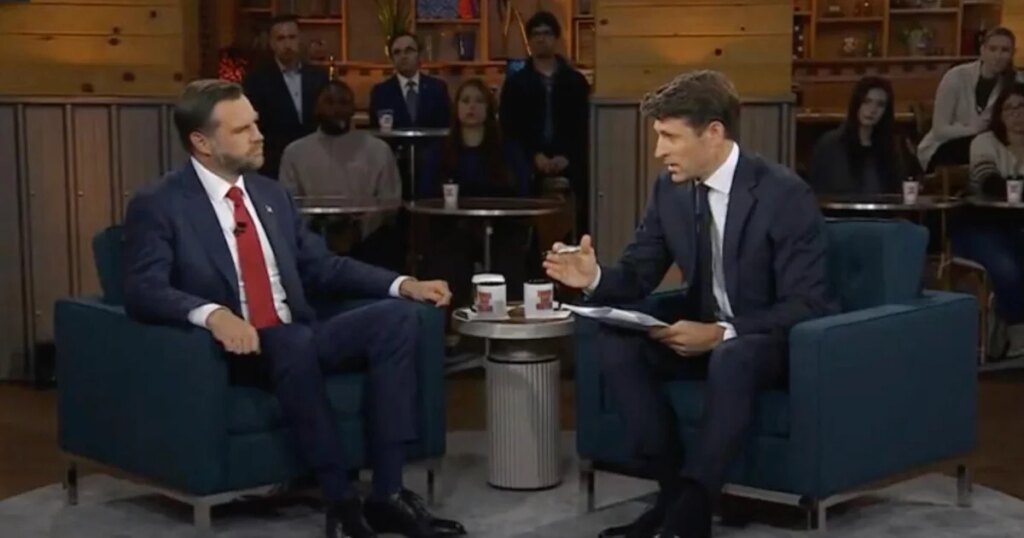
In a recent town hall event, Vice President JD Vance addressed various pressing issues, including the economy, immigration, and the ongoing conflict in Iran. Hosted by CBS News anchor Tony Dokoupil, the event focused on voter concerns in Michigan, a crucial swing state ahead of the midterm elections. Vance defended the Trump administration’s policies while engaging with constituents about current economic challenges and his potential future in politics.
| Article Subheadings |
|---|
| 1) Vance’s Future in Politics |
| 2) Economic Challenges and Solutions |
| 3) The Ongoing Situation with Iran |
| 4) Immigration Policies Under Scrutiny |
| 5) Community Concerns Regarding Data Centers |
Vance’s Future in Politics
During the town hall, Vice President JD Vance was asked about his intentions regarding a presidential run in 2028. Positioned as a potential frontrunner for the Republican primary, Vance acknowledged he had not yet made a definitive decision. “Of course, there’s a chance,” he replied when questioned if he might abstain from entering the race. He shared his personality traits, describing himself as a procrastinator when faced with significant life choices, reflecting on the complexities that come with a potential campaign.
Vance highlighted the impact of his family, particularly his wife, Usha Vance, stressing her mixed feelings about the political arena despite their shared commitment to public service. With four young children, the prospect of a presidential campaign weighs heavily on both him and his wife. This assessment adds an intriguing layer to Vance’s position in the Republican Party, where he is viewed as a significant ally of former President Donald Trump.
Economic Challenges and Solutions
A primary focus during the town hall was the current economic landscape, particularly the rising cost of living. Several attendees voiced their frustrations regarding financial hardships, directly linking these issues to the policies of the Trump administration. A specific concern raised by a local business owner, Sandy Johnson, regarding her family entertainment center barely breaking even highlighted the ongoing struggles faced by small businesses in Michigan.
In response, Vice President Vance attributed the economic downturn to a long-term systemic failure rather than the actions of a single administration. “What broke the United States,” he stated, “was a bipartisan failure to invest adequately in American labor and manufacturing.” He asserted that the consequences of offshoring American jobs have led to diminished consumer purchasing power, directly impacting local businesses like Johnson’s.
Vance expressed optimism about the future, citing new foreign investments and growth plans from Detroit automakers like General Motors and Ford. He noted, “We are turning the tide on this,” but conceded that the transformation of the economy would not happen overnight. “Just as this country wasn’t broken in one presidential term, it’s gonna take more than 18 months to fix things and turn them around,” he emphasized.
The Ongoing Situation with Iran
The Iran conflict, identified as a critical tension point, was also a significant topic during the town hall. Vance acknowledged the importance of addressing high gas prices, which he attributes to the ongoing strife. Questioned by a local barber, Keshon Wheatley, who expressed dissatisfaction with current prices and indicated his intention to vote for a Democratic candidate, Vance defended the administration’s approach towards Iran.
“If we just allowed the Iranians to control shipping out of the Strait of Hormuz,” he warned, “we would see gas prices escalate dramatically.” He explained that U.S. military efforts are crucial in maintaining a free flow of oil from the Middle East, and that any resolution in the conflict would likely lead to reduced prices for consumers. Although Vance acknowledged the ire regarding the Iran situation, he emphasized an ongoing strategy for securing U.S. interests without further escalating military involvement.
Immigration Policies Under Scrutiny
Another challenging aspect discussed was the Trump administration’s immigration enforcement tactics. A question posed by Sister Nancy Sylvester challenged Vance to justify these practices from a faith-based perspective, prompting him to outline a stringent yet humane approach to immigration enforcement. He expressed the need for balance, stating, “We’re trying to strike a balance between law enforcement and humane treatment.” Vance recognized the difficulties faced by U.S. Immigration and Customs Enforcement (ICE) agents, acknowledging that some have committed mistakes that hinder their mission.
Vance addressed his own rhetoric regarding immigration, particularly concerning holders of H-1B visas, admitting that he has at times misspoken. His aim, he explained, is not to dehumanize any immigrants but rather to ensure that policies are structured to enhance community cohesion. He warned of the potential societal changes resulting from large influxes of immigrants, advocating for a balanced approach that acknowledges both the contributions of immigrants and the concerns of everyday Americans.
Community Concerns Regarding Data Centers
Lastly, the rapid development of data centers in communities across the U.S. has raised tensions as they capitalize on the booming demand for computing power due to advancements in artificial intelligence. During the discussion, a concerned resident expressed frustrations about the nuisances these facilities impose on their neighborhood, specifically citing noise disruptions. Vance sympathized with these concerns, stating that while data centers can bring economic benefits, they must also be responsible neighbors that contribute meaningfully to the communities they inhabit.
He stressed the need for data center operations to align with local interests, suggesting they should “provide more tax revenue to local governments.” Vance noted that the economic proceeds must not simply enrich a few tech executives but also positively impact the local communities affected by their presence. “Economic benefits have to spread widely,” he declared, urging a collaborative approach between tech companies and local populations.
| No. | Key Points |
|---|---|
| 1 | Vice President JD Vance is considering a presidential run in 2028 but has not made a final decision. |
| 2 | Vance attributes the current economic challenges to a historical under-investment in American manufacturing and labor. |
| 3 | The Iran conflict is impacting gas prices significantly, with Vance asserting that U.S. military presence is crucial for stabilizing oil supply. |
| 4 | Vance acknowledges the controversial nature of the Trump administration’s immigration tactics and calls for a balanced approach. |
| 5 | Concerns about data centers emphasize the need for them to be “good community citizens” by ensuring local economic benefits. |
Summary
The town hall hosted by Vice President JD Vance illuminated various critical issues ahead of the midterm elections. From economic strategies to immigration policies, Vance’s comments reflect the administration’s priorities while engaging directly with voter concerns. By balancing a defense of past policies with a consideration of their impacts on local communities and the economy, Vance positions himself as a central figure in the evolving Republican narrative.
Frequently Asked Questions
Question: What key issues were discussed during Vance’s town hall?
Vice President JD Vance addressed topics such as economic challenges, immigration enforcement, the Iran conflict, and community impacts of data center developments.
Question: How does Vance respond to criticisms about the Trump administration’s economic policies?
Vance suggests that current economic difficulties stem from historical failures to invest adequately in American labor and manufacturing, rather than solely from recent policies.
Question: What stance does Vance take on immigration policies?
Vance emphasizes the need for a balanced approach that enforces immigration laws humanely while recognizing the contributions and challenges faced by immigrants.