
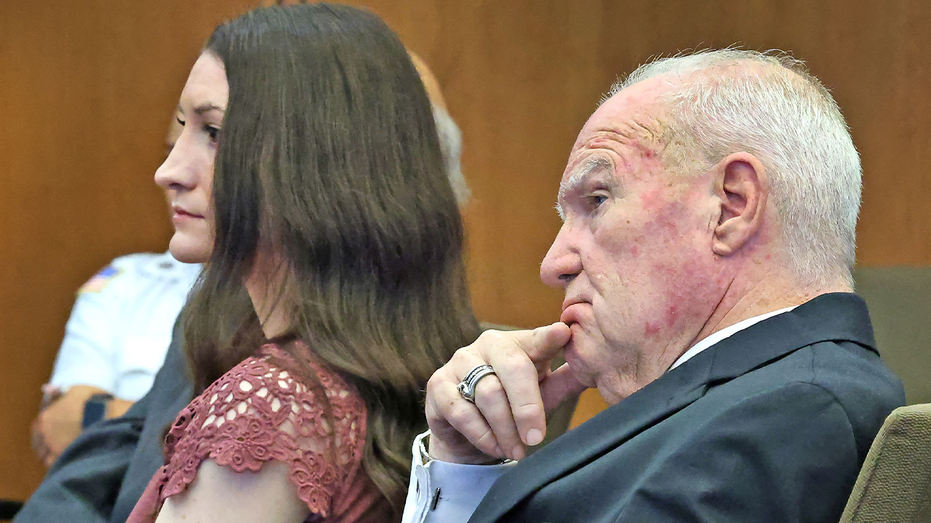
A Massachusetts judge has denied Lindsay Clancy’s renewed motion for a required finding of not guilty in the case involving the deaths of her three children. Judge William Sullivan ruled that prosecutors presented evidence that could allow a rational jury to find the elements of murder beyond a reasonable doubt. The decision follows a mistrial declared on Sept. 4 after jurors were unable to reach a unanimous verdict. Clancy is scheduled to return to court on Nov. 2 for arguments involving double jeopardy and a request concerning a juror who reportedly favored a guilty verdict.
The case concerns the deaths of Cora, Dawson and Callan Clancy at the family’s home in Duxbury, Massachusetts, in January 2023. Defense attorney Kevin Reddington argued that Plymouth County prosecutors had not introduced sufficient evidence to establish guilt or criminal responsibility. Prosecutors maintained that the trial evidence, including physical and circumstantial evidence, supported the charges.
| 1) | Judge rejects renewed acquittal request |
| 2) | Ruling addresses evidence and mental illness |
| 3) | Mistrial leaves case unresolved |
| 4) | Next hearing will consider double jeopardy |
| 5) | Defense and prosecution present competing theories |
Judge rejects renewed acquittal request
William Sullivan denied the motion after Kevin Reddington argued earlier in the week that the Commonwealth had failed to prove the murder charges beyond a reasonable doubt. The judge had rejected a similar request when the mistrial was declared on Sept. 4. In his renewed order, Sullivan found that the evidence introduced at trial was legally sufficient for a rational fact finder to reach a guilty verdict.
“There was evidence introduced, both physical and circumstantial, that would permit a rational trier of fact to find beyond a reasonable doubt the elements of the charge of murder.”
The ruling does not resolve the case or establish a final verdict. It addresses whether the evidence presented during the trial could support a conviction under the applicable legal standard.
Ruling addresses evidence and mental illness
The defense also argued that prosecutors had not shown Clancy was criminally responsible at the time of the alleged killings. The prosecution’s position was that, despite evidence concerning mental illness, Clancy retained substantial capacity to understand the criminality or wrongfulness of her conduct and to follow the law.
Sullivan rejected the argument that mental illness by itself prevents a finding of criminal responsibility. He pointed to the nature and methods of the killings, along with Clancy’s actions and demeanor around the time of the deaths, as evidence the Commonwealth used to support its theory.
“Mental illness alone does not preclude a finding of criminal responsibility beyond a reasonable doubt.”
Mistrial leaves case unresolved
The first trial ended in a mistrial on Sept. 4 because the jury could not reach a unanimous decision. Clancy appeared in Plymouth County Superior Court on Sept. 29 for the first time since that development. The proceedings followed the deaths of her three children, Cora, Dawson and Callan, at the family’s Duxbury home in January 2023.
Because the jury did not return a unanimous verdict, the legal issues surrounding the charges remain active. The judge’s latest order means the defense’s request to end the case through an outright finding of not guilty has been denied at this stage.
Next hearing will consider double jeopardy
Clancy is scheduled to return to court on Nov. 2. The hearing is expected to address her pending motion under the constitutional protection against double jeopardy, which generally limits repeated prosecution after certain case outcomes. The court will determine how that argument applies to the mistrial and the circumstances surrounding the unresolved jury deliberations.
The Nov. 2 proceeding is separate from the judge’s decision on the required-finding motion. Its outcome could affect whether prosecutors may pursue another trial, although the supplied court developments do not establish a final decision on that question.
Defense and prosecution present competing theories
The defense has maintained that there was no evidence proving Clancy killed her children or establishing the required level of criminal responsibility. Prosecutors, including Assistant District Attorney Shanan Buckingham, have argued that the evidence was extensive and included both physical and circumstantial material.
Attorney Edward Paltzik also criticized the defense’s actions following the mistrial. In addition, Reddington has requested an inquiry into the lone holdout juror who reportedly wanted to find Clancy guilty. The court’s handling of that request, along with the double jeopardy motion, will be part of the next phase of the case.
| 1 | Judge William Sullivan denied Lindsay Clancy’s renewed motion for a required finding of not guilty. |
|---|---|
| 2 | The judge said physical and circumstantial evidence could support a murder conviction. |
| 3 | A mistrial was declared Sept. 4 after jurors failed to reach a unanimous verdict. |
| 4 | A Nov. 2 hearing will address double jeopardy and a request concerning a juror. |
Summary
The denial of Clancy’s motion keeps the case active after the September mistrial. The ruling confirms only that the trial evidence was legally sufficient for a jury to consider the charges, not that Clancy has been convicted. Further proceedings on double jeopardy and the juror inquiry are scheduled for Nov. 2.
Frequently Asked Questions
What did the judge deny?
Judge William Sullivan denied Lindsay Clancy’s renewed motion for a required finding of not guilty.
Why was there a mistrial?
The jury was unable to reach a unanimous verdict, leading the judge to declare a mistrial on Sept. 4.
What happens next?
Clancy is scheduled for a Nov. 2 hearing on her double jeopardy motion and the defense request for an inquiry into a holdout juror.