
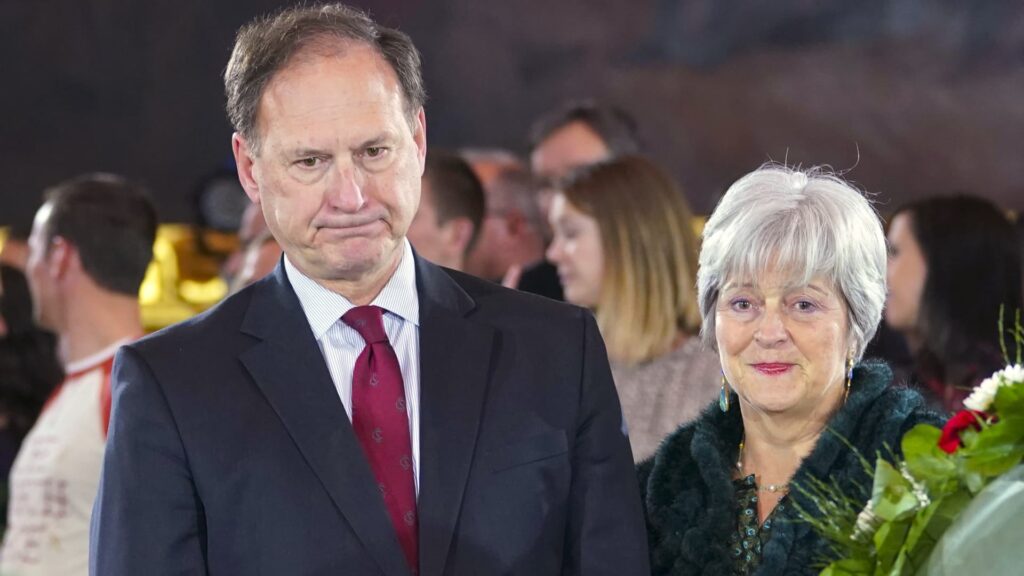
Supreme Court Justice Samuel Alito recently acknowledged he contemplated retirement but ultimately decided against it, feeling his presence on the bench is still valuable. At 76, Alito is the second-oldest member of the Supreme Court, and his decision comes amid speculation regarding potential changes in the Court’s composition, especially with upcoming midterm elections. The political landscape is shifting, particularly with the Senate races, which may impact future Supreme Court nominations if control changes parties, further adding tension to his decision-making process.
| Article Subheadings |
|---|
| 1) Alito’s Reflection on Retirement |
| 2) Implications of Midterm Elections on Court Appointments |
| 3) The Historical Context of Supreme Court Vacancies |
| 4) Current Political Climate and Its Impact on Justice Alito |
| 5) Future of the Supreme Court and Potential Nominations |
Alito’s Reflection on Retirement
Justice Samuel Alito has openly discussed his retirement thoughts in recent interviews, underscoring a blend of personal consideration and professional obligation. Alito, who has served on the Supreme Court since 2006, indicated that while he has thought about stepping down, he remains committed to contributing to the judiciary. In an interview with CBS News, he expressed a firm belief in his ongoing value as a justice, stating that he does not feel the time is right to retire just yet.
Alito’s contemplation is not just personal; it reflects the broader pressures and expectations placed on justices as they age. The speculation surrounding his potential departure from the bench has garnered attention as he stands as a prominent figure within the conservative majority of the Court. In a separate discussion with Fox News Sunday, he remarked on his bemusement at ongoing retirement speculation, likening it to “vultures circling” as commentators analyze his every move.
Implications of Midterm Elections on Court Appointments
As the next midterm elections approach, the political dynamics surrounding Supreme Court appointments have taken on heightened significance. There is a real possibility that the Senate could experience a shift towards the Democratic Party, which would complicate any Supreme Court nominations put forth by the Republican President Donald Trump. Alito recognized that the timing of his potential retirement could directly influence the political landscape within the judiciary, particularly if control of the Senate flips.
The stakes are high — if Democratic leaders gain a majority, they would essentially hold veto power over any nominee presented by the President. This reality weighed heavily on Alito’s decision-making matrix as he considers whether to remain on the bench or step aside. Furthermore, Democrats are keenly aware that they need to secure a net gain of at least four seats in the Senate to flip control while defending their own incumbencies, adding to the urgency and uncertainty surrounding the upcoming elections.
The Historical Context of Supreme Court Vacancies
The political ramifications of Supreme Court vacancies have been a focal point of American governance since the unexpected death of Justice Antonin Scalia in 2016. The subsequent maneuvering by then-Senate Majority Leader Mitch McConnell to block President Barack Obama‘s nomination of Merrick Garland highlights the strategic interplay between judicial appointments and political power plays. McConnell’s refusal to consider Garland until after the 2016 elections allowed President Trump to nominate Neil Gorsuch, solidifying a conservative majority that shapes today’s judicial landscape.
Similarly, following the death of Justice Ruth Bader Ginsburg in 2020, McConnell’s swift confirmation of Amy Coney Barrett just days before the presidential election further illustrates the tactical importance of timing in judicial appointments. These events sparked a new era of heightened partisanship regarding the Supreme Court, redefining not only the Court’s majority but also the implications for upcoming presidents and their judicial nominations.
Current Political Climate and Its Impact on Justice Alito
Justice Alito’s contemplation about retirement is intensified by the current political climate, characterized by an unpredictable public sentiment and fluctuating voter priorities. Recent polls indicate that the Democrats may hold a slight advantage in national House polling, with predictions suggesting that they could potentially regain control in the Senate as well. This shifting landscape introduces a layer of complexity for Alito as he deliberates his future role within the Court.
Local races across the country have revealed an unexpected tightness among Republican candidates amid growing public dissatisfaction regarding economic issues, such as inflation and employment. Such a backdrop complicates the prospects for Republican-backed nominees post-retirement, should Alito choose that path. The outcomes of these midterm elections may profoundly affect not only Alito’s career trajectory but also the Supreme Court’s ideological balance in the ensuing years.
Future of the Supreme Court and Potential Nominations
Looking ahead, the future of the Supreme Court rests on both the current composition and potential upcoming vacancies. Should Justices like Alito or Clarence Thomas, the Court’s oldest member, opt for retirement within the next few years, the subsequent nominations could significantly reshape the Court’s ideological leanings. Alito’s commitment to remaining on the Court for the time being illustrates the protective instinct many justices feel towards their legacies and the broader conservative agenda they represent.
Any eventual nomination from a Democratic-controlled Senate would inevitably face rigorous scrutiny and would be a reflection of a broader ideological strategy to counterbalance the current conservative dominance on the bench. The ongoing political campaigns will undoubtedly influence public engagement and interest in who fills these pivotal roles, thereby framing the political discussions heading into future election cycles.
| No. | Key Points |
|---|---|
| 1 | Justice Samuel Alito considered retirement but opted to stay on the Supreme Court. |
| 2 | Upcoming midterm elections could change the Senate’s political makeup, affecting future nominations. |
| 3 | Recent history reveals strategic blocking and confirmation of Supreme Court nominees based on political control. |
| 4 | The current political climate sees a tightening race, with Democrats holding slight leads in polls. |
| 5 | Future nominations will be critical; a change in justices could impact the Supreme Court’s ideological balance significantly. |
Summary
In conclusion, Justice Samuel Alito has opted to remain on the Supreme Court despite prior speculation about his retirement. The looming midterm elections and political dynamics surrounding potential nominee processes are crucial factors influencing his decision. A careful watch on the Senate races underscores that the outcomes will have significant ramifications for the Court’s future, shaping both its ideological direction and the political discourse surrounding judicial nominations for years to come.
Frequently Asked Questions
Question: What led Justice Alito to consider retirement?
Justice Alito reflected on his career and contributions to the Supreme Court, feeling his ongoing role was valuable to the judiciary. Speculation about retirement often arises with aging justices, particularly amidst political shifts.
Question: How would a Democratic-controlled Senate affect Supreme Court nominations?
If Democrats gain control of the Senate, they could effectively block any nominations proposed by a Republican president, influencing the ideological balance of the Court significantly.
Question: What are the implications of recent political history on current Supreme Court dynamics?
The political maneuvering seen in recent years, especially regarding past nominations and confirmations, highlights the growing partisan tensions and the strategic importance of Supreme Court appointments within political agendas.