
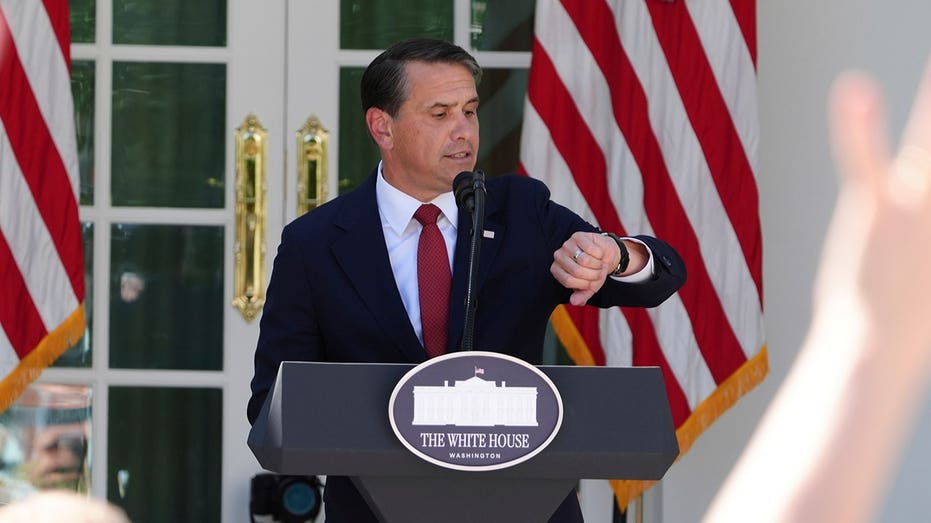
Attorney General Todd Blanche announced that federal prosecutors had facilitated the arrests of 160 defendants in cases involving suspected COVID-19 relief fraud. The cases, announced Tuesday, span federal districts nationwide and include about 80 newly charged defendants in Missouri and neighboring states. Authorities say the alleged schemes caused more than $245 million in losses. Separately, prosecutors in Southern California charged 12 people accused of fraudulently obtaining more than $10 million in childcare payments.
| 1) | Federal sweep and charges |
| 2) | Scale of alleged losses |
| 3) | California childcare case |
| 4) | Enforcement leadership and priorities |
| 5) | What happens next |
Federal sweep and charges
The Justice Department announced the enforcement action on Tuesday, September 15, 2026, during a briefing at the White House Rose Garden. Todd Blanche said federal prosecutors from across the United States worked between mid-June and September to support arrests and new criminal cases. The defendants are accused of exploiting pandemic-related government programs, with the cases being pursued in multiple federal districts.
About 80 of the newly charged defendants were connected to suspected COVID-19 fraud in Missouri and neighboring states. The broader total of 160 defendants includes people whose arrests were facilitated during the nationwide operation. The allegations concern claims for public funds made through programs created or expanded during the pandemic.
“If you knowingly break the law, you will be held accountable,” Blanche said.
Scale of alleged losses
Authorities said the suspected crimes involved more than $245 million in losses. The figure reflects the alleged impact of the cases brought together during the enforcement period, rather than a single scheme or prosecution. Federal prosecutors are handling the matters across different jurisdictions and programs.
The cases illustrate the continuing effort to investigate alleged misuse of pandemic relief funds after emergency programs distributed large amounts of taxpayer money. Prosecutors have pursued allegations involving false applications, improper claims and other conduct tied to government assistance. The defendants remain accused unless and until the allegations are proven in court.
California childcare case
On Tuesday, federal prosecutors in Southern California announced charges against 12 defendants who operated childcare facilities from their homes. Investigators allege the defendants collected more than $10 million in government childcare payments even though few or no children attended the facilities. The alleged conduct involved claims submitted for childcare services that prosecutors say were not provided.
Prosecutors also said some defendants were outside the United States when they submitted claims. One defendant, Turkiya Alawad, 63, was allegedly outside the country from January 1 through January 30, 2024, while claims were submitted and payments collected for dates during that period. The 12 defendants were naturalized citizens from Syria, Afghanistan, Sudan, Iraq and Somalia, according to the reported allegations.
The California case was described as larger than the Minnesota Feeding Our Future case in terms of alleged childcare claims. That earlier case involved roughly $4.6 million in claims to Minnesota’s Child Care Assistance Program, according to prosecutors cited in the report.
Enforcement leadership and priorities
The Trump administration has made the investigation of fraud and abuse in government programs a priority. Vice President JD Vance chairs the administration’s fraud task force, which has supported enforcement actions by federal prosecutors nationwide.
The Justice Department’s approach combines national coordination with prosecutions in local federal districts. This structure allows investigators and prosecutors to pursue alleged fraud tied to specific programs and jurisdictions while sharing information across the broader enforcement effort. The announced arrests represent the latest phase of that work.
What happens next
The defendants will face the federal court process in the districts handling their cases. Prosecutors must establish the allegations through evidence, while defendants may contest the charges and present their defenses. Court proceedings will determine whether the alleged losses and conduct can be proven.
Investigators are expected to continue reviewing pandemic relief and childcare payment records. The cases announced in September show that enforcement is addressing both COVID-19 relief programs and related government assistance systems. Additional actions, if pursued, would depend on the evidence gathered by federal agencies and prosecutors.
| Number | Key Point |
|---|---|
| 1 | Federal prosecutors facilitated arrests involving 160 defendants. |
| 2 | The suspected COVID-19 fraud cases involved more than $245 million in losses. |
| 3 | Twelve Southern California childcare operators were charged over more than $10 million in alleged payments. |
| 4 | About 80 newly charged defendants were linked to Missouri and neighboring states. |
Summary
The Justice Department’s nationwide operation targets alleged fraud involving pandemic relief and childcare assistance. The announced cases cover multiple jurisdictions and more than $245 million in suspected losses, including a separate Southern California prosecution involving alleged payments for children who were not present. The defendants will proceed through the federal court system, where prosecutors must prove the charges.
Frequently Asked Questions
How many defendants were involved in the enforcement operation?
Federal prosecutors facilitated arrests involving 160 defendants between mid-June and September 2026.
How much money was allegedly lost?
Authorities said the suspected COVID-19 fraud cases involved more than $245 million in losses.
What did the Southern California defendants allegedly do?
Prosecutors allege that 12 home-based childcare operators fraudulently collected more than $10 million in government childcare payments despite having few or no children attending their facilities.