
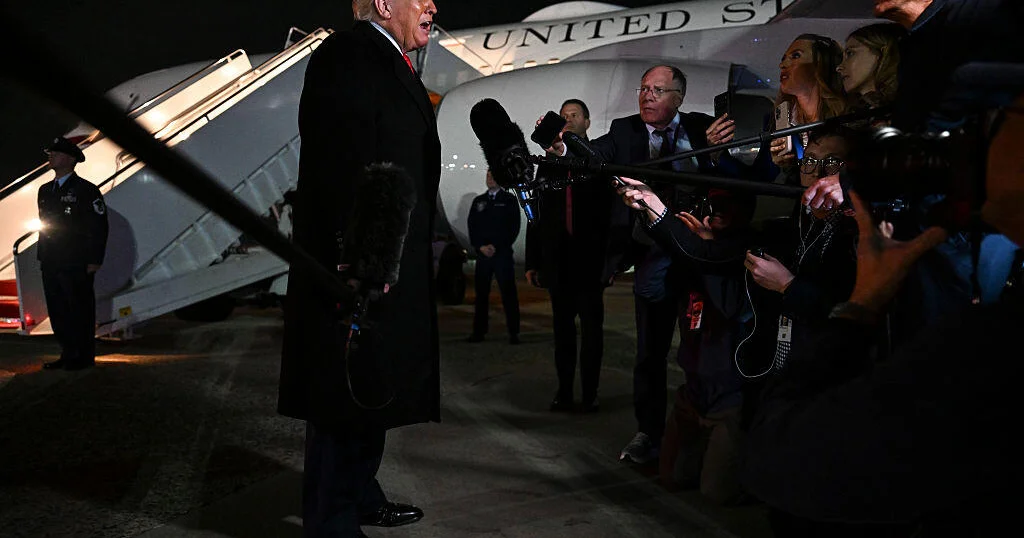
The ongoing tensions between the Trump administration and major news networks have escalated to a government investigation by the Justice Department into potential antitrust violations. This inquiry stems from an alleged boycott by television networks following President Trump’s controversial decision to rescind press credentials for certain organizations, which he accused of disseminating “fake news.” The investigation raises critical questions about the balance of power between media outlets and government, particularly in the realm of press freedom.
| Article Subheadings |
|---|
| 1) Context of the Antitrust Investigation |
| 2) Details of the White House Press Credential Controversy |
| 3) Impact on News Coverage and Journalism |
| 4) Legal Proceedings and Government Response |
| 5) Future Implications for Press Freedom |
Context of the Antitrust Investigation
The Justice Department’s inquiry comes on the heels of President Trump’s decision to revoke the press credentials of three major news outlets: CNN, MSNBC, and Politico. Responding to this move, networks forming the television press pool collectively suspended coverage of White House events, a decision indicative of their solidarity against what they perceive as censorship. These actions fall under the scrutiny of antitrust laws, particularly the Sherman Act, which aims to promote fair competition and curb monopolistic practices. The Justice Department’s spokesperson, Emily Covington, emphasized the importance of the investigation, noting that “Group boycotts among commercial competitors can violate the Sherman Act.”
While the specific legal implications of the press pool’s boycott are still unfolding, the Justice Department’s involvement indicates that the stakes are significant, impacting both journalists and the broader media landscape. The antitrust investigation seeks to discern whether the television networks acted collusively in response to the White House’s actions, potentially infringing upon regulations designed to ensure fair competition among news organizations.
Details of the White House Press Credential Controversy
The controversy ignited when President Trump publicly criticized specific media outlets for what he characterized as their consistent dissemination of “fake news.” In mid-September, he officially rescinded the White House credentials of journalists from CNN, MSNBC, and Politico, leading to widespread backlash among media professionals. Trump accused these organizations of publishing stories that he claimed posed national security threats, citing various reports on sensitive topics like the new White House ballroom and U.S. military actions abroad.
In retaliation, the five major news networks comprising the television press pool, including ABC, CBS, CNN, Fox, and NBC, announced a temporary suspension of coverage as a united stand against the action taken by the White House. This decision coincided with a critical moment when Chinese President Xi Jinping was visiting Washington, exacerbating tensions between the administration and the press. Collectively, these networks expressed that the public has a right to unbiased, accurate reporting from their government and that no news organization should face exclusion due to its editorial stance.
Impact on News Coverage and Journalism
The ongoing dispute has significant implications for journalistic practices and the relationship between the government and the press. The television press pool serves as a vital entity, rotating coverage responsibilities for presidential activities to ensure that all major news outlets receive equal access to information and events. The suspension of coverage reflects deep concerns about the erosion of press access under the current administration, a development that could inhibit transparency and accountability in government.
The coalition of news networks argues that boycotting coverage is a necessary action to preserve the integrity of journalism and uphold the principle of an independent press. They view the administration’s move to revoke credentials as dangerous precedence, which could embolden other administrations to limit press access based on content objection. This conflict not only represents a pivotal moment in U.S. journalism but also raises questions about how media organizations can operate in a climate where government officials threaten to restrict access based on perceived biases in reporting.
Legal Proceedings and Government Response
As the situation evolved, CNN, MSNBC, and Politico filed a lawsuit seeking the restoration of their press credentials. This legal challenge prompted U.S. District Judge Timothy Kelly to issue a temporary restraining order against the president’s ban, stating that the revocation of press credentials was likely unconstitutional and violated the principles of freedom of the press. Judge Kelly’s initial order allowed the reporters to regain access, yet the administration’s decision to still prohibit their presence in the Oval Office and aboard Air Force One remains a contentious issue.
Further complicating matters, the temporary restraining order was set to expire, prompting Judge Kelly to extend his order for another week, allowing him more time to deliberate on the case. This extension raises the stakes not only concerning the immediate access of journalists but also regarding legal interpretations of press freedom and government authority.
Future Implications for Press Freedom
The implications of this conflict stretch beyond the present moment, as the outcome of the Justice Department’s investigation and ongoing legal proceedings could have lasting effects on the media landscape. The situation underscores the fragile nature of press freedom in the United States and the potential dangers posed by executive overreach in curbing journalistic access. As more media organizations align themselves in support of independent reporting, the foundational principles of an open and transparent democracy are challenged.
As the legal repercussions unfold, the investigation itself could serve as a precedent, influencing how future administrations engage with media. Should the antitrust inquiry find grounds for violations, it may lead to increased scrutiny of how media outlets operate collectively, reinforcing the need for independent journalism free from governmental interference.
| No. | Key Points |
|---|---|
| 1 | The Justice Department is investigating potential antitrust violations by major TV networks, linked to a boycott after press credentials were revoked. |
| 2 | President Trump rescinded press credentials for specific news organizations, claiming they posed national security threats through “fake news” reporting. |
| 3 | The television press pool, which provides a rotating coverage of presidential events, collectively boycotted coverage in response to the White House’s actions. |
| 4 | Legal proceedings initiated by the affected news outlets resulted in a temporary restraining order allowing journalists to regain access. |
| 5 | The conflict raises serious concerns about press freedom and the potential implications for future government relations with media organizations. |
Summary
This evolving controversy highlights the ongoing struggle for press freedom in the United States amidst governmental challenges. As the Justice Department investigates potential antitrust violations stemming from a boycott of the White House press pool, key issues of access, transparency, and the role of media in a democratic society are brought to the forefront. The outcome of these proceedings will not only affect the immediate parties involved but could also shape the future dynamics between governmental authorities and the press.
Frequently Asked Questions
Question: What triggered the Justice Department’s investigation?
The investigation was triggered by the suspension of coverage by the television press pool after the Trump administration revoked press credentials for select news organizations.
Question: How did major networks respond to the White House’s actions?
In solidarity with the affected networks, all major networks in the television press pool suspended their coverage of White House events, emphasizing the importance of accurate and independent reporting.
Question: What are the potential outcomes of the ongoing legal proceedings?
Potential outcomes could range from the restoration of full press access to implications for how media organizations engage with the government, possibly setting precedents for press freedom in future administrations.