
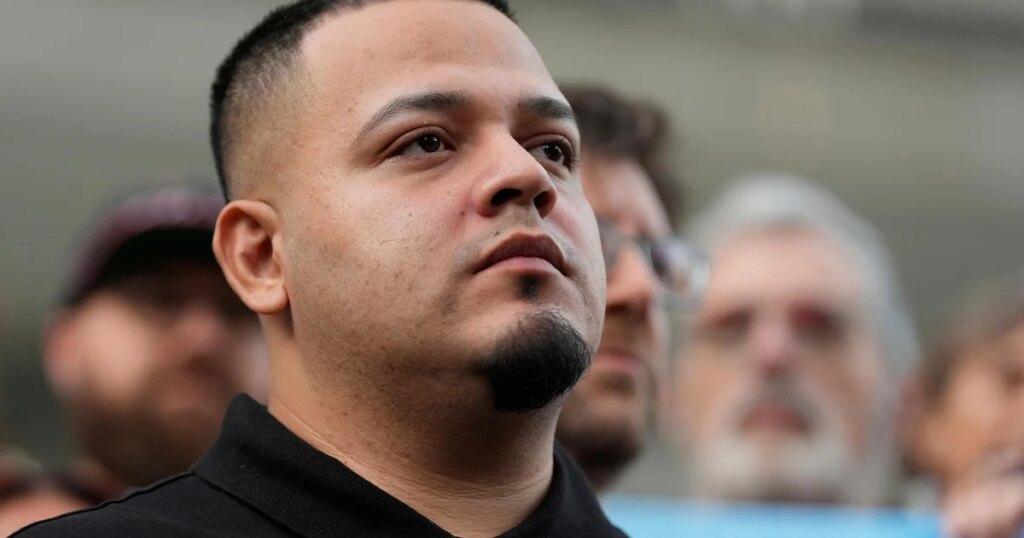
The Justice Department has moved to reactivate the criminal charges against Kilmar Abrego Garcia, a Salvadoran man whose wrongful deportation under the Trump administration was highlighted in a recent federal court ruling. In a controversial turn of events, a federal judge had previously dismissed the charges against Abrego Garcia on grounds that they were vindictive. The Department is now appealing this decision, insisting that the prosecution was based on legitimate grounds and not mere retaliation for his earlier legal victories.
| Article Subheadings |
|---|
| 1) Background on Kilmar Abrego Garcia’s Case |
| 2) Details of the Criminal Charges |
| 3) Department of Justice’s Position |
| 4) Defense Team’s Response |
| 5) Broader Implications of the Case |
Background on Kilmar Abrego Garcia’s Case
Kilmar Abrego Garcia initially gained media attention after being wrongfully deported back to El Salvador by U.S. immigration authorities under the previous administration. This significant event took place in 2022, when he contested the legality of his deportation proceedings. His challenges became a focal point for discussions surrounding immigrant rights and due process, as activists rallied for his reinstatement and legal representation. Abrego’s legal battles underscore the complicated and often controversial landscape of U.S. immigration policy, particularly as it pertains to individuals who face dire circumstances upon return to their home countries.
The deportation case drew additional scrutiny after Kilmar Abrego Garcia sought to appeal his situation in federal court, leading to heightened awareness regarding the practices of Immigration and Customs Enforcement (ICE) and their handling of immigrant cases. His situation has illuminated the critical nexus between immigration enforcement, the legal system, and the individuals caught in their clutches.
Details of the Criminal Charges
In November 2022, Kilmar Abrego Garcia was charged with two counts of human smuggling following a traffic stop in Tennessee. During the stop, law enforcement officers discovered several individuals in his vehicle, triggering immediate suspicion and subsequent criminal charges. Abrego Garcia pleaded not guilty to the charges, asserting that he did not engage in any illegal smuggling activities. This pleading set the stage for a complex legal battle as the prosecution commenced.
The indictment against him has raised significant questions about motivations behind immigration enforcement actions, particularly in his case. While federal prosecutors argued that their case was founded on evidence from the traffic stop, opponents of the charges highlighted proportionality concerns regarding the severity of the allegations relative to the actual conduct; a situation exacerbated by his previous wrongful deportation.
Department of Justice’s Position
On Monday, the Justice Department filed an appeal with the U.S. Court of Appeals for the 6th Circuit to reinstate the criminal charges against Kilmar Abrego Garcia. In their filing, officials emphasized that the initial indictment was based purely on substantial evidence and the law, dismissing any claims of vindictiveness that were raised in prior rulings. The DOJ firmly asserted that their actions were supported by “multiple legitimate bases to prosecute” Garcia for the alleged offenses.
The Department maintained that the dismissal of the charges, based on accusations of retaliatory motives, would significantly expand the judicial ability to dismiss serious criminal proceedings based purely on interpretations of prosecutors’ motivations. The DOJ insisted that their case was meticulously constructed around careful analysis of evidence and legal statutes, standing firmly by their approach to prosecution.
Defense Team’s Response
In stark contrast, Abrego Garcia’s defense team has vocally criticized the Justice Department’s claims, asserting that the prosecution was fundamentally vindictive. They contended that the initial indictment stemmed from a desire to retaliate against their client in light of his recent legal victories, including a successful Supreme Court case that challenged the legality of his deportation.
The defense emphasized that the evidence presented to the court underscored the vindictive nature of the indictment. They cited procedural concerns, arguing that key decision-makers, including officials from the Attorney General’s office, were not called to testify under oath, which could have provided critical insights into the motivations behind the prosecution. This assertion reflects a significant tension between the Justice Department’s portrayal of the case as legitimate and the defense’s framing of it as politically motivated.
Broader Implications of the Case
This ongoing legal battle surrounding Kilmar Abrego Garcia not only pertains to his individual circumstances but also symbolizes broader conversations regarding immigration policy in the United States. The case raises critical questions about how U.S. immigration laws are enforced, especially in light of previous administrative policies that were criticized for their harshness and perceived vindictiveness towards immigrants.
Moreover, the case speaks to the urgent need for clarity and integrity within the immigration enforcement framework, as well as ensuring that individuals do not face unjust repercussions simply for seeking legal refuge or disputing wrongful actions taken against them. As these legal proceedings unfold, they will likely continue to attract attention from policymakers, immigrant advocates, and the public alike, highlighting a crucial intersection of law and ethics in immigration cases.
| No. | Key Points |
|---|---|
| 1 | The Justice Department has filed an appeal to reinstate charges against Kilmar Abrego Garcia. |
| 2 | A federal judge previously dismissed the charges, citing vindictiveness. |
| 3 | The DOJ argues the case is based on legitimate evidence and law, dismissing claims of retaliation. |
| 4 | Abrego Garcia’s defense team argues charges are explicitly vindictive and politically motivated. |
| 5 | The outcome of the case could impact discussions on U.S. immigration enforcement policies. |
Summary
The ongoing legal struggle surrounding Kilmar Abrego Garcia encapsulates significant elements of the current U.S. immigration landscape, evidenced by the clash between the Justice Department and the defendant’s defense team. Both parties present starkly different narratives regarding the motivations behind the charges and their legitimacy. As this case progresses, the ramifications will extend beyond the individual involved, potentially shaping policy discussions and the procedural integrity of immigration law enforcement in the United States.
Frequently Asked Questions
Question: What are the charges against Kilmar Abrego Garcia?
Kilmar Abrego Garcia faces two counts of human smuggling stemming from a traffic stop in Tennessee, where multiple individuals were found in his vehicle.
Question: What has the Justice Department stated regarding the prosecution?
The Justice Department asserts that the prosecution is based on legitimate evidence and is not retaliatory, arguing it reflects their lawful obligation to uphold immigration laws.
Question: How did Kilmar Abrego Garcia’s defense team respond to the charges?
Garcia’s defense team claims the indictment is vindictive and politically motivated, suggesting that it was initiated to retaliate against him following his successful legal challenges against wrongful deportation.