
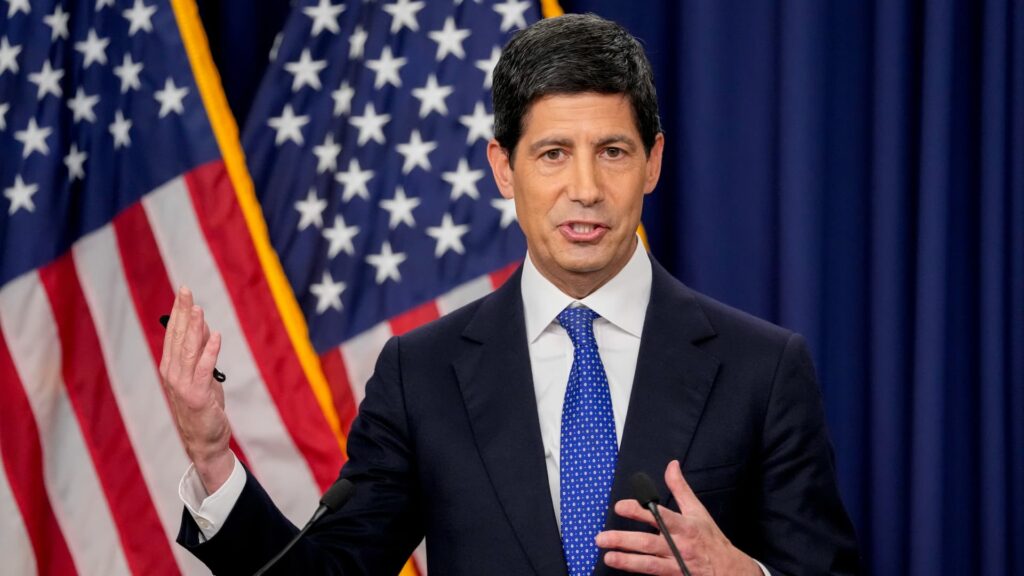
In a decisive move, the Federal Reserve has implemented its much-anticipated interest rate increase, signaling its ongoing commitment to combating inflation. Chairman Kevin Warsh revealed the unanimous decision during a succinct news conference, where he outlined the Fed’s overarching strategy in a challenging economic landscape. Participants in the market reacted sharply to the news, highlighting the divide between the Fed’s objectives and prevailing market sentiments.
| Article Subheadings |
|---|
| 1) Federal Reserve’s unanimous decision on interest rates |
| 2) Market reactions to the rate hike announcement |
| 3) Significance of a concise Federal Reserve statement |
| 4) Insights from the Federal Open Market Committee’s dot plot |
| 5) Maintaining independence amidst political pressure |
Federal Reserve’s unanimous decision on interest rates
On Wednesday, the Federal Reserve carried out a widely anticipated quarter-percentage-point rate hike. This decision, aimed at reinforcing the Fed’s inflation-fighting stance, came as a surprise to many given the diverse opinions among policymakers in the weeks leading up to the meeting. Despite this variance, the Federal Open Market Committee (FOMC) members voted unanimously in favor of the increase, leading to speculation about the extent of their commitment to tackling inflation head-on.
Chairman Kevin Warsh emphasized that the Fed must stay focused on long-term goals, stating that a united front is crucial in delivering consistent economic messaging. This moment marks a significant instance of cohesion amid differing opinions among the Fed’s members. Experts had expected at least one dissenting vote, particularly from Governor Christopher Waller, known for his more aggressive stance against inflation pressures. However, the unanimous decision may indicate a stronger consensus as the Fed gears up to navigate a potentially volatile economic environment.
Market reactions to the rate hike announcement
In the hours following the interest rate decision, market reactions were swift and severe. Initially, stocks appeared stable, with optimism building; however, as realities set in, a drastic downturn unfolded. The Dow Jones Industrial Average plummeted by 631 points, showcasing the immediate impact of Warsh’s hawkish rhetoric emphasized during his press conference.
The sentiment reflected a broader concern about multiple potential rate hikes, with bond yields also showing significant increases. Specifically, the 2-year Treasury yield surged more than 7 basis points in response to the Fed’s announcements, indicating traders’ expectations of further rate adjustments in the near future. Analysts noted that the sharp sell-off was reminiscent of the market’s reaction to the Federal Open Market Committee’s earlier sessions this year, underscoring the persistent uncertainty in financial markets as traders attempted to recalibrate expectations amid ongoing inflation pressures.
Significance of a concise Federal Reserve statement
The concise and deliberate nature of the Fed’s post-meeting statement has generated significant discussion among economists and market analysts. Clocking in at only 130 words, the statement represented a continued trend of brevity throughout Warsh’s tenure. This approach mirrors the post-meeting communications from previous months and appears purposeful in its intent to minimize misinterpretation.
While such statements have historically varied in length and detail, the current Fed’s strategy may be an effort to quickly convey essential information without overwhelming market participants with excessive commentary. During this recent meeting, Warsh engaged in a news conference that lasted approximately 30 minutes, with only 22 minutes dedicated to answering questions from reporters. Analysts are observing these developments closely, recognizing that straightforward communication is key to maintaining market stability during uncertain economic periods.
Insights from the Federal Open Market Committee’s dot plot
The insights garnered from the FOMC’s dot plot, which reflects individual members’ expectations for future interest rates, revealed intriguing dynamics among the policymakers. Most notably, 16 out of 18 members indicated the likelihood of at least one more rate hike this year, demonstrating a collective urgency to curb inflation while balancing economic growth. However, the projections varied significantly when looking further into the future.
For instance, while some members expressed expectations for additional hikes in 2027, a larger group anticipated either steady rates or increases through 2028. Moreover, ten members predicted no cuts would occur until at least 2029. This substantial disagreement reflects the complexities of forecasting amid economic uncertainty, exposing a divergence of opinions that could influence future strategy as economic conditions evolve.
Maintaining independence amidst political pressure
In a press conference filled with challenging questions, Warsh navigated inquiries about political pressures, especially considering the public statements made by former President Donald Trump. The former president recently expressed frustration with the Fed, suggesting that its policies were not aligned with his administration’s economic goals. Warsh firmly ensured the independence of the Federal Reserve remains intact, stating,
“Part of the independence of the Federal Reserve is we stay in our lane. Independence is a two-way street.”
By articulating the Fed’s autonomous role in economic policymaking, Warsh seeks to reassure market participants and the public that monetary policy decisions will be driven by economic indicators rather than political pressures. As the Fed continues to navigate such challenges, safeguarding its independence is critical to sustaining public trust and efficacy in future economic interventions.
| No. | Key Points |
|---|---|
| 1 | The Federal Reserve implemented a quarter-percentage-point rate hike aimed at addressing ongoing inflation concerns. |
| 2 | The decision was unanimous, surprising some analysts who anticipated dissenting votes among policymakers. |
| 3 | Market reaction included a significant decline in the Dow Jones Industrial Average, highlighting investor concerns over multiple potential rate hikes. |
| 4 | The Fed’s recent communication strategy continues to emphasize brevity and clarity in its statements and press conferences. |
| 5 | Warsh stressed the importance of the Federal Reserve’s independence, especially in light of political pressures from external figures. |
Summary
The Federal Reserve’s recent decision to increase interest rates reflects its unwavering commitment to managing inflation, a core aspect of its mandate. Amidst diverse market reactions and significant political pressure, Chairman Kevin Warsh asserts the importance of clear communication and the Fed’s independence in navigating complex economic landscapes. This pivotal moment underscores the delicate balance policymakers must strike between sustaining economic growth and curbing inflation while ensuring market stability.
Frequently Asked Questions
Question: What impact does an interest rate hike have on the economy?
An interest rate hike typically leads to higher borrowing costs for consumers and businesses, which can slow down spending and investment but aims to reduce inflation by curbing excessive demand.
Question: Why is the Fed’s independence important?
The independence of the Federal Reserve is crucial to maintaining unbiased and effective monetary policy that is not influenced by political pressures, allowing for objective decision-making based on economic indicators.
Question: How often does the Federal Open Market Committee meet?
The Federal Open Market Committee meets regularly, usually eight times a year, although additional meetings may be called to address urgent economic challenges.