
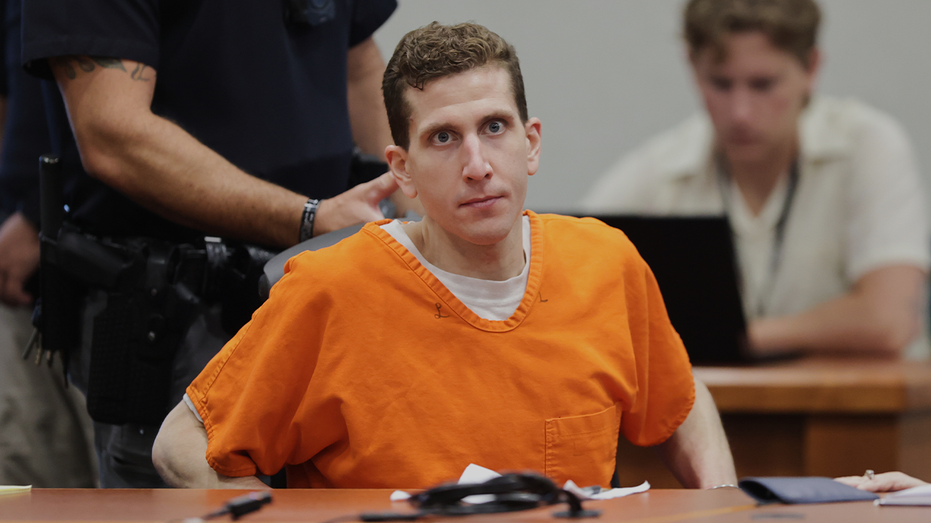
Bryan Kohberger faces a major legal challenge as he seeks to withdraw his guilty plea in the killings of four University of Idaho students. A defense attorney who represented D.C. sniper Lee Boyd Malvo said defendants rarely succeed in undoing pleas after sentencing. Kohberger’s petition alleges ineffective assistance of counsel, coercion, disinformation and false promises. His request could lead to renewed litigation, but it does not guarantee a new trial.
Kohberger pleaded guilty in July 2025 and received four consecutive life sentences without parole under an agreement that spared him the death penalty. The victims were Ethan Chapin, Xana Kernodle, Madison Mogen and Kaylee Goncalves, who were killed in Moscow, Idaho, in November 2022.
| Article Subheadings | |
|---|---|
| 1) | Legal challenge after sentencing |
| 2) | Terms of Kohberger’s plea |
| 3) | Claims in the post-conviction petition |
| 4) | Lessons from comparable cases |
| 5) | Obstacles if the plea is withdrawn |
Legal challenge after sentencing
Mark Petrovich, an attorney with decades of criminal defense experience, said on August 3, 2026, that Kohberger faces a “monumental uphill battle.” Petrovich represented Lee Boyd Malvo in post-conviction proceedings in Virginia and said the timing of Kohberger’s request is central to the difficulty. Courts are generally reluctant to permit defendants to withdraw pleas after sentencing because the plea has already produced a final judgment and punishment.
“It’s a monumental uphill battle. First of all, getting the judge to allow you to withdraw the plea, and then second of all to winning any new proceeding, because there’s a lot against you,” Petrovich said.
Terms of Kohberger’s plea
Kohberger entered the plea in July 2025 in the Idaho case after years of pretrial proceedings. He admitted guilt to the stabbing deaths of the four students and accepted four consecutive life sentences without the possibility of parole. In exchange, prosecutors did not pursue the death penalty, making the agreement a central part of the legal strategy in a case that had drawn national attention.
The killings occurred in Moscow in November 2022. Kohberger’s current effort seeks to undo the agreement rather than challenge only the length or conditions of his sentence. The court must first determine whether the plea can be withdrawn before any question of a new trial can be considered.
Claims in the post-conviction petition
In recent court filings, Kohberger alleges that his plea was not voluntary because he was pressured, misled about incarceration conditions and denied a full understanding of potentially exculpatory evidence. He also raises claims involving ineffective assistance of counsel, coercion, disinformation and false promises. Those allegations are intended to show that the decision to plead guilty was legally defective.
Petrovich questioned whether defense attorneys would have recommended a plea without reviewing the discovery provided by investigators and prosecutors. He said lawyers in capital cases typically spend years examining evidence before advising a client. The court would have to assess the attorneys’ conduct, the information available at the time and whether any alleged error affected Kohberger’s decision.
Lessons from comparable cases
Petrovich cautioned that Malvo’s litigation should not be treated as a direct comparison. Malvo’s appeals involved changes in constitutional law concerning juvenile sentencing, while Kohberger entered his plea as an adult to avoid a potential capital trial. Petrovich also described a separate case in which he helped a client withdraw a guilty plea before sentencing. That case proceeded to trial and ended in an acquittal, but its timing differed significantly from Kohberger’s circumstances.
Other notorious defendants have also tried to reverse guilty pleas. James Earl Ray sought to withdraw his 1969 plea in the assassination of Martin Luther King Jr. three days after entering it, but died in prison in 1998 without receiving the jury trial he requested. Efforts by Clifton Bloomfield and Robert Lee Yates Jr. to challenge pleas tied to murder convictions were also unsuccessful.
Obstacles if the plea is withdrawn
Even if a judge permits Kohberger to withdraw his plea, Petrovich said he would face a second major hurdle at any trial. Jurors would likely learn that Kohberger had previously admitted guilt under oath, requiring his defense to explain why he changed his position. That admission could affect how jurors evaluate his credibility and any later defense.
“You can’t wait until after you’re sentenced and see what the consequences of the plea are and then change your plea,” Petrovich said.
The outcome will depend on Idaho court decisions concerning the petition, the plea process and the conduct of defense counsel. Until a judge rules, Kohberger’s four life sentences remain in effect.
| Number | Key Point |
|---|---|
| 1 | Kohberger is seeking to withdraw a guilty plea entered in July 2025. |
| 2 | His plea agreement spared him from the death penalty and resulted in four consecutive life sentences. |
| 3 | His petition alleges pressure, ineffective counsel and misleading information. |
| 4 | A defense attorney said post-sentencing plea withdrawals are rarely successful. |
Summary
Kohberger’s petition places the validity of his guilty plea before the Idaho courts, but the post-sentencing timing creates a substantial legal barrier. Even a successful withdrawal would not automatically lead to an acquittal or prevent prosecutors from presenting the prior admission at trial. The court’s review of the plea process and the alleged shortcomings of counsel will determine the next stage of the case.
Frequently Asked Questions
What is Kohberger asking the court to do?
He is asking to withdraw his guilty plea in the killings of four University of Idaho students and to pursue further legal proceedings.
Why is the request difficult?
The plea was entered before sentencing, but Kohberger is seeking to undo it after receiving four life sentences. Courts generally impose a higher burden at that stage.
Would withdrawing the plea guarantee a new trial?
No. A judge would first have to allow the withdrawal, and any subsequent proceeding would present separate legal and factual challenges.