
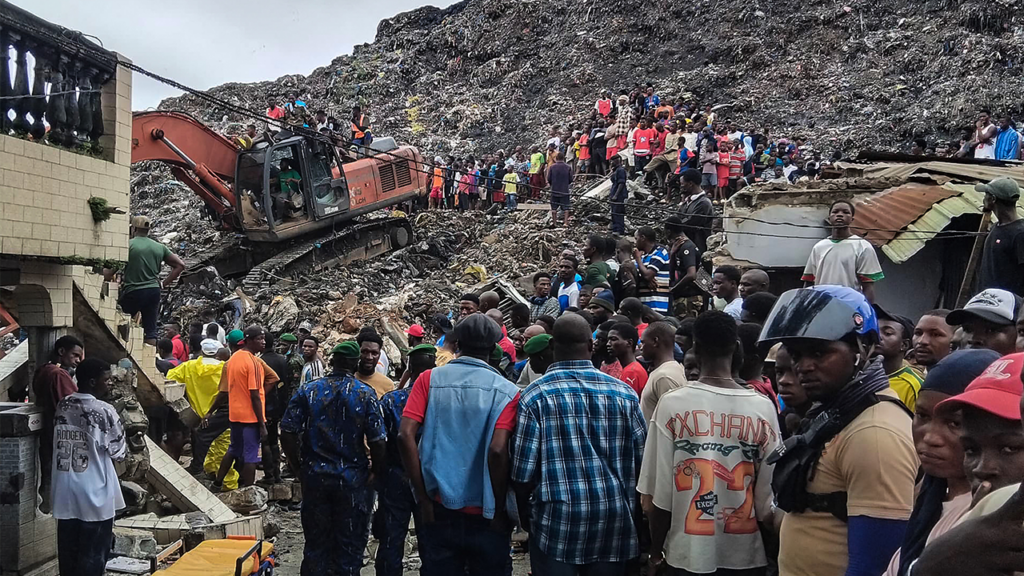
A catastrophic landslide at Guinea’s largest open-air landfill resulted in the tragic death of at least 30 individuals on August 23, 2026. The incident, which occurred in the capital city of Conakry, raised alarms about the previously identified hazardous conditions surrounding the Dar Es Salam landfill. Heavy rainfall preceding the collapse played a significant role in the calamity, as officials had already planned to close the site due to safety concerns. Authorities have initiated a rescue operation to locate any survivors amidst the wreckage.
| Article Subheadings |
|---|
| 1) Details of the Landslide Incident |
| 2) Impact on Local Residents |
| 3) Official Responses and Rescue Efforts |
| 4) Previous Incidents and Safety Measures |
| 5) Future Actions and Community Support |
Details of the Landslide Incident
The landslide at the Dar Es Salam landfill in Conakry occurred under devastating circumstances. On that fateful Sunday morning, the combination of a massive build-up of waste and heavy overnight rainfall led to the collapse of a three-story structure, which was one of the several makeshift homes situated around the landfill. Many individuals, including families, were sheltering near the site when the disaster struck, burying them under tons of garbage as the mountain of refuse gave way. Reports indicate that, while rescue teams worked to unearth survivors, the precarious nature of the landfill continued to pose threats, with ongoing fears that further collapses could occur.
Impact on Local Residents
The landslide’s impact on the local population was profound. At least 30 lives were lost, while many others faced serious injuries amidst the harrowing chaos. Eyewitness accounts reveal that locals rushed to aid one another, desperately searching through the rubble for friends and family members. Many homes were completely destroyed, intensifying the plight of residents who, even prior to the landslide, were living in vulnerable conditions near the landfill. Residents had previously been issued eviction notices due to safety concerns, but many remained close by, believing that their homes would be safe. The loss of life and property emphasizes the urgent need for infrastructure improvement and the relocation of people living in hazardous areas.
Official Responses and Rescue Efforts
In response to the landslide, local officials promptly initiated a search-and-rescue operation. Reports indicate that six people suffered serious injuries, and ambulances were on standby to transport the injured to hospitals for treatment. Authorities, including Lt. Col. Baldé Mamadou Bailo, the sanitation officer for the military engineering battalion, and Minister of Territorial Administration and Decentralization, Dienabou Touré, engaged in on-ground efforts to coordinate rescue activities. At the site, officials expressed their grief over the high fatality rate and reiterated previous warnings about the hazardous state of the landfill, emphasizing a dire need for improved waste management practices.
Previous Incidents and Safety Measures
The Dar Es Salam landfill has a tumultuous history, often being the site of similar tragic incidents. In 2017, torrential rains had previously caused a mudslide that claimed at least eight lives, raising alarms about the structural integrity and safety of the site. Despite calls for investigation and remediation, the landfill continued operating, albeit under conditions that officials deemed hazardous. Prior to this latest incident, there had been plans to close the site due to its dangerous state, but these measures were disregarded until the disaster prompted decisive action. Locals had long been aware of the risks, yet finding safe alternative housing remains a significant challenge.
Future Actions and Community Support
In the aftermath of the landslide, authorities have pledged to relocate affected families to safer areas. Minister Dienabou Touré highlighted a commitment to ensuring that families impacted by the disaster receive the necessary assistance and support for relocation. Moving forward, community organizations and international observers are expected to step in, providing aid and intervention aimed at enhancing local infrastructure, improving waste management practices, and fostering resilience against future disasters. Long-term efforts will be required to address the systemic issues contributing to such tragic events, including poverty, infrastructure deterioration, and climate change repercussions.
| No. | Key Points |
|---|---|
| 1 | At least 30 people have died due to a landslide at the Dar Es Salam landfill in Conakry, Guinea. |
| 2 | Heavy rainfall was a key factor contributing to the collapse of waste at the landfill. |
| 3 | Rescue operations are ongoing, with reports of serious injuries and several homes damaged. |
| 4 | The landfill had been previously scheduled for closure due to warnings over its safety. |
| 5 | Authorities are committed to relocating families affected by the disaster. |
Summary
The tragic landslide at the Dar Es Salam landfill underscores the urgent need for improved waste management and public safety measures in Guinea. With a significant loss of life and ongoing risks for local residents, the disaster highlights systemic issues related to infrastructure and governmental oversight. The commitment from officials to support affected families emphasizes the need for community engagement and proactive strategies to prevent future disasters of this nature.
Frequently Asked Questions
Question: What caused the landslide at the landfill?
The landslide was primarily caused by a combination of heavy rainfall and the weight of waste accumulated at the landfill, which led to the collapse of structures nearby.
Question: How many people were affected by the landslide?
At least 30 individuals lost their lives due to the landslide, while many others sustained serious injuries and were in critical condition.
Question: What steps are being taken to support affected families?
Authorities have pledged to relocate affected families to safer areas and are initiating proposals for community support and improved infrastructure in the region.