
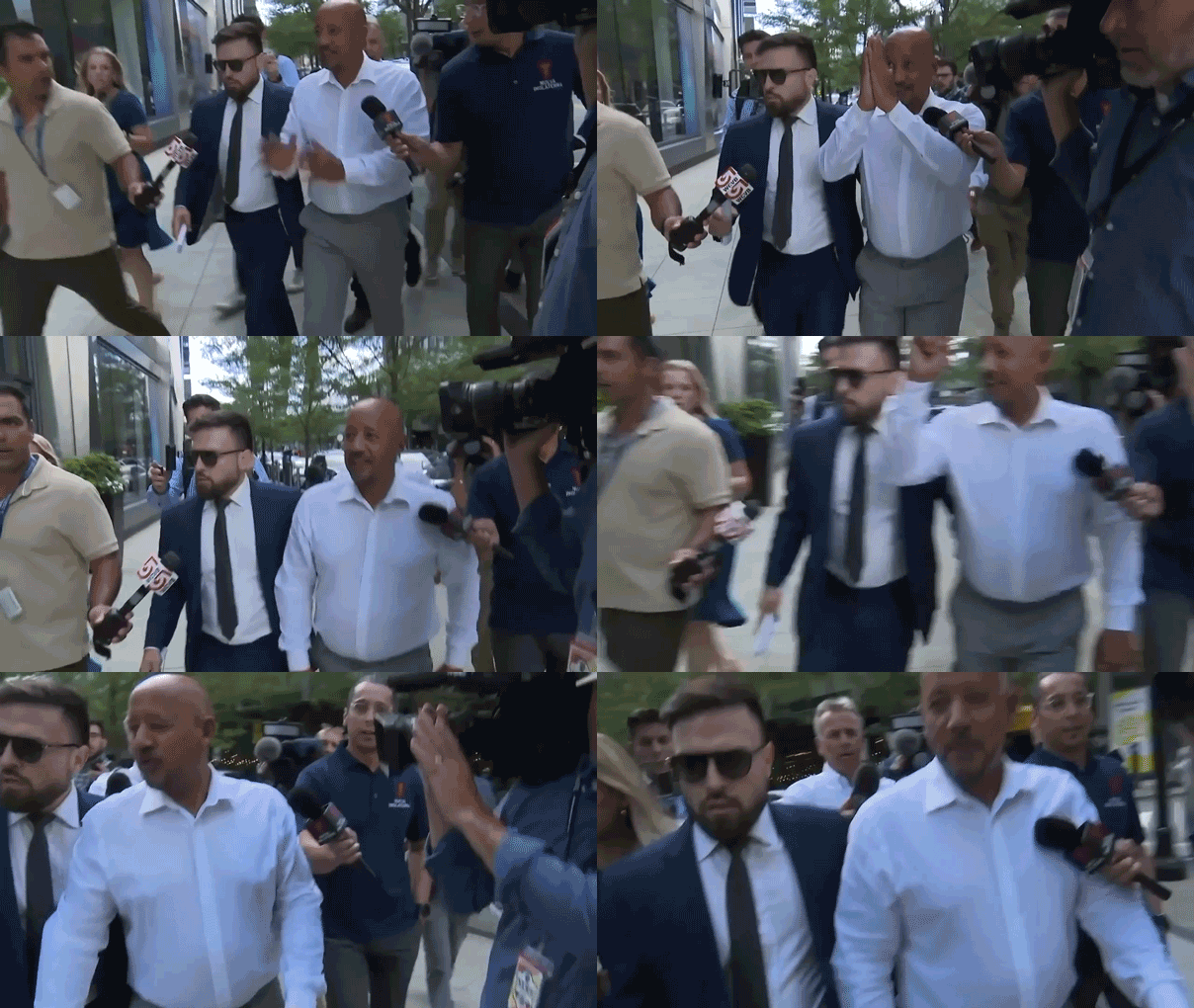
In an unfolding scandal, Brian DePeña, the mayor of Lawrence, Massachusetts, has been arrested for his alleged involvement in a COVID-19 relief fraud scheme, where he misused over $1.5 million intended for struggling businesses. The controversy escalated when DePeña’s lawyer claimed that the mayor does not speak English, a statement that has gone viral and incited criticism across social media platforms. This revelation comes as federal prosecutors investigate the improper allocation of funds from the Economic Injury Disaster Loan program, which was part of the U.S. government’s financial response to the pandemic, highlighting a troubling instance of corruption amidst public office.
| Article Subheadings |
|---|
| 1) Arrest of Mayor Brian DePeña |
| 2) Attorney’s Statement and Public Reaction |
| 3) Details of the Allegations |
| 4) DePeña’s Background and Political Career |
| 5) Implications of the Fraud Case |
Arrest of Mayor Brian DePeña
On a Friday morning recently, Lawrence Mayor Brian DePeña was taken into custody following allegations of fraud connected to pandemic relief funds. Law enforcement officials executed the arrest based on a detailed investigation into the misuse of over $1.5 million from the Economic Injury Disaster Loan (EIDL) program, which was initiated under the CARES Act to assist businesses financially impacted by the COVID-19 pandemic. DePeña, aged 61, was seen complying with authorities and was subsequently charged with multiple counts related to wire fraud and misallocation of funds, which could lead to significant legal repercussions, including a long prison sentence.
Attorney’s Statement and Public Reaction
In a statement to the press, DePeña’s attorney asserted, “He doesn’t speak English. No comment.” This remark quickly generated a wave of commentary on social media, prompting users to question how an elected official could be mute during such a significant inquiry. Responses varied widely, with members of conservative media and average citizens expressing disbelief at DePeña’s inability to communicate in the primary language of his constituency. The social media clip of the exchange amassed over a million views, underscoring the public’s intense scrutiny and the mistrust that can surface in similar cases of alleged public corruption.
Details of the Allegations
According to federal prosecutors, the allegations against DePeña are quite severe. He is accused of applying for funds that were designated to support his tire shop, Tenares Tire Services Inc., while allegedly diverting the money for personal uses and his mayoral campaign. The investigation suggests that DePeña leveraged his political influence and the trust placed in him by the community to execute a fraudulent scheme that misled both federal authorities and the public. The nature of these allegations raises critical questions about the integrity of elected officials and the systems put in place to manage public funds effectively and transparently.
DePeña’s Background and Political Career
DePeña has been involved in Lawrence politics for several years, serving on the City Council before his election as mayor in November 2021. He secured re-election in November 2025, indicating a level of community support despite the recent controversies. His tenure has not been short on challenges, with the city grappling with issues related to economic disparities and public trust since the pandemic’s onset. Officials, including U.S. Attorney Leah B. Foley, noted that DePeña was once considered a leader in his community and his alleged actions represent a significant betrayal of public trust. This history adds a layer of complexity to the ongoing investigation, as constituents grapple with the implications of his actions.
Implications of the Fraud Case
The serious nature of DePeña’s charges carries significant implications not just for him personally, but for the integrity of political office in the U.S. If convicted, he faces a potential sentence of up to 30 years in prison, a stark reminder of the legal consequences that can befall public officials who exploit their positions for personal gain. Moreover, this case underscores a broader problem of corruption within public service, prompting discussions around the need for stricter oversight and accountability measures to ensure a similar situation does not happen in other jurisdictions. As the investigation unfolds, citizens of Lawrence and beyond will likely continue to monitor the developments closely, examining how such instances can affect governance at all levels.
| No. | Key Points |
|---|---|
| 1 | Lawrence Mayor Brian DePeña was arrested for alleged COVID-19 relief fraud. |
| 2 | DePeña’s lawyer claimed he does not speak English, leading to public outrage. |
| 3 | Federal allegations include misuse of over $1.5 million meant for small businesses. |
| 4 | DePeña secured his role as mayor after serving on the City Council for several years. |
| 5 | If convicted, DePeña may face a prison sentence of up to 30 years. |
Summary
The case against Mayor Brian DePeña serves as a critical examination of integrity within public office and the responsibilities that come with elected positions. The allegations of fraud not only tarnish the local government’s credibility but also raise pertinent questions about the role of transparency and accountability in public service. As investigations proceed, the ramifications for DePeña and for the community of Lawrence may unfold in far-reaching ways, reminding both citizens and officials alike of the importance of ethical conduct in governance.
Frequently Asked Questions
Question: What is the Economic Injury Disaster Loan (EIDL) program?
The EIDL program is a financial assistance initiative created under the CARES Act to support small businesses that experienced economic distress due to the COVID-19 pandemic. It provides loans to help businesses cover expenses such as payroll, rent, and other operational costs.
Question: What are the legal consequences of wire fraud?
Wire fraud is a federal crime that can result in severe penalties, including lengthy prison sentences and significant fines. If convicted, individuals may face up to 20 years in prison for each count, depending on the severity of the offense.
Question: What can citizens do to ensure accountability in local government?
Citizens can engage in local governance by attending city council meetings, advocating for transparency in government processes, and demanding accountability from elected officials. Participating in elections and holding representatives accountable through community activism also plays a crucial role in maintaining ethical governance.