
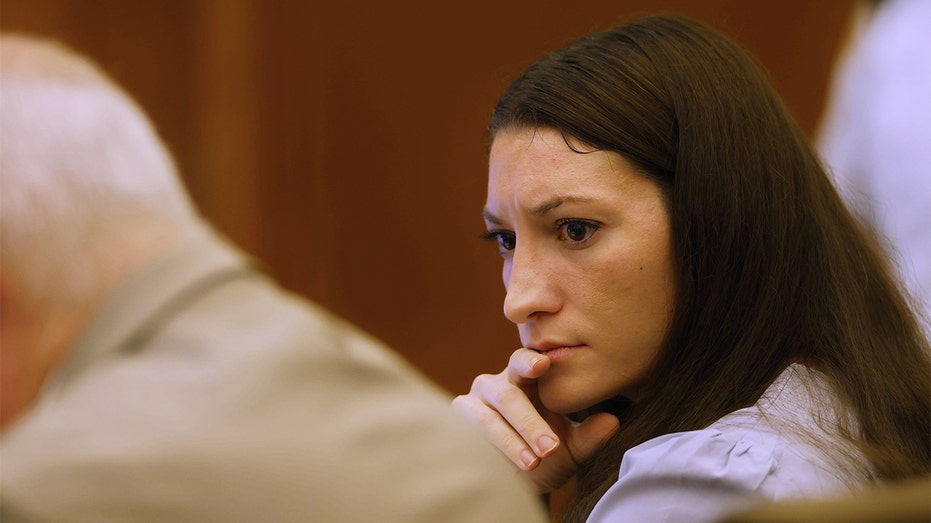
Lindsay Clancy agreed in court to stipulate to certain forensic facts, allowing prosecutors to avoid calling numerous witnesses about evidence handling at her murder trial. The agreement came as a Massachusetts State Police trooper testified that investigators found no usable fingerprints on a knife or three exercise bands recovered from the family’s Duxbury home. The developments narrowed the case toward whether Clancy was criminally responsible when her three children died in January 2023. A trial attorney said the defense is seeking to focus jurors on Clancy’s mental state rather than lengthy chain-of-custody testimony.
| 1) | Evidence stipulation accepted in court |
| 2) | Trial focus shifts to mental state |
| 3) | Fingerprint testimony leaves evidentiary gaps |
| 4) | Defense and prosecution implications |
| 5) | Charges and next steps |
Evidence stipulation accepted in court
Before jurors entered the courtroom Tuesday, Judge William Sullivan questioned Clancy about an agreement covering selected forensic facts. Clancy repeatedly confirmed that she understood the Commonwealth would not have to prove those facts independently at trial and said no one had forced or threatened her to accept the arrangement.
Sullivan ruled that Clancy entered the stipulation knowingly, intelligently, voluntarily and willingly. Defense attorney Kevin Reddington said the agreement would spare the court from hearing testimony from dozens of witnesses whose sole purpose would be to establish the chain of custody for blood, bodily fluids, exercise bands and DNA evidence.
Trial focus shifts to mental state
The stipulation is not a guilty plea and does not concede that Clancy was criminally responsible for the deaths of her children, Cora, Dawson and Callan. Clancy faces three murder charges connected to the children’s deaths inside the family’s Duxbury home on Jan. 24, 2023.
Clancy’s defense says she was experiencing postpartum psychosis and was not criminally responsible. Margaret McLean, a former prosecutor and trial attorney who teaches law at Boston College’s Carroll School of Management, said the evidence agreement could help direct jurors toward criminal intent, or mens rea, instead of repeated testimony about the disturbing circumstances of the deaths.
“The legal strategy behind the move by the defense is to steer the jury’s focus away from the horrific nature of the acts and to that central issue of criminal intent,” McLean said.
Fingerprint testimony leaves evidentiary gaps
Later in the proceeding, Massachusetts State Police Trooper Jonathan O’Loughlin described his examination of a knife and three exercise bands collected from the home. He testified that the knife contained an area bearing a friction-ridge impression, but it lacked enough characteristics or minutiae for investigators to compare it with a known fingerprint.
The yellow, black and blue exercise bands likewise produced no impressions suitable for comparison. O’Loughlin said fingerprints are highly fragile and can be affected by an object’s texture, environmental conditions, movement, grip strength or whether a surface was wiped. When Reddington asked whether investigators had obtained fingerprints, O’Loughlin answered that they had not.
Defense and prosecution implications
McLean said the absence of identifiable prints could lead jurors to question whether gloves were used or whether the objects were wiped. Those possibilities could be viewed as signs of planning, although the testimony itself did not establish that either occurred.
The defense may argue that jurors cannot draw conclusions from facts that were not presented in evidence. McLean said jurors may use common sense during deliberations, but they cannot speculate about unsupported explanations. She also cautioned that Clancy’s composed answers in court do not establish her mental condition at the time of the killings.
“She sounded rational. She understands what she’s doing,” McLean said. “But remember, the Commonwealth’s burden of proof is to prove that she was sane beyond a reasonable doubt at the time the crimes were committed, not today, not two weeks ago.”
Charges and next steps
The trial is continuing in Plymouth Superior Court, where prosecutors and defense attorneys are presenting evidence about the deaths of the three children. The evidence agreement reduces the need for foundational testimony, while the fingerprint evidence leaves jurors to evaluate what significance, if any, should be attached to the lack of usable impressions.
The central question remains whether Clancy had the mental capacity and criminal responsibility required for conviction when the children died. The stipulation resolves selected evidentiary issues, but it does not decide that question or determine the outcome of the murder charges.
| Number | Key Point |
|---|---|
| 1 | Clancy voluntarily accepted a stipulation covering selected forensic facts. |
| 2 | The agreement is not a guilty plea or an admission of criminal responsibility. |
| 3 | Investigators found no usable fingerprints on the knife or exercise bands. |
| 4 | The defense says postpartum psychosis affected Clancy’s criminal responsibility. |
Summary
The evidence deal streamlines the trial by removing the need to prove certain forensic facts through extensive chain-of-custody testimony. With no usable fingerprints recovered from key items, the parties may dispute what inferences jurors can reasonably draw. The case remains centered on Clancy’s mental state and whether prosecutors can prove criminal responsibility at the time of the children’s deaths.
Frequently Asked Questions
What did Lindsay Clancy agree to?
She agreed to stipulate to certain forensic facts, meaning prosecutors do not have to prove those facts separately through additional witnesses.
Does the stipulation mean Clancy pleaded guilty?
No. The agreement is not a guilty plea and does not admit that she was criminally responsible for the deaths of her three children.
What did investigators say about fingerprints?
A trooper testified that the knife and three exercise bands contained no impressions usable for identification or comparison.
What is the defense arguing?
The defense says Clancy was suffering from postpartum psychosis and is seeking to focus the trial on whether her mental state prevented criminal responsibility.