
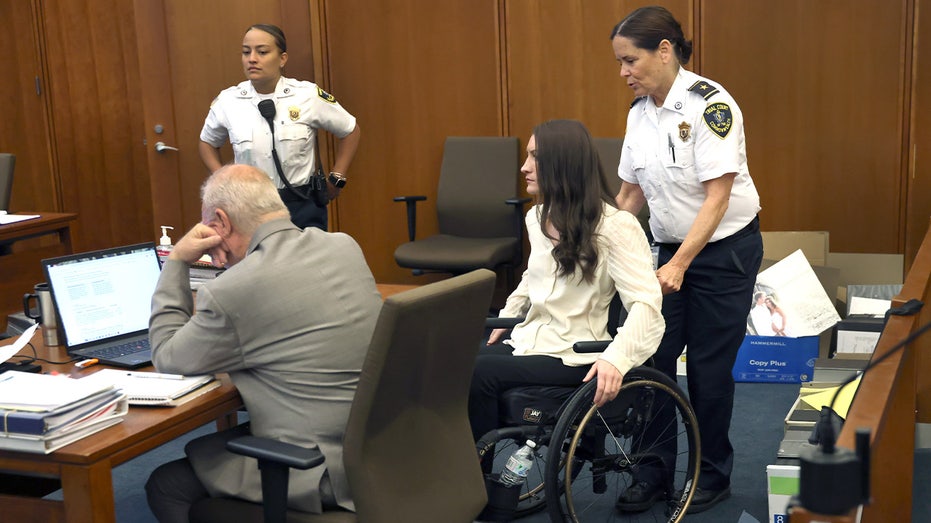
Michael P. Desronvil, the lone juror who opposed an insanity verdict for Lindsay Clancy, says he never wavered during deliberations. His account conflicts with fellow jurors who said he appeared to acknowledge reasonable doubt but still refused to join them. The jury deadlocked 11-1, leading the judge to declare a mistrial. Prosecutors are now weighing whether to seek a retrial as Clancy’s case returns to court.
| 1) | Holdout juror rejects claims of uncertainty |
| 2) | How the 11-1 deadlock produced a mistrial |
| 3) | The competing prosecution and defense arguments |
| 4) | Prosecutors face a difficult retrial decision |
| 5) | What happens next in the case |
Holdout juror rejects claims of uncertainty
In a public statement, Michael P. Desronvil disputed fellow jurors’ descriptions of his position during the trial in Plymouth Superior Court in Massachusetts. He said he did not have doubts about the prosecution’s case and maintained that the evidence showed Lindsay Clancy knew what she was doing when she killed her three children in January 2023.
“I didn’t have any doubts. As I tried to explain different possible theories during deliberation, I kept getting cut off as if I had doubts based on the evidence present.”
Desronvil said physical evidence, testimony from key witnesses and the prosecution’s presentation persuaded him that Clancy understood and planned her actions. His statement directly challenges accounts from other jurors, who said he seemed to recognize reasonable doubt but nevertheless declined to support an insanity finding.
How the 11-1 deadlock produced a mistrial
The jury was considering whether Clancy should be found not guilty by reason of insanity. Eleven jurors supported that outcome, while Desronvil stood alone in favor of a conviction, according to the account of the deliberations. Because the panel could not reach a unanimous verdict, Judge William Sullivan declared a mistrial.
The decision ended the first trial without a final resolution of Clancy’s criminal responsibility. The sealed identities and questionnaires of the jurors were ordered protected because of safety concerns connected to the high-profile proceedings. The disagreement among jurors has since become central to public discussion of whether another panel could reach a unanimous decision.
The competing prosecution and defense arguments
Lindsay Clancy, a former labor and delivery nurse, admitted killing her children, Cora, 5, Dawson, 3, and Callan, 8 months. Her defense argued that severe mental illness made her not criminally responsible at the time of the killings and sought a verdict based on insanity.
Prosecutors argued that Clancy planned the murders and understood that her actions were wrong. Desronvil’s statement aligns with that position, saying the evidence demonstrated that she knew exactly what she was doing. The 11-1 split shows that most jurors accepted the defense position, but the lone holdout prevented the required unanimous result.
Prosecutors face a difficult retrial decision
Plymouth County prosecutors are weighing whether to bring the case before another jury. A retrial would require prosecutors to persuade all jurors to reject Clancy’s insanity defense, a challenge after the first panel strongly favored the defense’s position.
Legal analyst Jonathan Turley said prosecutors must consider whether a future Massachusetts jury could unanimously rule against Clancy. He also said abandoning the case would carry its own difficulties because three children died. Clancy’s attorneys have raised the possibility of resolving the case without another jury trial, but no final agreement has been announced.
What happens next in the case
Lindsay Clancy is scheduled to return to court on September 29, while prosecutors decide whether to seek a retrial. The court date provides an opportunity for the parties to address the next procedural step, including whether the case will proceed toward another trial or whether negotiations will continue.
The jurors’ sealed information remains protected, and the conflicting descriptions of deliberations do not change the mistrial result. Any future proceeding would again focus on whether Clancy was criminally responsible and whether prosecutors can prove their position beyond the required legal standard.
| Number | Key Point |
|---|---|
| 1 | Michael P. Desronvil says he consistently supported conviction. |
| 2 | The jury deadlocked 11-1 on the insanity issue. |
| 3 | Judge William Sullivan declared a mistrial. |
| 4 | Prosecutors are considering whether to pursue a retrial. |
| 5 | Clancy is due back in court on September 29. |
Summary
The first trial ended without a verdict after one juror rejected an insanity finding supported by the other 11. His public response disputes claims that he wavered, while prosecutors must decide whether another jury can resolve the case unanimously. The next significant court date is September 29.
Frequently Asked Questions
Why was the trial declared a mistrial?
The jury could not reach a unanimous decision. Eleven jurors supported finding Clancy not guilty by reason of insanity, while one juror opposed that outcome.
What does the holdout juror say?
Michael P. Desronvil says he never doubted that prosecutors proved Clancy knew what she was doing and planned the killings.
What is the next scheduled court date?
Clancy is due back in court on September 29 as prosecutors consider whether to seek a retrial.