
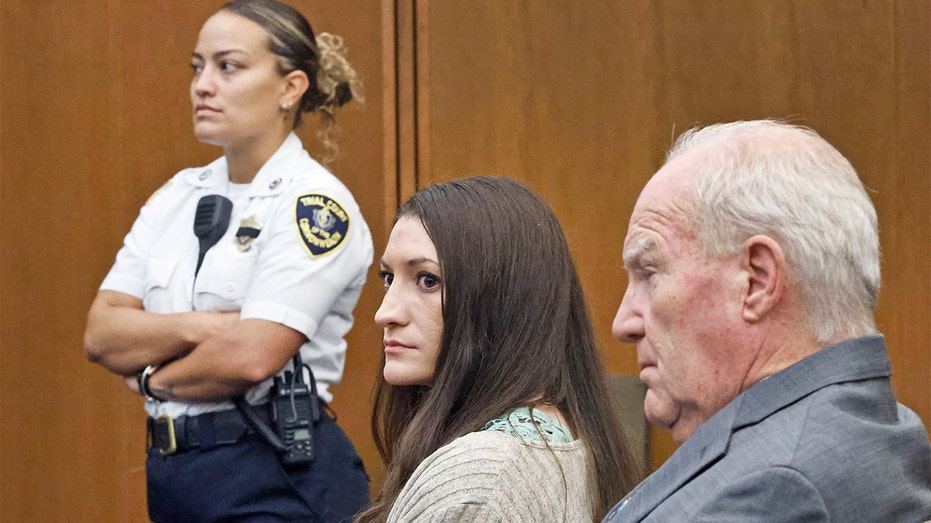
Lindsay Clancy’s murder trial ended in a mistrial after a 12-member jury failed to reach a unanimous verdict in the deaths of her three children. Juror No. 5 said she initially favored conviction but later defended the lone holdout, describing strong personalities and entrenched views in the deliberation room. The jury split 11-1 after deliberating for about a week. The case centered on whether Clancy was criminally responsible when her children died in January 2023.
The deadlock remains unresolved as prosecutors and defense lawyers consider the possibility of another trial.
Article Subheadings
| 1) | Jury split and mistrial |
| 2) | Juror No. 5’s changing view |
| 3) | Holdout’s role and privacy |
| 4) | Central criminal responsibility question |
| 5) | Potential retrial and unresolved case |
Jury split and mistrial
The jury in Lindsay Clancy’s Massachusetts murder trial consisted of nine women and three men. After deliberating for a full week, the panel repeatedly told Judge William Sullivan that it could not reach agreement. The final division was reported as 11 jurors favoring one outcome and one juror refusing to join them.
Judge Sullivan declared a mistrial on Friday afternoon after denying a defense request to remove the holdout. The proceeding ended without a verdict, leaving the legal question of Clancy’s responsibility unresolved. The mistrial followed an emotionally charged case involving the deaths of three young children at their Duxbury, Massachusetts, home.
Juror No. 5’s changing view
Juror No. 5 told local television that she initially leaned toward a guilty verdict. She said, however, that the deliberations involved several forceful personalities and that the disagreement could not be reduced solely to the position of the final holdout.
“The stand-alone juror was not the only one that was unwilling to see things from the other side, so I’m going to kind of defend that individual in a sense. There were some big personalities in that room, but at the end of the day, it just came down to an inability to move past your convictions.”
She also said she might still believe Clancy was guilty in a certain sense, while characterizing Clancy as a woman who was not mentally healthy. Her comments offered a different account from other jurors who publicly criticized the holdout after the mistrial.
Holdout’s role and privacy
Three other jurors, including the foreperson, said in a televised interview that the holdout had acknowledged having reasonable doubt but continued to insist that Clancy was criminally responsible. They described the juror as arrogant and said information presented by nurses serving on the panel was disregarded.
The holdout had not publicly identified himself as of Wednesday morning. Judge Sullivan impounded the jury list after the trial because of privacy and safety concerns. The competing public accounts show how sharply the deliberations divided the panel, but they do not establish why individual jurors reached their positions.
Central criminal responsibility question
The trial focused on whether Lindsay Clancy was criminally responsible when she strangled her children, 5-year-old Cora Clancy, 3-year-old Dawson Clancy and 8-month-old Callan Clancy, with exercise bands in 2023. The children died at the family’s Duxbury home in January of that year.
The defense argued that Clancy should not be held criminally responsible because she was suffering from postpartum psychosis. Prosecutors’ position was tested against that mental-health defense throughout the trial. The jury’s failure to agree meant that no final determination was made on the competing claims about her mental state and actions.
Potential retrial and unresolved case
A retrial remains a possibility, although the mistrial itself did not resolve whether prosecutors will pursue the case again. Clancy’s former husband, Patrick Clancy, has addressed the prospect of another trial publicly, while the defense remains led by attorney Kevin J. Reddington.
The former foreperson reportedly said she planned to attend a potential retrial in support of Clancy’s defense. The jury’s public statements may shape discussion around a future proceeding, but any new jury would have to evaluate the evidence independently. Until prosecutors and the court determine the next step, the case remains without a verdict.
Key Points
| Number | Key Point |
|---|---|
| 1 | The jury deadlocked 11-1 after about a week of deliberations. |
| 2 | Juror No. 5 initially favored conviction but said multiple strong personalities influenced the discussions. |
| 3 | The holdout’s identity remained private because the jury list was impounded. |
| 4 | The defense argued that postpartum psychosis prevented criminal responsibility. |
| 5 | A possible retrial would revisit the deaths of Cora, Dawson and Callan Clancy. |
Summary
The mistrial in Lindsay Clancy’s case followed a deeply divided jury and left the central question of criminal responsibility unanswered. Public comments from jurors indicate that the disagreement involved both the evidence and sharply different approaches to deliberation. With the holdout’s identity protected and a retrial still possible, the case remains pending without a verdict.
Frequently Asked Questions
Why was a mistrial declared?
A mistrial was declared after the 12-member jury repeatedly reported that it could not reach a unanimous decision. The final split was reported as 11-1.
What did Juror No. 5 say?
Juror No. 5 said she initially favored conviction but later defended the lone holdout, saying several strong personalities and fixed positions shaped the deliberations.
What was the defense argument?
The defense argued that Clancy was not criminally responsible because she was experiencing postpartum psychosis when her children were killed.
Could Lindsay Clancy face another trial?
A retrial is possible, but the case’s next legal step had not been determined after the mistrial. Any future jury would consider the evidence anew.