
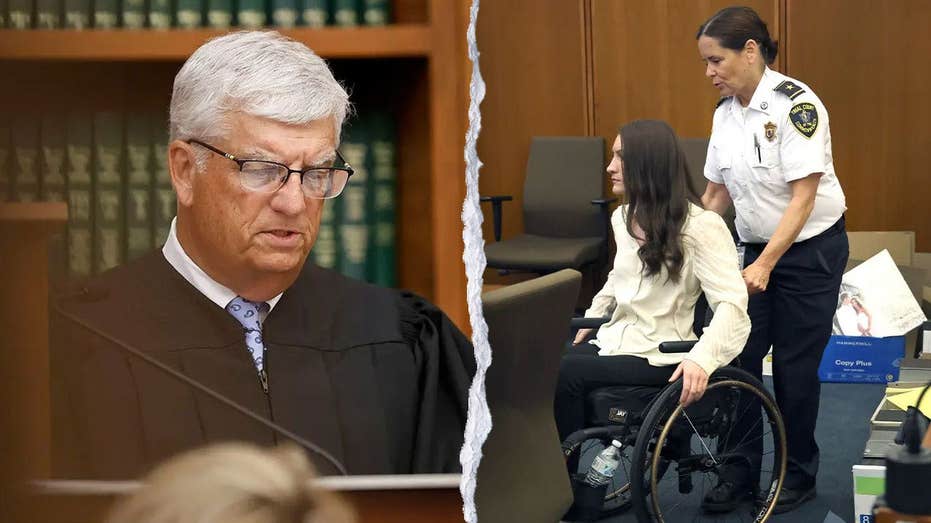
Jurors in the Lindsay Clancy murder trial ended their fifth day of deliberations without reaching a unanimous verdict. The panel reported a second deadlock Wednesday, prompting Judge William Sullivan to issue a Tuey-Rodriguez charge urging continued discussion. Jurors deliberated for several more hours before being dismissed and are scheduled to return Thursday. The impasse raises the possibility of a mistrial if the panel cannot agree.
| 1) | Jury reports a second deadlock |
| 2) | Judge delivers a rare instruction |
| 3) | The competing criminal responsibility claims |
| 4) | Separate courthouse security case |
| 5) | What happens when deliberations resume |
Jury reports a second deadlock
The jury, made up of nine women and three men, resumed deliberations Wednesday in Plymouth Superior Court in Plymouth, Massachusetts. The panel had already told Judge William Sullivan on Tuesday that it could not unanimously agree on a verdict. When jurors again reported that they remained divided, the court faced a procedural decision about whether to let them continue working.
After receiving the judge’s instruction, jurors spent several additional hours considering the case. They were ultimately sent home without a verdict and are expected back Thursday. A continued failure to reach unanimity could move the case closer to a mistrial, although no mistrial had been declared as of Wednesday evening.
Judge delivers a rare instruction
Judge Sullivan issued a Tuey-Rodriguez charge, a formal Massachusetts instruction named for decisions of the state Supreme Judicial Court. The instruction encourages jurors to carefully weigh one another’s views and continue deliberating, while making clear that they should not surrender honestly held beliefs merely to produce a unanimous result.
The charge is generally viewed as an important late-stage step when jurors are unable to agree. Retired Massachusetts Superior Court Judge Thomas Drechsler previously said the instruction can prompt jurors to reconsider their positions by emphasizing that the current panel is best placed to decide the evidence.
“The reasoning is that it often works,” Drechsler said, while noting that another deadlock after the instruction could create a high likelihood of a mistrial.
The competing criminal responsibility claims
The jury must decide whether Lindsay Clancy was criminally responsible when she killed her three children, Cora, Dawson and Callan, inside the family’s Duxbury, Massachusetts, home on Jan. 24, 2023. Cora was 5, Dawson was 3 and Callan was 8 months old at the time.
Clancy, 36, a former labor and delivery nurse, does not dispute that she killed the children. Her defense argues that she was experiencing postpartum psychosis and should be found not criminally responsible. Prosecutors argue that she planned the killings, understood the difference between right and wrong and withheld disturbing thoughts from medical providers because she knew they were wrong.
Separate courthouse security case
Wednesday also brought a development involving Dawn Light, who was accused of recording jurors as they left the courthouse Tuesday. Light was arraigned on a charge related to witness intimidation and pleaded not guilty.
Prosecutors said a video recovered from Light’s cellphone showed Clancy jurors leaving the courthouse. Light said she was trying to see Clancy and did not realize that jurors had been recorded. A judge released her on personal recognizance and ordered her to stay away from the courthouse, avoid contact with jurors and witnesses and refrain from sharing images.
Before deliberations resumed Wednesday, Sullivan reminded people in the courtroom that orders protecting jurors and other participants were being enforced. He did not specifically refer to Light’s arrest in that warning.
What happens when deliberations resume
Jurors are scheduled to return Thursday and continue weighing the evidence and legal instructions. Their next report will determine whether deliberations continue, a verdict is reached or the court must consider declaring a mistrial.
A mistrial would mean that the current jury did not reach the required unanimous decision, but it would not itself resolve the criminal responsibility question. For now, the case remains with the jury, and the court has not announced any outcome beyond the planned resumption of deliberations.
| Number | Key Point |
|---|---|
| 1 | The jury reported a second deadlock after five days of deliberations. |
| 2 | The judge issued a Tuey-Rodriguez charge encouraging continued discussion. |
| 3 | The defense relies on postpartum psychosis, while prosecutors argue the killings were planned. |
| 4 | Jurors are scheduled to resume deliberations Thursday. |
Summary
The Lindsay Clancy jury remains divided after receiving a rare instruction intended to help it reach a unanimous decision without pressuring members to abandon sincere views. The panel will return Thursday, with a mistrial possible if the deadlock continues. The central issue remains whether Clancy was criminally responsible for the deaths of her three children.
Frequently Asked Questions
Why did the judge issue a Tuey-Rodriguez charge?
The charge was issued after jurors reported that they could not unanimously agree. It encourages careful consideration of other jurors’ views while protecting sincerely held positions.
What is the jury deciding in the Clancy case?
The jury is deciding whether Clancy was criminally responsible when she killed her three children in the family’s Duxbury home in January 2023.
Could the case end in a mistrial?
Yes. If jurors remain unable to reach a unanimous verdict after continuing deliberations, the judge could consider declaring a mistrial. No mistrial had been declared as of Wednesday.