
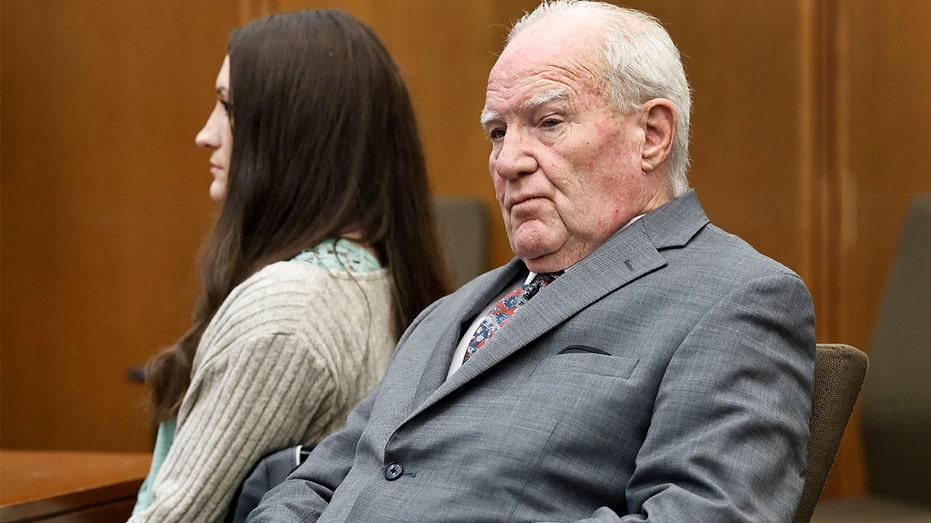
David Yannetti, a former Karen Read defense attorney, praised Kevin Reddington as jurors in the Lindsay Clancy murder trial continued deliberating without a verdict. The jury completed six days of deliberations and twice informed the court that it could not reach a unanimous decision. Jurors were scheduled to return Friday, Sept. 4, for a seventh day in the Massachusetts case.
Reddington represents Lindsay Clancy, who is charged with murdering her three children at their Duxbury home in January 2023. Yannetti said the wait is among the most difficult stages of a trial because attorneys and their clients have little control once a case reaches the jury.
The cases involving Clancy and Read are factually different, but Yannetti said both drew intense public attention and involved women with no previous criminal records.
| 1) | Yannetti identifies with the pressure facing Reddington |
| 2) | Clancy’s charges and possible verdicts |
| 3) | Judge rejects request involving an alleged holdout |
| 4) | The jury’s extended deliberations |
| 5) | Why the Read comparison matters |
Yannetti Identifies With the Pressure Facing Reddington
David Yannetti, who played a prominent role on Karen Read’s defense team during two Massachusetts murder trials, said the Clancy deliberations brought back the stress of waiting for jurors. He said the most difficult stage begins after both sides finish presenting their cases and the jury leaves the courtroom.
“It immediately brings back the stress and the pressure that comes from having somebody’s life in your hands and the very worst part of a trial, which is when the jury’s out,” Yannetti said.
Yannetti said Kevin Reddington appeared confident despite the uncertainty and had performed well while defending Clancy amid severe allegations and intense public scrutiny.
Clancy’s Charges and Possible Verdicts
Lindsay Clancy faces three counts of murder in the deaths of her children, Cora, 5, Dawson, 3, and Callan, who was 8 months old. The children died at the family’s Duxbury, Massachusetts, home in January 2023. The trial is being held in Plymouth Superior Court.
The jury may consider first-degree murder, second-degree murder or manslaughter under the evidence and instructions presented at trial. It could also find Clancy not criminally responsible under her insanity defense.
Judge Rejects Request Involving an Alleged Holdout
During the sixth day of deliberations, the jury sent another note to Judge William Sullivan about its inability to reach a unanimous verdict. After reminding jurors that prosecutors must prove guilt beyond a reasonable doubt, Sullivan directed them to continue working.
Reddington then requested removal of what he described as an apparent single holdout. He said another juror had accused that person of failing to follow the law. Sullivan rejected the request, leaving the jury intact.
Retired Massachusetts Judge Carol Erskine, who is not involved in the case, said disagreement alone does not establish that a juror is refusing to deliberate.
The Jury’s Extended Deliberations
The Clancy jury completed its sixth day on Thursday, Sept. 3, 2026. Court proceedings ended shortly after 4 p.m., and jurors were expected to return Friday morning for day seven. Their notes indicated difficulty reaching unanimity, but they did not end deliberations.
“It’s torture,” Yannetti said. “You’re all just sort of on the frying pan, being cooked.”
Why the Read Comparison Matters
Yannetti said the Read and Clancy cases are not alike in their underlying facts. He identified a narrower connection: both defendants are professional women with no prior court involvement or criminal records before becoming the focus of heavily watched Massachusetts murder proceedings.
Read’s first trial ended with a deadlocked jury after five days of deliberations in 2024. She was acquitted of all homicide-related charges after her second trial in 2025, when jurors deliberated for four days. Yannetti said Reddington had done a wonderful job defending Clancy in what he called a horrific set of facts.
| Number | Key Point |
|---|---|
| 1 | The jury completed six days of deliberations and was scheduled to return for a seventh. |
| 2 | Judge William Sullivan rejected Reddington’s request to remove an alleged holdout juror. |
| 3 | Clancy faces possible murder or manslaughter convictions, or a finding that she was not criminally responsible. |
Summary
The prolonged deliberations have highlighted the strain faced by defense lawyers and clients awaiting a verdict. The court declined to intervene in the jury’s disagreement, and deliberations remained active heading into a seventh day.
Frequently Asked Questions
Who represents Lindsay Clancy?
Kevin Reddington represents Clancy in her Plymouth Superior Court murder trial.
How long had the jury deliberated?
The jury had completed six days by Thursday, Sept. 3, 2026, and was scheduled to begin a seventh day Friday.
What charges does Clancy face?
Clancy faces three counts of murder. The jury may also consider second-degree murder, manslaughter and whether she was not criminally responsible under an insanity defense.
Why was a juror removal request rejected?
Judge William Sullivan rejected the request because disagreement is not necessarily a refusal to deliberate.