
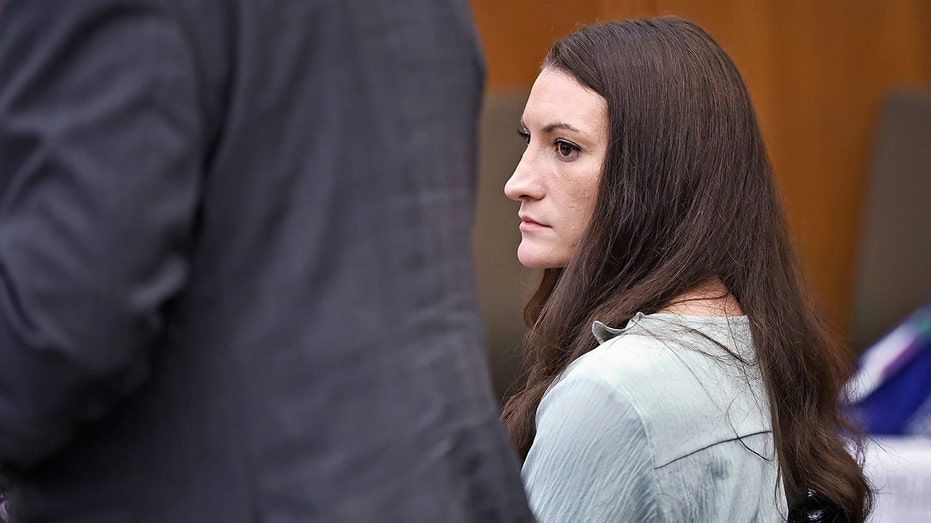
Lindsay Clancy’s jury ended its sixth day of deliberations Thursday without reaching a verdict in the case involving the deaths of her three children. The proceedings were complicated by a dispute over whether one juror was refusing to follow the court’s instructions on reasonable doubt. Deliberations are scheduled to resume Friday, when Judge William Sullivan is expected to examine the issue. A mistrial remains possible if the 12-member panel cannot reach a unanimous decision.
| 1) | Jury ends sixth day without a verdict |
|---|---|
| 2) | Defense raises concern about a holdout juror |
| 3) | Judge weighs limits on examining deliberations |
| 4) | Case centers on criminal responsibility |
| 5) | Mistrial and retrial options remain possible |
Jury ends sixth day without a verdict
The jury returned to Plymouth Superior Court in Plymouth, Massachusetts, on Thursday, September 3, 2026, for a sixth day of deliberations. The panel consists of nine women and three men and has already told the court twice that it was deadlocked. It left court without resolving the case and is expected to resume discussions Friday.
The jury must decide whether Lindsay Clancy is criminally responsible for the deaths of her children, Cora, Dawson and Callan. The children, all younger than 6, were found strangled at the family’s Duxbury home in January 2023. Clancy faces three counts of first-degree murder, although she does not dispute that she killed them.
Defense raises concern about a holdout juror
Defense attorney Kevin J. Reddington asked unsuccessfully Thursday for a juror to be removed after the foreperson reported that the juror was not following the court’s instructions concerning reasonable doubt. Reddington argued that the dispute could prevent the panel from producing any verdict.
After the court proceedings, Reddington said a later jury note appeared to indicate an 11-to-1 division. The note did not state which verdict the 11 jurors supported or how the remaining juror viewed the charges. Reddington said the judge planned to hold an inquiry at 9 a.m. Friday.
“When a note that the judge already has says that there are 11 jurors that have made a decision and one juror will not apply reasonable doubt…” Reddington said.
Judge weighs limits on examining deliberations
Prosecutors opposed removing a juror, saying the court could not determine who was right without improperly probing the panel’s private discussions. They argued that Judge William Sullivan had acted appropriately by asking jurors whether they could follow the law and by repeating the reasonable doubt instruction.
Sullivan declined to remove the juror, describing such a step as a sensitive undertaking. The judge also said the court could not take sides in the jury’s deliberations. The defense expects arguments over the issue to occur in open court rather than at a sidebar conference.
Case centers on criminal responsibility
The central dispute at trial is not whether Clancy caused the children’s deaths, but whether she was legally responsible when the killings occurred. Prosecutors contend she understood her actions and should be held accountable under Massachusetts law.
Clancy’s attorneys argue that she was experiencing postpartum psychosis and could not appreciate the wrongfulness of her conduct or conform her behavior to the law. The jury may consider verdicts including first-degree murder, second-degree murder, voluntary manslaughter, involuntary manslaughter, not guilty by reason of a lack of criminal responsibility, or not guilty.
Mistrial and retrial options remain possible
If the jurors again report that they cannot reach a unanimous verdict, the case could end in a mistrial. Any decision about a future prosecution would involve the Plymouth County district attorney’s office and the defense, but no agreement or retrial has been announced.
Kevin J. Reddington said he believed the defense could proceed with another trial if necessary, citing available witnesses and evidence. He also said prosecutors might seek to delay a retrial for six months or a year, while indicating that the defense would be prepared to move sooner.
“Bring it,” Reddington said when asked about a possible retrial. “I got witnesses lined up. We’re all set. I’m ready. We’ve got all our evidence.”
| Number | Key Point |
|---|---|
| 1 | The jury completed six days of deliberations without a verdict. |
| 2 | The defense says one juror may not be applying reasonable doubt correctly. |
| 3 | Judge William Sullivan is expected to conduct an inquiry Friday morning. |
| 4 | The verdict will turn on Clancy’s criminal responsibility at the time of the killings. |
| 5 | A continued deadlock could result in a mistrial. |
Summary
The jury’s inability to reach a verdict has added a procedural dispute to an already closely watched criminal responsibility case. The judge’s Friday inquiry may clarify whether the panel can continue deliberating under the court’s instructions. Until then, the possible outcomes range from a conviction on a murder charge to acquittal, a finding of lack of criminal responsibility, or a mistrial.
Frequently Asked Questions
What happened after the sixth day of deliberations?
The jury ended Thursday without a verdict and is scheduled to return Friday. The panel has previously reported being deadlocked.
Why did the defense object to one juror?
The defense said the juror was refusing to follow the court’s instructions on reasonable doubt. The judge declined to remove the juror at that stage.
What could happen if the jury remains divided?
If the panel cannot reach a unanimous verdict, the court could declare a mistrial. A future retrial could then be considered, but no retrial has been scheduled.