
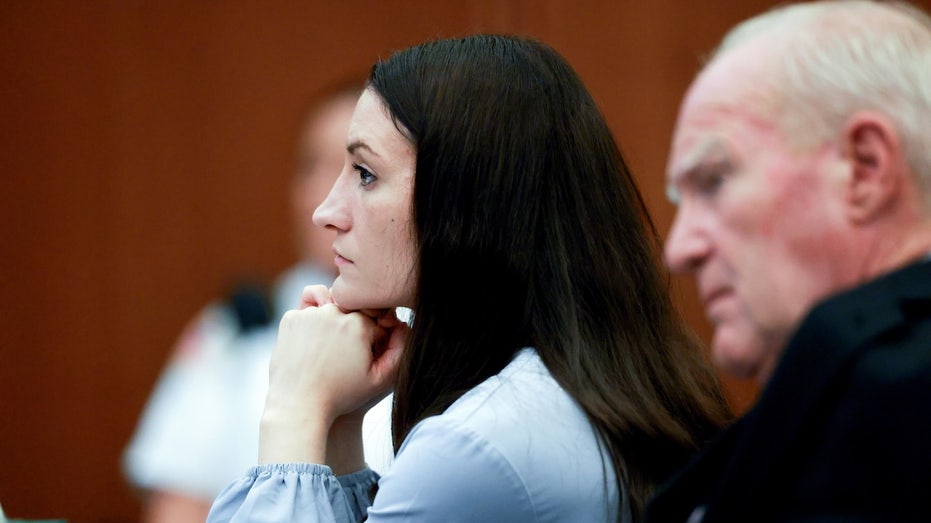
A Massachusetts judge declared a mistrial Friday after jurors failed to reach a unanimous verdict in the case against Lindsay Clancy, who was charged with killing her three children. The 12-member jury had deliberated for about a week before reporting that it could not resolve the case. The proceedings ended without a conviction or acquittal, and prosecutors may seek a new trial.
The case centered on whether Clancy was legally responsible for the January 2023 deaths or whether postpartum psychosis and other severe psychiatric symptoms prevented her from understanding her actions or following the law. The judge said he wanted any retrial to occur sooner rather than later, potentially later this fall.
The mistrial followed an emergency defense appeal concerning an alleged division among jurors. The Massachusetts Supreme Judicial Court declined to block the mistrial, allowing the trial judge to formally end the proceedings.
| 1) | Jury deadlock brings the trial to an end |
| 2) | The charges and the January 2023 deaths |
| 3) | Competing accounts of Clancy’s mental state |
| 4) | The court’s next steps and legal position |
| 5) | Families and victims remain central to the case |
Jury deadlock brings the trial to an end
Plymouth County Superior Court Judge William Sullivan declared the mistrial on September 4, 2026, after the jury said it could not agree on a verdict following approximately seven days of deliberations. The dispute intensified when defense attorney Kevin Reddington argued that the panel was divided 11-1 and that the holdout juror had expressed doubt but was not properly applying the court’s reasonable-doubt instructions.
The defense sought emergency relief from the Massachusetts Supreme Judicial Court, asking for additional inquiry into the juror and an order preventing the mistrial. Justice Dalila Argaez Wendlandt denied the request Friday afternoon. The ruling cleared the way for Judge Sullivan to conclude the trial without a verdict.
The charges and the January 2023 deaths
Lindsay Clancy faced three first-degree murder charges in the deaths of her children, 5-year-old Cora, 3-year-old Dawson and 8-month-old Callan. Prosecutors said the children were strangled with exercise bands at the family’s home in Duxbury, Massachusetts, on January 24, 2023.
Authorities arrived after Patrick Clancy returned from errands that included buying children’s stool softener and takeout food. He found Lindsay seriously injured outside the home, while the children were inside. Cora and Dawson died that night, and Callan died several days later in a hospital. Clancy survived after jumping from a second-story window and sustained injuries that left her paralyzed and dependent on a wheelchair.
Competing accounts of Clancy’s mental state
The defense argued that Clancy’s mental health had deteriorated after months of anxiety, depression, insomnia, medication changes and psychiatric treatment. Her attorneys said postpartum psychosis left her unable to appreciate the wrongfulness of her conduct or conform her behavior to legal requirements. They also argued that she heard a male voice commanding her to kill the children.
“It was almost like she was a puppet, and someone else was pulling the strings,” forensic psychiatrist Phillip Resnick testified.
Prosecutors disputed that account and maintained that Clancy remained criminally responsible. Their evidence was intended to show planning, purposeful conduct and awareness before, during and after the killings. Forensic psychiatrist Gregory Saathoff testified that Clancy’s reported auditory hallucinations were unusual because she had not previously described hearing voices to several mental health professionals, and because the voice reportedly stopped after the strangling of her youngest child.
The court’s next steps and legal position
A mistrial means the case ended without a final determination of guilt or innocence. Under Massachusetts law, once a lack of criminal responsibility is properly raised, prosecutors must prove beyond a reasonable doubt that the defendant was criminally responsible.
The prosecution has not announced whether it will retry Clancy. Judge Sullivan said he hoped a new trial would occur “sooner rather than later,” possibly later in the fall. Clancy is scheduled to return to court on September 29 for a status hearing, trial assignment and consideration of a defense Rule 25 motion. Existing bail orders remain in effect.
Families and victims remain central to the case
Plymouth County District Attorney Tim Cruz said the children must remain visible in the legal process and acknowledged the suffering experienced by the family. The trial also included testimony from Patrick Clancy and relatives who described concerns about Lindsay’s mental health before the deaths.
“It is our job to make sure the victims are not invisible,” Cruz said.
Susan Clancy, Lindsay’s former mother-in-law, testified that the family was deeply concerned about her condition while also describing her as a loving and nurturing mother. Paula Musgrove, Lindsay’s mother, testified about a message in which her daughter requested help because of severe insomnia, fear and concern about being alone.
| Number | Key Point |
|---|---|
| 1 | The jury deadlocked after about a week of deliberations. |
| 2 | The case involved the deaths of Cora, Dawson and Callan Clancy. |
| 3 | The defense cited postpartum psychosis, while prosecutors argued Clancy remained responsible. |
| 4 | A retrial remains possible, with Clancy due back in court on September 29. |
Summary
The mistrial leaves the criminal case unresolved and preserves the prosecution’s option to seek another trial. Any future proceeding is expected to again focus on the legal significance of Clancy’s psychiatric condition and the evidence concerning her conduct. The victims, their family and the unresolved question of criminal responsibility remain at the center of the case.
Frequently Asked Questions
What is a mistrial?
A mistrial ends a court proceeding without a verdict. It generally leaves the prosecution able to seek a new trial, depending on applicable law and future prosecutorial decisions.
Why did the jury fail to reach a verdict?
Jurors reported that they could not reach a unanimous decision. The defense described an alleged 11-1 split, but the court ended the trial after the jury remained deadlocked.
What happens next for Lindsay Clancy?
Prosecutors will decide whether to pursue a retrial. Clancy is scheduled for a September 29 court hearing addressing the case’s status, trial assignment and a defense Rule 25 motion.