
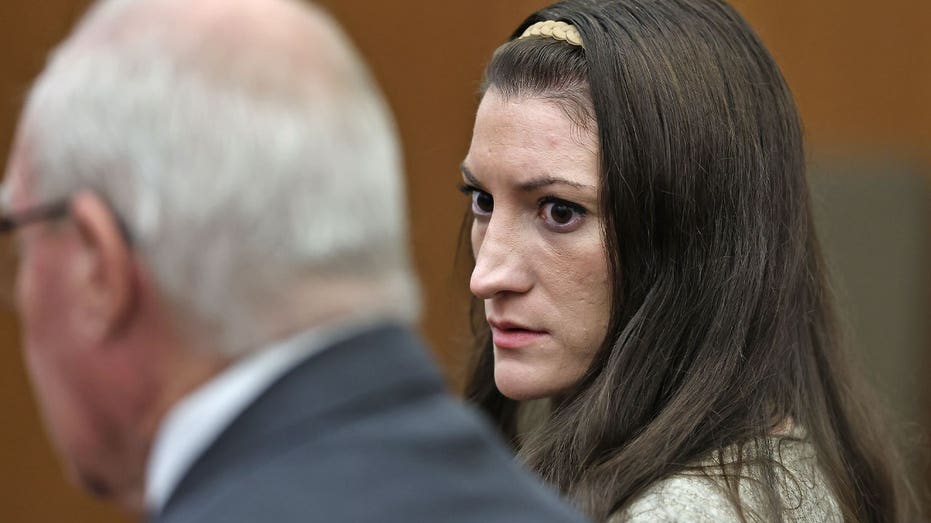
Lindsay Clancy’s murder trial ended in a mistrial after jurors failed to reach a unanimous verdict on three first-degree murder charges. The jury was divided 11-1, with one juror opposing the position held by the other 11 members. The holdout juror’s brother said his sibling made the decision after reviewing the evidence and denied that religion influenced the vote. Judge William Sullivan declared the mistrial on September 4.
| 1) | The jury deadlock and mistrial |
| 2) | What the holdout juror’s brother said |
| 3) | The charges against Lindsay Clancy |
| 4) | Questions surrounding the jury’s decision |
| 5) | What happens after the mistrial |
The jury deadlock and mistrial
The jury in Lindsay Clancy’s trial could not agree on a unanimous verdict regarding three first-degree murder charges. Deliberations ended with an 11-1 split, creating a deadlock that prevented the case from reaching a final verdict. The disagreement concerned whether Clancy should be held criminally responsible for the deaths of her three children.
Judge William Sullivan, who presided over the proceedings in Plymouth County Superior Court, declared a mistrial on September 4. A mistrial means the jury was discharged without resolving the charges. The available account does not state whether prosecutors will seek a new trial or identify any future court date.
What the holdout juror’s brother said
The lone holdout juror did not publicly explain the vote in the available report. His brother, speaking about the deliberations, said the juror reviewed the case and reached his own conclusion based on the evidence presented in court.
“For me, that’s how I would do it. I would just listen to the case with all the evidence, and go from there.”
The brother also acknowledged that the decision produced different reactions among those following the case. He said the choice was beneficial to some people but not to others. He disputed suggestions that religion played a role, stating that he did not believe religion had anything to do with the juror’s decision.
The charges against Lindsay Clancy
Lindsay Clancy, 36, faced three counts of first-degree murder in connection with the deaths of her children. The children were identified as 5-year-old Cora, 3-year-old Dawson and 8-month-old Callan.
The children were discovered strangled at the family’s home in January 2023. The charges required the jury to determine whether the evidence established criminal responsibility beyond the applicable legal standard. The mistrial left those charges unresolved.
Questions surrounding the jury’s decision
The 11-1 division shows that the jurors reached sharply different conclusions after considering the evidence and legal arguments. The available information does not identify the specific evidence that persuaded the holdout juror or explain the reasoning of the other 11 jurors in detail.
The brother’s comments address two issues raised after the mistrial: whether the holdout acted independently and whether personal beliefs affected the vote. He said the juror made the call after examining the case and rejected religion as an explanation for the decision. No further characterization of the juror’s deliberative reasoning was provided.
What happens after the mistrial
The mistrial ended the trial without a verdict, but it did not resolve the first-degree murder charges. The next steps will depend on decisions by prosecutors and the court. The report does not provide a ruling on a retrial, a new trial schedule or any other pending proceeding.
The case remains subject to further court action. Until a new proceeding or other resolution occurs, the jury’s 11-1 split is the central outcome of the trial described in the available information.
| Number | Key Point |
|---|---|
| 1 | The jury split 11-1 on three first-degree murder charges. |
| 2 | Judge William Sullivan declared a mistrial on September 4. |
| 3 | The holdout juror’s brother said the decision followed a review of the evidence. |
| 4 | The brother denied that religion influenced the juror. |
Summary
The trial of Lindsay Clancy ended without a verdict after one juror disagreed with the other 11 members on three first-degree murder charges. Her brother said the holdout juror independently assessed the evidence, while denying that religion influenced the decision. The charges remain unresolved following the mistrial.
Frequently Asked Questions
Why was a mistrial declared?
A mistrial was declared because the jury could not reach a unanimous verdict. The panel was split 11-1.
What charges did Lindsay Clancy face?
Lindsay Clancy faced three counts of first-degree murder in connection with the deaths of her children Cora, Dawson and Callan.
Did the holdout juror’s brother say religion affected the vote?
No. The brother said he did not think religion had anything to do with the juror’s decision and described the vote as based on reviewing the case and evidence.