
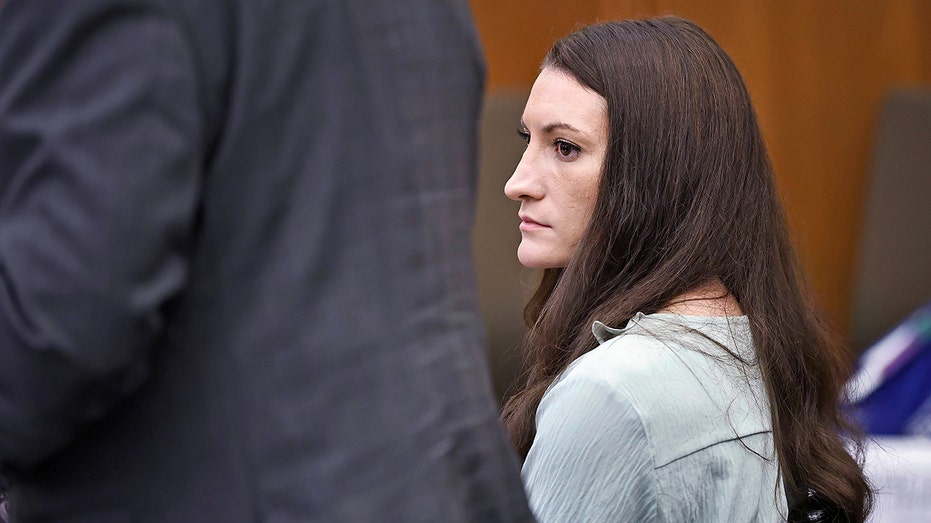
The Lindsay Clancy murder trial in Massachusetts ended in a mistrial after jurors failed to reach a unanimous verdict. Eleven jurors favored finding Clancy not criminally responsible, while one juror supported criminal responsibility. The case concerns the deaths of Clancy’s three young children in January 2023 and her defense that postpartum psychosis affected her legal responsibility. Her attorneys have filed a motion seeking a not guilty finding that would prevent a retrial.
| 1) | Jury deadlock ends the Massachusetts trial |
| 2) | Defense relies on postpartum psychosis claim |
| 3) | Juror describes emotional deliberations |
| 4) | Dispute centers on reasonable doubt |
| 5) | Defense seeks to block a retrial |
Jury deadlock ends the Massachusetts trial
The trial ended in a mistrial last week after jurors could not agree on a unanimous verdict. Clancy was accused of strangling her three children in January 2023 after her husband, Patrick, left the family home to collect medication and takeout.
When Patrick returned, he found Clancy injured outside the home after an apparent suicide attempt. The children were unconscious in the basement. Two died that night, while the third was taken by air to a Boston hospital and died several days later.
The jury’s disagreement concerned whether Clancy was criminally responsible, not whether she caused the children’s deaths. Her defense did not dispute that she killed them, but argued that severe mental illness prevented criminal responsibility.
Defense relies on postpartum psychosis claim
Clancy’s attorneys argued that she was suffering from postpartum psychosis when the killings occurred. They said the condition affected her ability to understand or control her conduct and that she should be found not guilty by reason of lack of criminal responsibility, Massachusetts’ version of an insanity defense.
Prosecutors argued that Clancy remained criminally responsible despite evidence of mental illness. Jurors therefore had to assess evidence about her mental state, the legal standard and the circumstances surrounding the children’s deaths.
Juror Paula, 65, said the majority believed Clancy needed help and that the healthcare system had failed her and her family. She said the case also showed the need for stronger support and education about postpartum mental health conditions.
“We all tried to help each other. It was hard to separate the children from what our task was, and it was very emotional,” Paula said.
Juror describes emotional deliberations
Paula said jurors received 297 pieces of evidence, including Patrick’s emotional 911 call. She said some jurors found the call difficult to hear while reviewing the case.
According to Paula, an initial poll showed that eight jurors favored a finding of no criminal responsibility, two supported a guilty verdict and two were undecided. She said the panel did not begin deliberations with an 11-to-1 split.
The majority ultimately concluded that Clancy was not criminally responsible. Paula said jurors struggled to reconcile that view with the holdout juror, who continued to favor criminal responsibility. She said the evidence made it difficult to separate the tragedy from the legal question before the panel.
Dispute centers on reasonable doubt
The foreperson told the judge that the jury could not reach a verdict and alleged that the holdout was refusing to apply the law concerning reasonable doubt. Judge William Sullivan questioned jurors individually about whether they could follow the instructions, and they reportedly said they could.
Paula said the majority believed the holdout had acknowledged doubts about the case at various points. In her view, those doubts should have prevented convictions for first-degree murder, second-degree murder or manslaughter under the court’s instructions.
“Everybody says you’re not supposed to feel like you failed, but you have a task to come out unanimous. And we tried everything we could to get to that end. And I feel like we let down Lindsay,” Paula said.
Paula said deliberations might have restarted with an alternate juror if the holdout had provided evidence supporting his reasoning. Juror Kellie Farina also discussed the disagreement and said the holdout had difficulty moving beyond the fact that Clancy killed her children.
Defense seeks to block a retrial
On Thursday, Clancy’s defense filed a motion arguing that prosecutors failed to meet their burden of proof. The filing asks the judge to enter a required finding of not guilty, which the defense says would prevent the state from retrying the case.
The motion follows the mistrial and accounts of the jury’s division. Its outcome will determine whether the case moves toward another trial or ends with a court-ordered acquittal. The defense continues to rely on postpartum psychosis, while prosecutors maintain that Clancy should be held accountable under Massachusetts law.
| No. | Key Point |
|---|---|
| 1 | The trial ended in a mistrial after the jury failed to reach unanimity. |
| 2 | Eleven jurors favored finding Clancy not criminally responsible. |
| 3 | The defense attributed the killings to postpartum psychosis. |
| 4 | A defense motion seeks a not guilty finding and an end to the case. |
Summary
The mistrial leaves the Lindsay Clancy case unresolved. Most jurors accepted the defense position on criminal responsibility, but one juror’s contrary view prevented a unanimous verdict. The judge must consider the defense motion for a required finding of not guilty, while further proceedings depend on the court’s ruling.
Frequently Asked Questions
Why did the Lindsay Clancy trial end in a mistrial?
The jury could not reach a unanimous verdict. Eleven jurors favored finding Clancy not criminally responsible, while one favored criminal responsibility.
What was Clancy’s defense?
Her attorneys argued that postpartum psychosis and severe mental illness left her not criminally responsible for killing her three children.
What motion did the defense file?
The defense asked the judge to enter a required finding of not guilty, arguing that prosecutors failed to meet their burden. It says that ruling would prevent a retrial.