
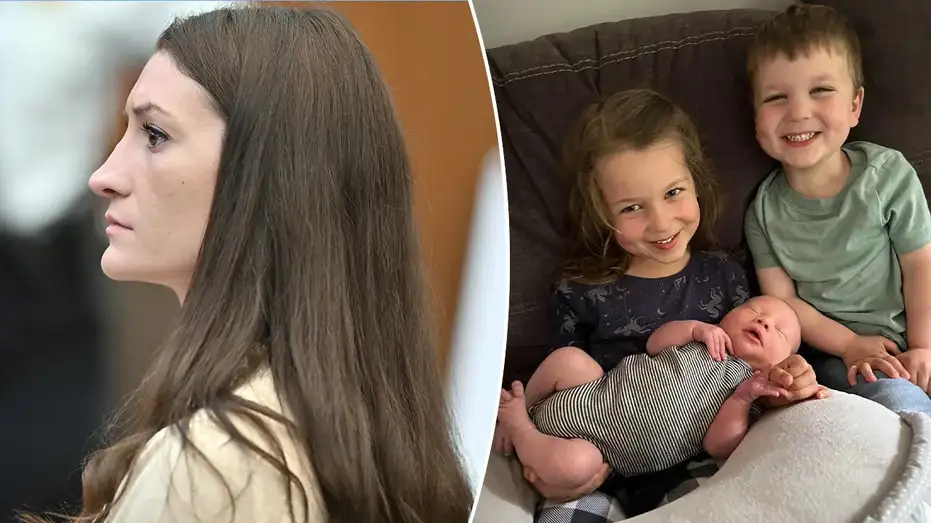
The murder trial of Lindsay Clancy was temporarily halted Wednesday after she broke down while a medical examiner described the autopsy of her 5-year-old daughter, Cora Clancy. Clancy faces three first-degree murder charges in the deaths of Cora, 3-year-old Dawson Clancy, and 8-month-old Callan Clancy. Judge William Sullivan excused the jury and ordered a recess after Clancy began sobbing and said she could not continue. The defense does not dispute that Clancy killed the children but argues that severe postpartum mental illness and prescription medications left her not criminally responsible.
| 1) | Courtroom breakdown during autopsy testimony |
| 2) | Charges and the January 2023 deaths |
| 3) | Competing accounts of Clancy’s mental state |
| 4) | Medication evidence presented at trial |
| 5) | Judge’s response and the next phase of testimony |
Courtroom breakdown during autopsy testimony
The disruption occurred Wednesday at Plymouth Superior Court as medical examiner Barbara Olson testified about the autopsy of Cora. Soon after Olson took the stand and began describing the examination, Clancy started crying and told the court, “I can’t do this.” Two women were seen appearing to console her inside the courtroom.
The testimony was part of the prosecution’s presentation concerning the deaths of Clancy’s three children. The emotional reaction led the judge to remove the jury temporarily so proceedings could continue without exposing jurors to the interruption.
Charges and the January 2023 deaths
Clancy, 32, is charged with first-degree murder in connection with the deaths of Cora, Dawson and Callan. The children died at the family’s home in Duxbury on January 24, 2023. After the killings, Clancy attempted suicide, according to the evidence described in court.
The case centers on what happened inside the Duxbury home and on Clancy’s condition at the time. Prosecutors have argued that she killed the children deliberately, while the defense has acknowledged the killings and is contesting her criminal responsibility rather than the underlying conduct.
Competing accounts of Clancy’s mental state
The defense maintains that Clancy was suffering from severe postpartum depression and postpartum psychosis. It argues that the condition was worsened by the number and combination of prescription medications she had been given and that she was not criminally responsible for the deaths.
Prosecutors presented a sharply different account in their opening statement. They said Clancy “deliberately and meticulously” killed the children and “acted intentionally, rationally, and swiftly to accomplish a very specific goal.” The jury must weigh those competing interpretations of her state of mind and actions.
“I can’t do this,” Lindsay Clancy said during the testimony.
Medication evidence presented at trial
Testimony and other evidence presented in court indicated that five doctors prescribed Clancy multiple medications before the children’s deaths. The listed drugs included Zoloft, Valium, trazodone, Prozac, Lamictal, Seroquel, Remeron, Klonopin, buspirone, Ativan, amitriptyline and Ambien.
The medication history is significant because the defense says overmedication contributed to the postpartum condition it cites. Prosecutors, however, are using the broader evidence to support their contention that the killings were intentional. The ultimate legal question is whether Clancy had the required criminal responsibility when the deaths occurred.
Judge’s response and the next phase of testimony
Judge William Sullivan ordered a recess after Clancy’s breakdown and excused the jury. The court had also taken a break earlier Wednesday when Clancy cried during testimony from another medical examiner, Renee Stonebridge, about her examination of body parts from the three children.
The trial is continuing with medical and forensic testimony at Plymouth Superior Court. The proceedings are expected to address the autopsies, the circumstances at the Duxbury home, Clancy’s medical treatment and the competing claims about whether she was legally responsible for the deaths.
| 1 | Clancy broke down during testimony about Cora’s autopsy, prompting a recess. |
|---|---|
| 2 | She faces three first-degree murder charges over the deaths of her children. |
| 3 | The defense cites postpartum depression, postpartum psychosis and medication effects. |
| 4 | Prosecutors say the killings were deliberate, rational and intentional. |
Summary
The trial remains focused on both the physical evidence surrounding the deaths and Clancy’s mental state in January 2023. Her emotional reactions caused two interruptions during medical examiner testimony, but the central dispute remains whether the prosecution can prove first-degree murder and whether the defense can establish that she was not criminally responsible.
Frequently Asked Questions
What charges does Lindsay Clancy face?
Clancy faces three first-degree murder charges in connection with the deaths of her three children.
Why was the trial paused?
The judge ordered a recess after Clancy began sobbing during testimony about her daughter’s autopsy and said she could not continue.
What is the defense arguing?
The defense argues that severe postpartum depression and postpartum psychosis, worsened by prescription medication, made Clancy not criminally responsible.