
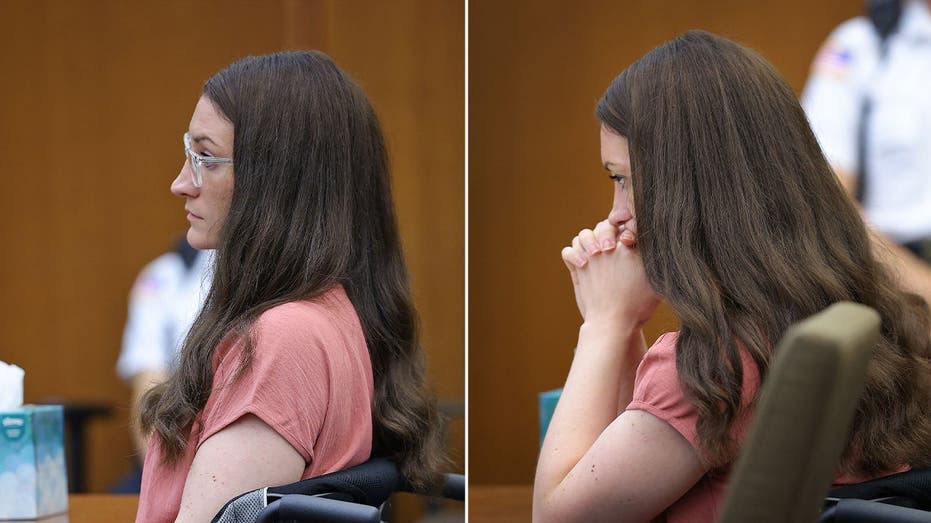
A Massachusetts psychiatrist testified that a person can communicate, make plans and carry them out while experiencing psychosis. The testimony came as the defense challenged prosecutors’ portrayal of Lindsay Clancy as organized and calculating when her three children died. Clancy has pleaded not guilty and says she was experiencing postpartum psychosis. The prosecution maintains that she acted deliberately and understood her conduct.
The testimony may help the defense argue that apparent calm or coherent behavior does not necessarily rule out severe psychiatric symptoms. However, the central legal question remains Clancy’s mental state at the precise time of the deaths.
| 1) | Psychiatrist acknowledges that psychosis can coexist with planning |
| 2) | Defense focuses on the difference between lucidity and mental illness |
| 3) | Hospital evaluations provide competing interpretations of Clancy’s condition |
| 4) | Prosecutors challenge the defense account through medication evidence |
| 5) | The trial turns on criminal responsibility at the time of the deaths |
Psychiatrist acknowledges that psychosis can coexist with planning
During testimony on Monday, August 3, 2026, Dr. Sejal Shah agreed with defense attorney Kevin Reddington that a person experiencing psychosis may still communicate with others, formulate plans and act on them. The exchange took place on the fifth day of testimony at Plymouth Superior Court in Massachusetts.
The defense used the testimony to counter the idea that psychosis must involve obvious physical or conversational impairment. Shah rejected the suggestion that a person must be visibly confused, unable to walk or unable to speak in order to be experiencing psychosis.
“People can communicate and plan and act on plans even if they’re in the middle of a psychosis, right?”
“Yes,” Shah replied, according to the testimony described in court.
Defense focuses on the difference between lucidity and mental illness
The defense argues that Clancy’s ability to communicate or appear organized during some interactions does not establish that she was free of psychosis when her children died. Clancy is charged in the deaths of Cora, 5, Dawson, 3, and Callan, 8 months, at the family’s Duxbury home on January 24, 2023.
Criminal defense attorney Seth J. Zuckerman said the testimony could support an argument that Clancy was not necessarily manipulative or following a rational grand plan merely because she displayed organized behavior at certain times. He said the central question is what was in her mind at the exact time she killed her children.
Hospital evaluations provide competing interpretations of Clancy’s condition
Shah, an associate chief of psychiatry and medicine at Brigham and Women’s Hospital, evaluated Clancy several times in January and February 2023. Her first assessment occurred five days after the killings. Shah said Clancy was confused, made mistakes during a cognitive assessment and reported visual hallucinations following spinal surgery.
Shah diagnosed delirium at that stage and identified possible contributing factors including anesthesia, oxygen problems and an elevated heart rate. She testified that those symptoms resolved by the next day. During later evaluations, Clancy appeared calm and cooperative, showed organized and goal-directed thinking, and denied hallucinations as well as suicidal or homicidal intent.
Shah described Clancy as an honest patient who did not appear to exaggerate symptoms for a legal purpose. The defense presented the evidence as consistent with symptoms that could vary over time, while prosecutors emphasized the later evaluations and her apparent lucidity.
Prosecutors challenge the defense account through medication evidence
On redirect examination, prosecutors focused on Clancy’s psychiatric medication history. Shah agreed that Clancy was not taking every medication discussed at the same time and said she had not known that some prescriptions had been barely used or left untouched.
The prosecution has argued in opening statements that Clancy “deliberately and meticulously” killed the children and acted intentionally, rationally and quickly to achieve a specific goal. Prosecutors have also pointed to her husband Patrick Clancy’s trips to a CVS and a local restaurant, as well as communications between the couple, to argue that she appeared lucid during the relevant period.
Shah also testified that Clancy requested do-not-resuscitate status after surviving a fall from a second-story window. The hospital did not immediately change her status because the fall was reported as a suicide attempt. Shah said Clancy later agreed that her mental health should be stabilized before reconsidering the request.
The trial turns on criminal responsibility at the time of the deaths
Clancy has pleaded not guilty to three counts each of murder and strangulation. Her defense says postpartum psychosis made her not criminally responsible. The prosecution must prove beyond a reasonable doubt that she was criminally responsible when the children were killed, as instructed by Judge William Sullivan.
Zuckerman said that burden could benefit the defense, but cautioned that the testimony was not decisive. The defense must connect evidence of psychiatric symptoms to the specific time of the deaths rather than relying only on symptoms documented later in the hospital.
| 1 | Dr. Sejal Shah testified that psychosis does not necessarily prevent communication or planning. |
| 2 | The defense argues that apparent lucidity does not rule out severe psychiatric symptoms. |
| 3 | Prosecutors are using medication history and behavior evidence to challenge the psychosis defense. |
| 4 | The key legal issue is Clancy’s criminal responsibility at the exact time of the deaths. |
Summary
The psychiatrist’s testimony gives Clancy’s defense a basis for arguing that coherent behavior and psychosis can occur at the same time. Its significance will depend on whether the defense can show that such symptoms affected Clancy when her children died. Prosecutors continue to argue that the evidence demonstrates planning, intent and criminal responsibility.
Frequently Asked Questions
What is Lindsay Clancy charged with?
She faces three counts each of murder and strangulation in connection with the deaths of her three children.
What is the defense arguing?
The defense argues that Clancy was experiencing postpartum psychosis and was not criminally responsible when the deaths occurred.
Why was Dr. Sejal Shah’s testimony important?
Shah agreed that a person experiencing psychosis may still communicate, plan and act, which could help the defense challenge the significance of Clancy’s apparently organized behavior.