
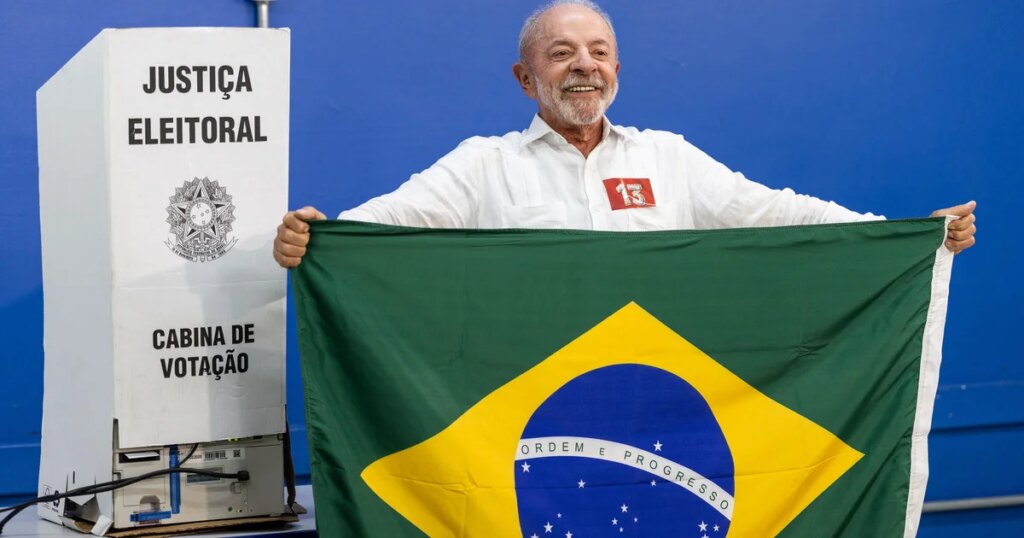
Brazil’s presidential elections yielded pivotal results as Luiz Inácio Lula da Silva won a closely contested race against Flávio Bolsonaro, securing about 51.8% of the vote. This election marks Lula’s return to the presidency, extending his leadership over Brazil, where he has a substantial following. Bolsonaro’s refusal to concede and subsequent claims for the annulment of results hint at potential unrest, drawing national and international attention to the Brazilian political landscape.
| Article Subheadings |
|---|
| 1) Election Results and Immediate Reactions |
| 2) Historical Context of Lula’s Presidency |
| 3) Tensions Surrounding the Voting Process |
| 4) Key Issues Affecting Voter Sentiment |
| 5) Implications of U.S.-Brazil Relations |
Election Results and Immediate Reactions
The Brazilian electoral court declared Luiz Inácio Lula da Silva the winner of the presidential race late Sunday after all votes were counted, revealing a lead of nearly 4.4 million votes over his rival, Flávio Bolsonaro. Lula, who will soon turn 81, garnered 51.8% of the total vote, enabling him to reclaim the presidency amidst an era of heightened political polarization in Brazil. Following the results, celebrations erupted among Lula’s supporters, gathering en masse outside the São Paulo hotel where he awaited the announcement.
“This was a defeat for denialism and lies,” Lula proclaimed to his enthusiastic followers, pledging to uphold justice for all Brazilians regardless of their political affiliations.
In stark contrast, Bolsonaro refused to concede, promptly calling for the annulment of the election results while expressing his dissatisfaction with the electoral process.
Historical Context of Lula’s Presidency
This election victory stands as Lula’s fourth non-consecutive term, a notable achievement given Brazil’s turbulent political history. Lula’s initial presidency from 2003 to 2010 is marked by significant economic growth and social reforms aimed at alleviating poverty. Following a corruption scandal that led to his imprisonment, Lula’s political comeback has reignited discussions on governance and integrity. Bolsonaro, the son of former president Jair Bolsonaro, attempted to capitalize on anti-establishment sentiments, yet he ultimately fell short in his bid to extend his family’s political influence. Observers note this election as a reversal of the right-leaning trends seen across Latin America, where many nations have recently elected leaders aligned with U.S. political strategies.
Tensions Surrounding the Voting Process
The voting process was marred by chaos as issues emerged at several polling stations, compelling Brazilian Supreme Court Justice Cristiano Zanin to extend the voting hours by two hours—an unforeseen decision that complicated the electoral proceedings. The Supreme Court’s ruling followed requests from both camps, citing logistical issues and adverse weather conditions affecting voter turnout. In cities like São Paulo, transportation problems were reported, restricting access to polls predominantly affecting Lula’s voter base. Consequently, the confusion surrounding these extensions raised alarms about the integrity and fairness of the electoral process, further backing Bolsonaro’s call for annulment. Nevertheless, international observers maintained that the elections were conducted properly, emphasizing the overall peaceful nature of the voting day.
Key Issues Affecting Voter Sentiment
The election was heavily influenced by immediate concerns related to the cost of living and security. Both candidates faced scrutiny over familial corruption ties, which ultimately painted both campaign trails with skepticism from constituents. Lula’s supporters typically rallied behind his legacy of poverty alleviation and social justice, while Bolsonaro’s base harbored sentiments demanding substantial change, emphasizing the rising costs of living. This gap in priorities resulted in vastly differing perspectives on economic management and governance, further highlighting the ideological divisions within Brazilian society. As Lula focused on a message of inclusiveness and forward momentum, Bolsonaro championed a tough-on-crime narrative, demonstrating the contrasting strategies that defined the electoral stage.
Implications of U.S.-Brazil Relations
The election results have dramatically shifted the dynamics of U.S.-Latin American relations, particularly in light of Lula’s historical critique of the Trump administration’s policies, including high tariffs and interference in local affairs. Lula’s skepticism surrounding U.S. influence in Brazilian elections looms large, as he advocates for Brazil’s sovereignty amid pressures for compliance with U.S. interests in the region. Bolsonaro’s incumbency had seen stronger alignment with U.S. policies; however, Lula’s presidency may signify a new chapter for Brazil, characterized by independence in international relations. As Lula moves to reestablish Brazil’s diplomatic relationships, his administration’s stance on cooperation with global powers, especially the U.S., will be crucial in shaping future environmental and trade policies.
Summary
The recent elections in Brazil reveal substantial discontent and division within the nation, generating questions regarding governance, economic strategy, and the role of external influences. Lula’s victory reverberates throughout Latin America, as it disrupts a pattern of right-wing leadership while promising a return to progressive policies. The forthcoming administration will need to navigate the complexities of domestic challenges alongside international relations, particularly with the U.S., and work to heal the divides apparent in Brazilian society.
| No. | Key Points |
|---|---|
| 1 | Lula wins the presidential race with 51.8% of the vote against Bolsonaro. |
| 2 | Bolsonaro refuses to concede, calling for annulling election results. |
| 3 | Voting issues arise, leading to an extension of polling hours by the Supreme Court. |
| 4 | Economic concerns and security shape the electoral landscape and voter sentiment. |
| 5 | Future U.S.-Brazil relations may be affected by the new administration’s policies and stance on sovereignty. |
Frequently Asked Questions
Question: What does Lula’s election signal for Brazil?
Lula’s election signals a shift back towards left-leaning governance in Brazil after a series of right-leaning administrations, with implications for socio-economic policies and international relations.
Question: How did the voting process affect the election outcome?
Voting process disruptions, such as transportation issues and last-minute decisions to extend polling hours, raised concerns about electoral fairness and potential legal challenges from losing candidates.
Question: What are the implications of Lula’s presidency on U.S.-Brazil relations?
Lula’s presidency may reestablish Brazilian independence from U.S. influences, focusing on sovereign policies rather than compliance with U.S. interests, especially regarding trade and environmental issues.