
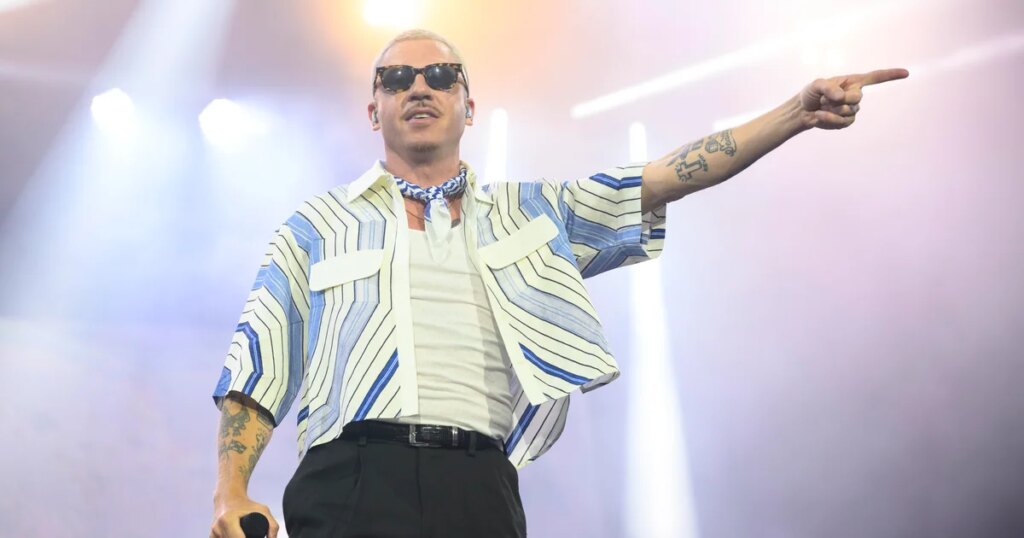
In a recent controversial move, performer Macklemore has been dropped from Ed Sheeran‘s Loop tour after making on-stage statements regarding his pro-Palestinian beliefs. During a performance earlier this month, he spoke out about supporting Palestine, prompting mixed reactions from the public and organizations alike. Following pressure from various stakeholders, including venue operators and advocacy groups, the decision was made to remove Macklemore from the lineup, stirring significant debate about freedom of expression in the music industry.
| Article Subheadings |
|---|
| 1) Controversial remarks during Loop tour |
| 2) Reaction from public and advocacy groups |
| 3) Official statement from concert promoters |
| 4) Macklemore’s response and the allegations |
| 5) Broader implications for free speech |
Controversial remarks during Loop tour
During a performance as the opening act for Ed Sheeran‘s Loop tour earlier this month, Macklemore used his platform to voice his support for the Palestinian cause. This moment, which occurred in front of a large audience, included a declaration that he wished to advocate for Palestine from significant stages across the country. Macklemore stated,
“The truth is, a big part of the reason why I wanted to do this tour in the first place is so I can stand up in stadiums like this and say two words that are very near and dear to my heart: Free Palestine.”
During the same performance, he performed a song titled “Hind’s Hall,” seemingly referencing a building at Columbia University that has become a focal point for pro-Palestinian demonstrators.
Reaction from public and advocacy groups
The response to Macklemore’s comments was immediate and polarized. Some applauded him for taking a stand on a contentious issue, while others strongly denounced his remarks. The Anti-Defamation League described the comments as “completely unacceptable,” emphasizing the need for sensitivity around such intricate geopolitical topics. In response, the Israeli American Council initiated a petition advocating for Macklemore’s removal from the tour, arguing his comments could be harmful and divisive. This division highlights the challenges artists face when engaging in political discourse, especially when it pertains to sensitive subjects such as the Israeli-Palestinian conflict.
Official statement from concert promoters
In light of the backlash, the concert promoter for Sheeran’s U.S. Loop tour, Messina Touring Group, released a statement announcing Macklemore’s removal from the tour. They indicated that several venues expressed concerns over hosting concerts featuring Macklemore, indicating that his continued participation could jeopardize the entire tour. The statement read,
“As the concert promoter for Ed Sheeran’s U.S. Loop Tour, we have been notified by venues on the upcoming U.S. tour dates that they will not allow a concert to take place with Macklemore on the lineup, which would result in the cancellation of the tour and impact hundreds of thousands of fans.”
This was part of a broader discussion among stakeholders regarding the responsibilities of performers to mitigate controversy amidst their undertakings.
Macklemore’s response and the allegations
Following news of his removal, Macklemore took to social media to express his perspective regarding the incident. He clarified that he does not consider himself a victim but highlighted that the real victims are the Palestinian people. He alleged that Ed Sheeran received a phone call from influential figures like Robert Kraft, owner of the New England Patriots, which he claimed influenced the decision to remove him from the lineup. In his emotional display, Macklemore conveyed,
“Taking a side can cost you… I’ve lost all of those things,”
referring to potential financial losses and personal relationships as fallout from taking a stand on his beliefs.
Broader implications for free speech
The incident surrounding Macklemore raises significant questions about the limits of free speech in artistic performances. Following the announcement of his removal, organizations like the Council on American-Islamic Relations (CAIR) expressed concern, arguing that the decision sets a dangerous precedent regarding artistic expression and political advocacy. The CAIR Deputy Director, Edward Ahmed Mitchell, remarked,
“They should pursue legal options or reschedule his tour rather than give in to bullying by billionaires who care about free speech as much as they care about slaughtered Palestinian children.”
This statement reflects a growing worry among advocates for free speech that protecting significant corporate interests may hinder the ability of artists to discuss polarizing geopolitical matters freely.
| No. | Key Points |
|---|---|
| 1 | Macklemore was removed from Ed Sheeran’s Loop tour due to his on-stage pro-Palestinian statements. |
| 2 | His remarks garnered mixed reactions, with both criticism and praise from various public and advocacy groups. |
| 3 | Concert promoters cited threats of venue cancellations as a key reason for Macklemore’s removal. |
| 4 | Macklemore alleged that powerful individuals influenced the decision to remove him from the tour. |
| 5 | The incident has sparked a broader conversation about the implications of free speech in the arts. |
Summary
The removal of Macklemore from Ed Sheeran’s Loop tour has ignited a considerable discourse on artistic freedom and the repercussions of political statements in performance art. While Macklemore aimed to utilize his platform to raise awareness about a significant global issue, the resulting backlash and organizational pressure highlight the meticulous balance between personal advocacy and professional obligations in the entertainment industry. This incident serves as a pivotal moment prompting further scrutiny of how artists navigate the complexities of political expression while maintaining their careers.
Frequently Asked Questions
Question: Why was Macklemore removed from the tour?
Macklemore was removed from the tour due to on-stage remarks he made supporting the Palestinian cause, which drew controversy and backlash from various groups, resulting in concerns from concert promoters about potential venue cancellations.
Question: What was Macklemore’s reaction to his removal?
Macklemore reacted to his removal by stating he does not see himself as a victim but rather highlighted the Palestinian people as the true victims. He also alleged that outside influences, including a phone call from the owner of the New England Patriots, led to his dismissal.
Question: What are the implications of this incident for artistic expression?
This incident raises significant questions about the limits of free speech in artistic endeavors, suggesting that artists may face repercussions for expressing political views, which could inhibit their freedom to engage with pressing social issues.