
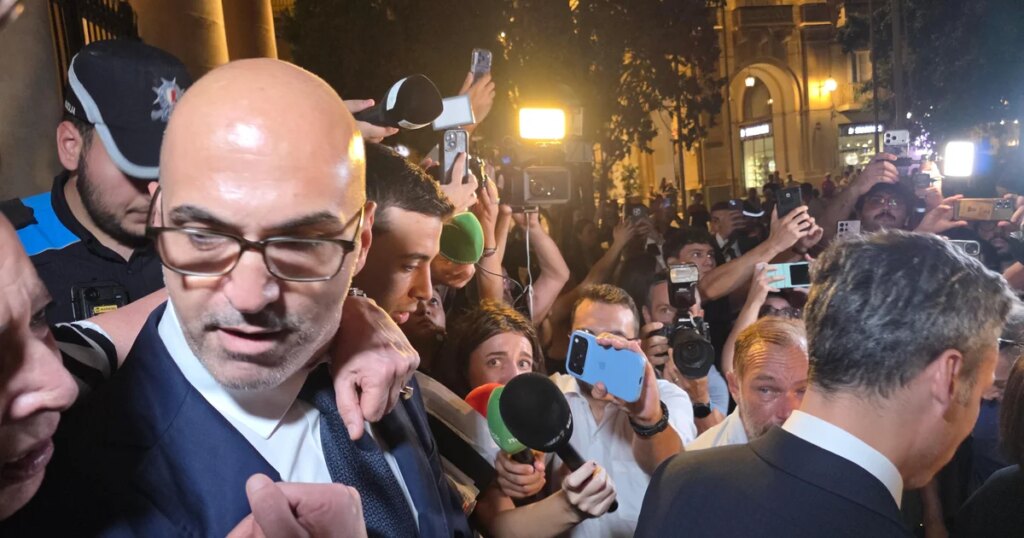
In a highly publicized legal outcome, a Malta jury has acquitted prominent businessman Yorgen Fenech of murder charges related to the 2017 car bomb assassination of investigative journalist Daphne Caruana Galizia. The verdict, which returned with an 8-1 vote, has reignited debates about the culture of impunity within Malta’s judicial system and brought forth renewed calls for accountability from both the public and political constituencies. The acquittal has amplified the already complex issues surrounding the investigation into Caruana Galizia’s death, prompting protests and a demand for justice from her family and political opposition.
| Article Subheadings |
|---|
| 1) The assassination that shocked a nation |
| 2) The implications of Caruana Galizia’s investigative work |
| 3) A prime minister’s downfall amid protests |
| 4) Ongoing controversy over judicial accountability |
| 5) Broader implications for press freedom |
The assassination that shocked a nation
On October 16, 2017, Malta was shaken by the tragic and violent death of Daphne Caruana Galizia. The investigative journalist was killed by a car bomb while driving near her home, an event that sent shockwaves not only through Malta but across Europe. Caruana Galizia, who had turned her investigative lens on political corruption and powerful business interests in Malta, was a well-known figure lauded for her fearless reporting. Her assassination exposed a troubling atmosphere of fear and impunity regarding the treatment of journalists, a sentiment echoed in the wake of her death by both citizens and international observers.
The circumstances surrounding her death prompted widespread outrage and numerous protests, wherein thousands of people took to the streets to demand accountability. The public’s response highlighted deep-seated frustrations regarding government actions—or lack thereof—towards safeguarding the press and investigating corruption allegations. The assassination not only represented an attack on a journalist but also on democratic principles, as it raised questions about the safety of journalists and the government’s commitment to upholding justice.
The implications of Caruana Galizia’s investigative work
Daphne Caruana Galizia dedicated her career to exposing corruption, often targeting individuals within the Maltese government. Her reporting was pivotal in shedding light on irregularities involving high-profile politicians, including those close to former Prime Minister Joseph Muscat. For example, her investigations linked members of Muscat’s administration to offshore companies revealed in the Panama Papers, creating a compelling narrative that captivated both the Maltese public and international audiences.
The political repercussions of her work were immediate, culminating in widespread protests that held Muscat’s administration accountable. These protests illuminated a broader narrative of corruption within Malta, culminating in an inquiry which concluded that various state actors bore responsibility for creating conditions that led to her murder. The revelation that she was facing numerous libel suits at the time of her assassination further underscored the high stakes involved in investigative journalism and the personal costs often faced by journalists engaged in such work.
A prime minister’s downfall amid protests
In the wake of Yorgen Fenech‘s arrest in 2019, protests grew increasingly fervent, leading to a dramatic political fallout. Fenech was apprehended while attempting to flee Malta on his yacht. His status as one of the wealthiest businessmen in the country and his connections to a controversial power station contract with the government only added fuel to public outrage. The national response was swift and emphatic; public outcry peaked with demands for the resignation of Prime Minister Joseph Muscat, who ultimately stepped down amid mounting pressure, leaving a profound impact on Malta’s political landscape.
Following Muscat’s resignation, there were hopes that a commitment to justice and accountability would follow. However, the recent verdict freeing Fenech from murder charges raises questions about the integrity of the judicial process, leaving many feeling disillusioned and concerned over whether true accountability will ever be obtained. In a country fraught with a legacy of corruption and impunity, the question looms: Can meaningful steps be taken to uphold justice for Caruana Galizia and ensure the safety of journalists moving forward?
Ongoing controversy over judicial accountability
The acquittal of Yorgen Fenech has reignited debates surrounding judicial accountability in Malta. It reflects not only the complexities involved in prosecuting high-profile cases but also indicative of larger systemic issues. Caruana Galizia’s family and supporters express severe disappointment with the recent ruling, emphasizing that it reinforces a culture in which powerful individuals evade accountability for their actions.
“Nine years after Daphne’s brutal assassination, the institutional failures that enabled her murder remain unaddressed and unreformed,”
a statement from her family indicated, showcasing their ongoing struggle for justice.
Notably, the jury’s decision has drawn criticism regarding the credibility of key witnesses, raising questions about the integrity of the evidence presented during the trial. The complexity of the case is further complicated by the fact that several others have already been sentenced in connection with the murder, yet the mastermind behind the act remains unpunished. Concerns over the sufficiency of legal protections for journalists heighten anxieties about the future of press freedom in Malta, a nation contending with a turbulent history of threats against journalists.
Broader implications for press freedom
The struggle for accountability in the case of Daphne Caruana Galizia highlights significant issues regarding press freedom, not only in Malta but in broader contexts worldwide. Organizations advocating for journalistic rights express concern that this latest ruling sends a detrimental message to would-be investigative journalists, stifling the free exchange of information necessary for a functioning democracy. The Committee to Protect Journalists, an international organization, echoed sentiments shared by many; even nearly nine years after her death, there is still an enduring wait for justice.
As the international community watches closely, the case serves as a reminder that the fight for accountability extends beyond individual cases and must include systemic reforms to protect all journalists. Advocacy efforts will need to focus on legislative changes aiming at enhancing protections for reporters and addressing the underlying factors that led to the assassination of Caruana Galizia. The pursuit of justice remains vital for not only her family but for the preservation of democratic rights across Malta and beyond.
| No. | Key Points |
|---|---|
| 1 | The jury found Yorgen Fenech not guilty of masterminding the assassination of investigative journalist Daphne Caruana Galizia. |
| 2 | Caruana Galizia’s assassination highlighted systemic corruption in Malta’s political landscape. |
| 3 | Fenech’s acquittal has reignited public protests demanding accountability and justice. |
| 4 | Numerous individuals implicated in the assassination have already faced legal consequences. |
| 5 | The case continues to serve as a focal point for discussions on press freedom and the safety of journalists. |
Summary
The acquittal of Yorgen Fenech marks a significant moment in Malta’s ongoing struggle with accountability in the face of corruption and violence against journalists. Daphne Caruana Galizia’s death and the ensuing controversy surrounding it expose deep-rooted systemic issues affecting freedom of the press and the safety of reporters. With calls for justice and accountability still echoing in the public realm, the case underscores the need for long-lasting reforms that ensure the protection of journalists and prevent future tragedies.
Frequently Asked Questions
Question: Who was Daphne Caruana Galizia?
Daphne Caruana Galizia was a Maltese investigative journalist known for her relentless reporting on corruption and political scandals within Malta, which ultimately led to her assassination in 2017.
Question: What were the main charges against Yorgen Fenech?
Yorgen Fenech was charged with being the mastermind behind the assassination of Daphne Caruana Galizia, including counts of complicity and criminal conspiracy.
Question: What has been the public reaction to Fenech’s acquittal?
The public reaction has been largely negative, with protests organized by opposition parties and citizens demanding accountability for Caruana Galizia’s assassination and expressing disappointment with the judicial outcome.