
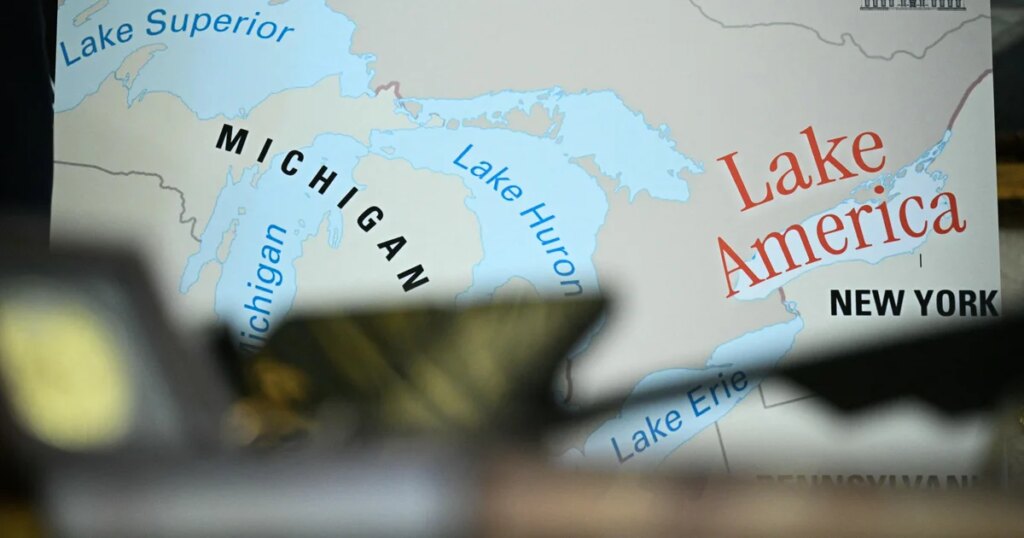
In a surprising turn of events, MapQuest has emerged as the leading free app in the Apple App Store, following its decision to retain the historical name of Lake Ontario amidst a controversial executive order signed by former President Donald Trump. This strong public response, coupled with the company’s strategic move to maintain familiar place names on its maps, has revitalized user interest and interaction with the app. Despite political tensions between the U.S. and Canada, MapQuest’s recent success serves as a reminder of the power of consumer sentiment in shaping business strategies in the digital age.
| Article Subheadings |
|---|
| 1) MapQuest’s Rise to Popularity |
| 2) Controversial Executive Order |
| 3) User Reaction and Engagement |
| 4) The Road Ahead for MapQuest |
| 5) Broader Implications for Digital Companies |
MapQuest’s Rise to Popularity
MapQuest, a pioneering digital mapping service that dates back to 1996, has recently surged in downloads to become the top free app available on the Apple App Store. The rise in popularity comes after the company firmly chose not to comply with an initiative aimed at renaming Lake Ontario to “Lake America,” an action requested by the administration of former President Donald Trump. This refusal to alter the name was celebrated by a significant number of users and marked a pivotal moment for MapQuest, which has had to navigate a challenging tech landscape amidst increasing competition from heavyweights like Google Maps.
The company issued a statement highlighting that the decision to keep the historical name was well-received, with hundreds of thousands more users downloading the app since the announcement. Compared to its regular usage rates, the app’s activities reportedly soared to approximately 50 times the norm. Such developments underscore MapQuest’s resilience and adaptability as it seeks to reclaim relevance in the digital mapping space.
Controversial Executive Order
Former President Donald Trump signed an executive order prompting the renaming of Lake Ontario as part of a broader narrative that has sometimes framed Canada as an unfavorable trade partner. The order was strategically timed amid ongoing tensions over trade negotiations, where both nations had recently imposed tariffs on each other’s goods. This political backdrop created significant public interest and media coverage surrounding the order and its implications.
Despite the presidential decree, MapQuest’s steadfast decision not to comply illustrates an instance of a consumer-oriented approach, where public sentiment appears to resonate more profoundly than political directives. The company stands by its mission to provide accurate and familiar representations of geographic landmarks, a commitment it articulated through social media announcements and public statements.
User Reaction and Engagement
MapQuest’s user base has shown remarkable enthusiasm, reflecting a collective desire to uphold traditional place names. Following the announcement of the decision to retain Lake Ontario, reactions on social media and various platforms indicated overwhelming support from users who felt connected to their local geography. In an official statement regarding the backlash against the proposed name change, Doug Berger, general manager of MapQuest, emphasized the importance of understanding community attachment to geographical names. He noted,
“We are aware that Lake Ontario is being correctly labeled on our map,”
further reinforcing their commitment to cultural and historical integrity.
The decision to allow users to suggest alternative names for Lake Ontario also fueled user engagement, introducing an element of interactivity to the app that has historically been relatively static. This user-driven feature invites individuals to participate in the renaming process, illustrating MapQuest’s intent to empower its user base and foster a sense of community over the platform.
The Road Ahead for MapQuest
Going forward, MapQuest’s path appears promising yet filled with challenges. The navigating company faces an uphill battle against established players like Google Maps, which have significantly more resources and technological capabilities. However, the recent surge in popularity may pave the way for MapQuest to invest in updating its services and enhancing its digital offerings, including GPS and real-time traffic navigation.
With a renewed user base and a clearer brand identity focused on familiarity, MapQuest could leverage this momentum to engage existing customers while attracting new ones. The company will need to capitalize on its unique position as it strives to differentiate itself from competitors—potentially by further integrating user feedback into its products and services.
Broader Implications for Digital Companies
The situation surrounding MapQuest and the renaming of Lake Ontario highlights broader implications for digital companies navigating the intersection of technology, politics, and user preferences. As consumers become increasingly vocal about their preferences and values, businesses in the digital space must adopt a more responsive stance to foster loyalty and engagement.
MapQuest’s recent experience illustrates the potential repercussions of aligning corporate decisions with prevailing political narratives. Companies may find themselves facing when they choose either to follow external directives or embrace user feedback in establishing their brand reputation. Stakeholder engagement will remain key as businesses strive to strike a balance between government influence and user-driven marketing in today’s digital landscape.
| No. | Key Points |
|---|---|
| 1 | MapQuest retains the name Lake Ontario, leading to a surge in app downloads. |
| 2 | The decision counters a controversial executive order from former President Trump. |
| 3 | User engagement has dramatically increased, showcasing a consumer preference for familiar names. |
| 4 | The incident underscores the need for companies to balance political directives with user sentiment. |
| 5 | MapQuest’s future may rely on embracing user feedback and enhancing its services. |
Summary
In conclusion, MapQuest’s recent handling of the Lake Ontario naming controversy has not only reignited its relevance in the mapping application market but has also highlighted the essential role user preferences play in shaping the landscape of digital services. As the company charts its future, the importance of aligning corporate strategies with consumer values may prove to be a fundamental aspect of competition within this sector. Moreover, this episode serves as a pertinent example of the evolving relationship between technology firms and political environments, reminding stakeholders that consumer sentiment remains a powerful force.
Frequently Asked Questions
Question: What was the executive order regarding Lake Ontario?
Former President Trump signed an executive order to rename Lake Ontario as “Lake America,” citing trade tensions with Canada.
Question: How did MapQuest engage users after deciding to keep the name Lake Ontario?
MapQuest allowed users to create their own names for the lake, encouraging community participation and feedback through the app.
Question: What implications does this situation have for other digital companies?
This incident illustrates the importance of aligning corporate decisions with user preferences and highlights the need for businesses to be responsive to consumer sentiment in a politically charged environment.