
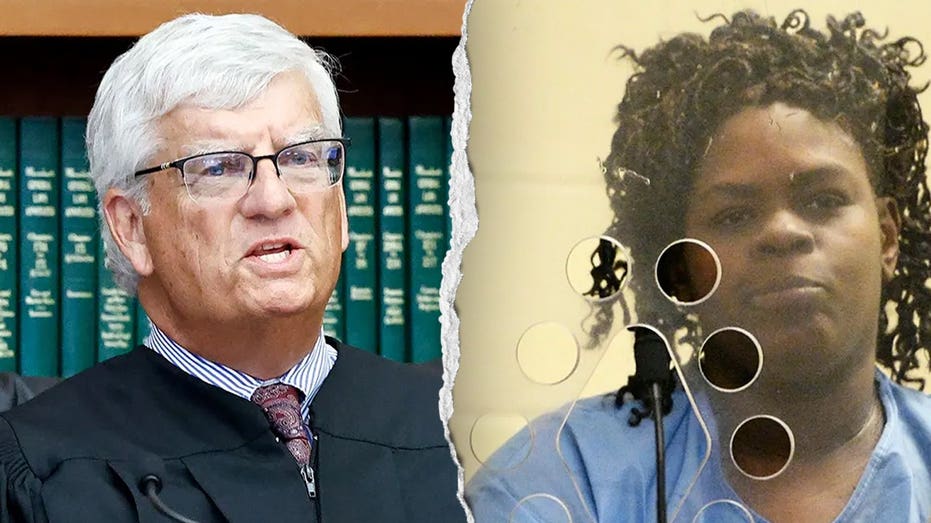
The Massachusetts Supreme Judicial Court has overturned Latarsha Sanders‘ murder convictions and ordered a new trial in the deaths of her two sons. The court ruled that jurors were improperly denied psychiatric records relevant to her insanity defense. The ruling does not determine that Sanders was legally insane or entitled to acquittal.
Sanders admitted killing her sons but argued that severe mental illness and psychosis made her legally not responsible. The decision means a retrial could include medical evidence that was unavailable to the first jury.
| 1) | Court orders a new trial for Latarsha Sanders |
|---|---|
| 2) | Psychiatric records become central evidence |
| 3) | Details of the killings and insanity defense |
| 4) | Other legal issues the court addressed |
| 5) | How the ruling could affect a retrial |
Court orders a new trial for Latarsha Sanders
Latarsha Sanders, a Brockton, Massachusetts, mother, was convicted in 2022 of killing her sons, 8-year-old Edson “Marlon” Brito and 5-year-old La’Son Brito. She received two concurrent life sentences without parole after William Sullivan presided over the trial in Plymouth Superior Court. In August 2026, the Massachusetts Supreme Judicial Court vacated the convictions and sent the case back for a new trial.
Justice David Gaziano wrote that the killings themselves were not the disputed issue before the jury. The central question was whether Sanders lacked criminal responsibility because of mental illness. The court concluded that excluding records connected to her psychiatric treatment deprived the defense of medical support for that argument.
Psychiatric records become central evidence
The records came from the Massachusetts Correctional Institution in Framingham and a state psychiatric hospital. They included observations of paranoia, hallucinations and delusional thinking, along with diagnoses within the schizophrenia spectrum. A clinical neuropsychologist relied partly on thousands of pages of those records when testifying that Sanders had been “grossly psychotic” at the time of the killings.
Retired Massachusetts Superior Court Judge Jack Lu said the ruling would materially alter the case if it is tried again because a future jury could hear the excluded records. He also cautioned that the decision should not be viewed as proof that the original judge acted improperly under the law as it was understood at the time.
Details of the killings and insanity defense
Prosecutors said Sanders understood that her conduct was wrong. Defense attorneys argued that severe psychosis prevented her from being legally responsible. Evidence described by the court indicated that Sanders had become preoccupied with conspiracy theories involving the Illuminati and expressed fears related to voodoo before the killings.
Investigators said Sanders initially gave conflicting accounts after the deaths. She later told detectives that the stabbings were part of a ritual connected to voodoo and the Illuminati. The defense presented those statements and her psychiatric history to support its claim that she was experiencing a serious mental disorder when the attacks occurred.
Other legal issues the court addressed
The court also considered statements Sanders made describing herself as “evil.” It ruled prosecutors could refer to those statements when addressing whether she understood the moral wrongfulness of her actions. The court cautioned that such evidence could not become a personal attack unrelated to criminal responsibility.
The justices rejected a prosecution theory that Sanders may have borrowed parts of her account from episodes of “Law & Order: SVU,” finding no evidence to support that suggestion. Defense attorney Robert Shaw said excluding the medical evidence denied Sanders a meaningful opportunity to present a complete defense. Assistant Plymouth County District Attorney Melissa Johnson argued that the records had properly been excluded.
How the ruling could affect a retrial
The ruling does not dismiss the charges or clear Sanders. It requires another trial, where psychiatric records and related testimony may be available to jurors. Prosecutors would still be able to present evidence about Sanders’ statements, conduct and alleged understanding of the wrongfulness of the killings.
The case also shares a mental health context with another Massachusetts proceeding. In September 2026, William Sullivan declared a mistrial in the case against Lindsay Clancy after jurors deadlocked over whether she was criminally responsible for the deaths of her three children.
| Number | Key Point |
|---|---|
| 1 | Sanders’ convictions were vacated and a new trial was ordered. |
| 2 | The court said psychiatric records were improperly excluded. |
| 3 | The ruling does not determine whether Sanders was legally insane. |
| 4 | A future jury may hear thousands of pages of mental health records. |
Summary
The decision changes the evidentiary landscape for any retrial of Latarsha Sanders. Psychiatric records tied to diagnoses, treatment and reported psychosis give the defense a broader basis for arguing that Sanders lacked criminal responsibility. The prosecution will retain the opportunity to challenge that claim.
Frequently Asked Questions
What did the court decide?
The court vacated Sanders’ murder convictions and ordered a new trial because psychiatric records relevant to her insanity defense were excluded.
Does the ruling mean Sanders was found legally insane?
No. The ruling addressed the evidence available to the jury and did not decide whether Sanders was legally insane or entitled to acquittal.
What evidence could be introduced in a retrial?
A future jury could hear psychiatric records documenting treatment, diagnoses, paranoia, hallucinations and delusional thinking, subject to decisions by the trial court.