
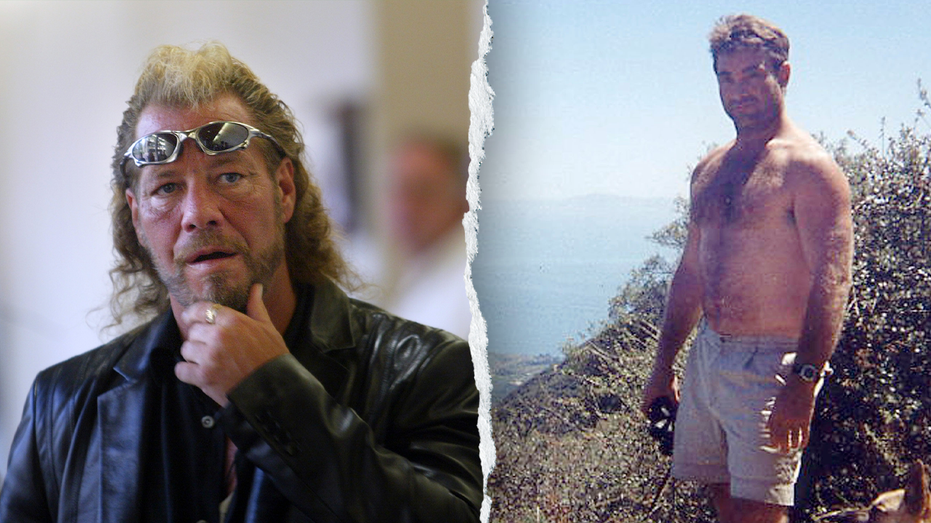
Andrew Luster, the Max Factor heir captured in Mexico by bounty hunter Duane “Dog” Chapman in 2003, has been released from prison. Luster was convicted in absentia of 86 counts involving the drugging and rape of three women in California. His original 124-year sentence was later reduced to 50 years, and he completed his prison term on October 11 after receiving early-release credits under California’s Proposition 57.
The release has renewed concerns from one of Luster’s victims, who said she remains worried about her safety and the safety of others. Chapman, meanwhile, has described the capture as a costly operation that helped establish his public profile.
| 1) | The 2003 flight and Mexico capture |
|---|---|
| 2) | The convictions and original sentence |
| 3) | Victims’ concerns after the release |
| 4) | Proposition 57 and early release |
| 5) | Chapman’s legal and professional aftermath |
The 2003 flight and Mexico capture
Andrew Luster, the great-grandson of cosmetics entrepreneur Max Factor, fled the United States during a sexual assault trial in California in 2003. After receiving information about his location, Duane “Dog” Chapman, his son Leland Chapman, longtime associate Tim Chapman and others traveled to Mexico.
The group located Luster in Puerto Vallarta on June 18, 2003. Chapman said a photograph supplied by tipsters showed only a knee and a watch, but he recognized the watch from a televised interview. The team identified Luster speaking with a young woman in a bar, tackled him and moved him into an SUV.
Mexican authorities stopped the vehicle outside the city and arrested the group. Chapman said Luster claimed he had been kidnapped, prompting him to give the lead investigator extensive information about the case. A Mexican judge later dismissed the case.
“You’re under arrest by the United States of America,” Duane “Dog” Chapman recalled shouting during the capture.
The convictions and original sentence
Luster was convicted in absentia on 86 counts connected to the drugging and rape of three women between 1996 and 2000. The assaults took place at his home in Mussel Shoals, California, while the trial continued without him after his departure.
Investigators recovered more than 100 videotapes from the home. A victim said some recordings documented criminal conduct and described them as deeply disturbing. Luster initially received consecutive sentences totaling 124 years in prison. That sentence was later reduced, and he was resentenced to 50 years in 2013.
Victims’ concerns after the release
One victim, identified as Jane Doe No. 3, said she had dated Luster for five or six months without knowing she had been drugged and raped on the night they met. She said investigators later connected her account to recovered videotapes.
The victim said Luster’s release was unsettling because he was no longer in a secure facility. She also cited concerns about a notebook recovered from his Mexican hotel room that allegedly contained a “payback list” with names of victims and others. She said the release felt like a threat to victims, their families, investigators and the broader public.
“It’s very unsettling knowing that he is not behind bars, not in a closed facility,” Jane Doe No. 3 said.
Proposition 57 and early release
Prosecutors opposed Luster’s early release in 2024 and again in 2025. Despite those objections, he earned substantial credits under California’s Proposition 57 criminal justice reforms, which classified his crimes as nonviolent for the relevant release calculation.
Luster’s prison term ended on October 11, more than two decades after his capture and imprisonment. Jane Doe No. 3 said she did not understand how the conduct shown in the videos could be categorized as nonviolent, calling the result baffling.
Chapman’s legal and professional aftermath
Duane “Dog” Chapman said he never received a bounty for locating Luster and lost hundreds of thousands of dollars during the operation and its legal aftermath. Mexican law did not authorize bounty hunters to apprehend fugitives, and Chapman said he, Leland Chapman, Tim Chapman and members of a camera crew were arrested.
The case preceded Chapman’s rise to television fame. He has since announced a new online series focused on helping certain inmates with good behavior and positive reports obtain bail, while excluding people facing serious felony or sex-abuse charges. Chapman said he expects to continue bounty hunting for another five to seven years.
| Number | Key Point |
|---|---|
| 1 | Luster was captured in Puerto Vallarta on June 18, 2003. |
| 2 | He was convicted in absentia on 86 counts involving three women. |
| 3 | His original 124-year sentence was reduced to 50 years. |
| 4 | He was released October 11 after earning credits under Proposition 57. |
| 5 | A victim said the release has caused continuing fear and distress. |
Summary
The release of Andrew Luster closes a prison term that followed his flight from a California trial and his capture in Mexico by Duane “Dog” Chapman. While the release resulted from sentence reductions and Proposition 57 credits, a victim said the decision has intensified concerns about safety and accountability.
Frequently Asked Questions
Who is Andrew Luster?
Andrew Luster is the great-grandson of cosmetics entrepreneur Max Factor who was convicted in absentia of 86 counts involving the drugging and rape of three women.
When was Luster captured?
He was captured in Puerto Vallarta, Mexico, on June 18, 2003, after fleeing the United States during his California trial.
Why was Luster released early?
Luster earned early-release credits under California’s Proposition 57, which classified his crimes as nonviolent for the applicable release calculation. His term ended on October 11.