
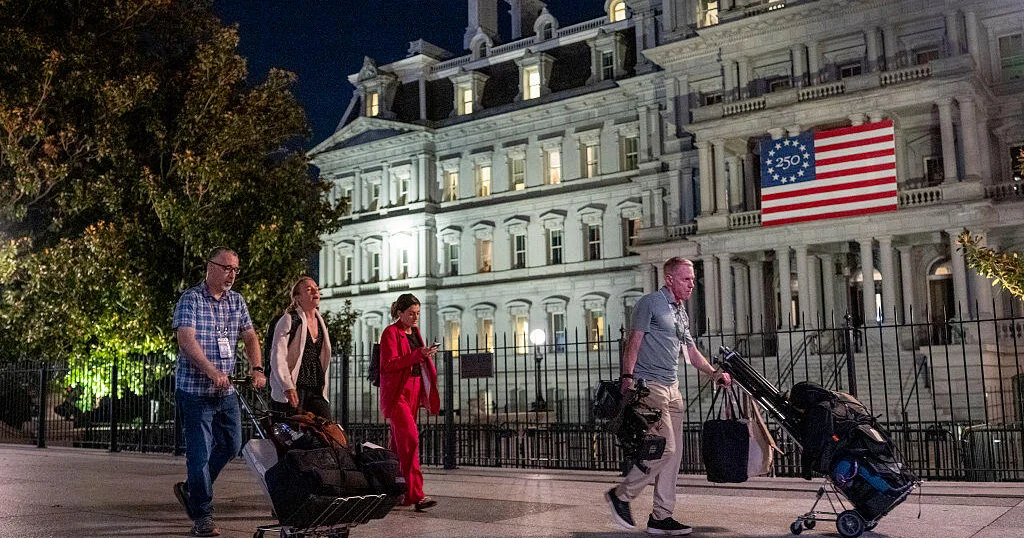
On Monday, several prominent news organizations, including CNN, MS NOW, and Politico, filed a lawsuit against the Trump administration, claiming that the president’s recent ban on their access to the White House constitutes a violation of First Amendment rights. The lawsuit was initiated after the outlets had their press passes revoked, prompting concerns over media freedom and governmental transparency. As legal proceedings unfold, the case raises significant questions regarding the balance between a president’s authority and the press’s role in a democratic society.
| Article Subheadings |
|---|
| 1) Basis of the Lawsuit: First Amendment Concerns |
| 2) President Trump’s Response and Social Media Commentary |
| 3) Historical Context: Previous Press Access Issues |
| 4) Implications of the Legal Battle for Press Freedom |
| 5) Future of Media Relations Under the Current Administration |
Basis of the Lawsuit: First Amendment Concerns
The lawsuit filed by CNN, MS NOW, and Politico hinges on allegations that President Trump’s ban on these news outlets from White House grounds is an unconstitutional act of censorship. The First Amendment of the U.S. Constitution provides for freedom of the press; the news organizations argue that preventing journalistic access contradicts this foundational principle. The legal documents cite the historical importance of press freedoms and highlight that the ability of reporters to cover the presidency without fear of retaliation is crucial for democratic governance.
In their motion, the organizations assert that the president’s actions represent a clear infringement designed to manipulate news narratives by blocking outlets he perceives as critical. The legal team is calling upon a U.S. District Judge to expedite their complaint to restore press access swiftly. The news networks were expelled following the revocation of their press credentials, and legal experts warn that such barring sets a dangerous precedent for future interactions between press and power.
President Trump’s Response and Social Media Commentary
In a series of social media posts, President Trump expressed his views on the ban and the broader context of media coverage. He argued that his administration is not attacking the free press, but rather combating what he termed “fake news,” which he claims is detrimental to the nation’s well-being. Trump stated,
“FAKE NEWS IS A THREAT TO DEMOCRACY, and I will do whatever is necessary to make sure that the U.S.A. thrives.”
This characterization reinforces his long-standing contention that some media entities disseminate misinformation that threatens public trust in institutions.
Trump further elaborated, suggesting that media outlets should bear responsibility for the content they produce, asserting,
“I don’t think somebody should be allowed to come and write fake stories. They’re fake news. And they have no credibility.”
His remarks underscore his administration’s favorable policy toward outlets that align with his political narrative, fostering a divisive media environment where access could be contingent upon favorable coverage.
Historical Context: Previous Press Access Issues
Access to the press has been a contentious issue during Trump’s presidency, with previous instances highlighting a trend toward restricting such access. One notable case involved former CNN reporter Jim Acosta, who had his press credentials revoked only to receive reinstatement following a court ruling. The court found that Acosta’s Fifth Amendment rights to due process had been violated, re-establishing crucial legal precedents around press access. Judge Timothy Kelly, who oversaw that case, has now been assigned to the current lawsuit, furthering the historical narrative of legal challenges against media bans.
Additionally, past incidents, such as the ban on The Associated Press from specific White House events, illustrate a continued struggle between the administration and various media outlets. These restrictions have often been justified by the administration as necessary for maintaining security or decorum, yet critics argue they constitute viewpoint discrimination. Such actions not only threaten the operational capabilities of news organizations but also diminish the transparency that is vital for a functioning democracy.
Implications of the Legal Battle for Press Freedom
The outcome of this case is anticipated to have significant ramifications for the future of press freedoms in the United States. Legal experts caution that a ruling in favor of the Trump administration could embolden additional measures to restrict media access based on political affiliation or editorial stance. Conversely, a decision favoring the news outlets could reaffirm the principles enshrined in the First Amendment, setting a precedent for how press relationships with government officials should be conducted moving forward.
As news organizations advocate for equitable access to government proceedings, this ongoing legal battle may serve as a watershed moment for media operations and governmental accountability. Proponents for press freedom see this situation as crucial for deterring any attempts by the government to impose censorship or retaliate against journalists performing their essential duties.
Future of Media Relations Under the Current Administration
Looking ahead, the relations between the media and the Trump administration will likely continue to be fraught with challenges related to access and transparency. With the legal battle underway, other news organizations may be prompted to reassess their interactions with the White House and the potential ramifications of unfavorable coverage. Reports suggest that the current administration is tightening its grip on media access not just at the White House but also in other federal domains, such as the Pentagon, which could curtail the media’s ability to conduct comprehensive reporting.
Furthermore, if the administration succeeds in this legal tussle, it may incentivize similar actions by future administrations, regardless of party affiliation, fostering a climate of fear over journalistic inquiry. This litigation serves as a critical indicator of how media dynamics may shift, influencing the public’s access to information deemed vital for civic engagement and political accountability.
| No. | Key Points |
|---|---|
| 1 | The lawsuit by several news organizations aims to challenge the Trump administration’s First Amendment violations. |
| 2 | President Trump’s social media responses frame the ban as a defense against “fake news.” |
| 3 | Historical precedents of press access disputes illustrate a trend in this administration towards limiting media access. |
| 4 | The legal proceedings could have lasting implications for press freedom and government accountability. |
| 5 | Future media relations under Trump’s administration may be characterized by increased tension and restricted access. |
Summary
The ongoing legal confrontation between the Trump administration and major news organizations underscores a pivotal moment in the discourse surrounding press freedom in the United States. As this lawsuit unfolds, its ramifications could either reaffirm the constitutional protections afforded to the press or set a precedent for further limitations on journalistic access to government information. The outcome will not only impact the parties involved but also shape the broader relationship between media and government in the years to come.
Frequently Asked Questions
Question: What prompted the lawsuit against the Trump administration?
The lawsuit was initiated after CNN, MS NOW, and Politico were banned from the White House, claiming the ban constituted a violation of their First Amendment rights.
Question: How has President Trump characterized the press outlets involved in the lawsuit?
President Trump has referred to these media outlets as “fake news” and argues that their reporting lacks credibility, justifying the ban on these organizations from White House events.
Question: What could be the implications of this legal battle for press freedoms?
The outcome may either strengthen First Amendment protections for the press or potentially encourage more restrictive measures on media access by government authorities in the future, altering the landscape of journalistic freedoms.