
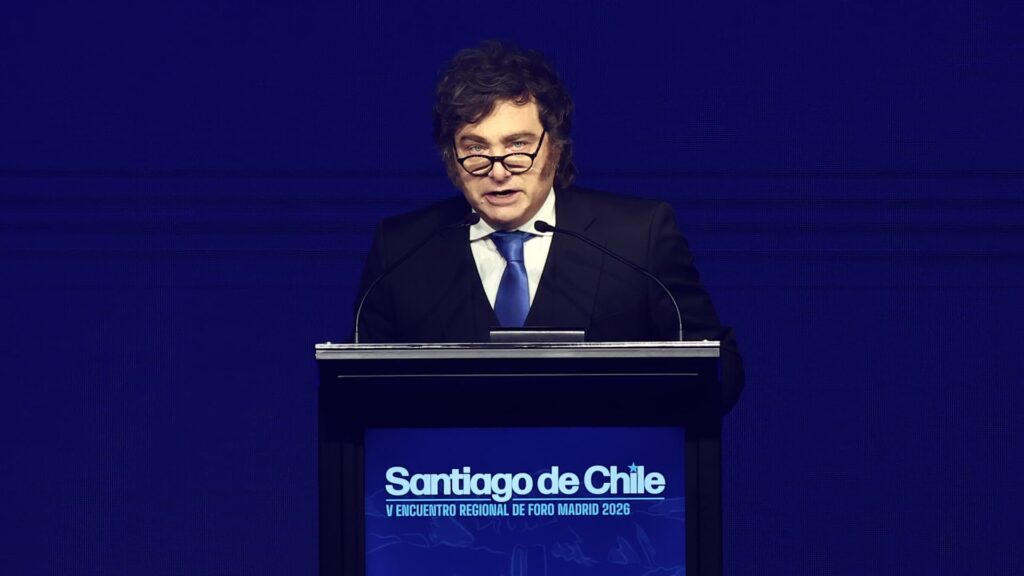
In a bold resurgence of national sentiment, Argentine President Javier Milei has intensified a long-standing dispute over the sovereignty of the Falkland Islands, also known as Las Malvinas. In a recent address, Milei championed Argentina’s claims over the self-governing British territory, threatening sanctions on oil companies involved in exploration efforts off the archipelago. As national tensions escalate, the implications of Milei’s rhetoric raise questions about the future of Argentina-Britain relations and the role of the U.S. in potential conflicts.
| Article Subheadings |
|---|
| 1) Renewed Claims Over the Falkland Islands |
| 2) Economic Sanctions Targeting Oil Development |
| 3) International Implications and the U.S. Stance |
| 4) Historical Context of the Falklands Dispute |
| 5) The Domestic and Global Repercussions |
Renewed Claims Over the Falkland Islands
President Javier Milei recently reignited the long-standing territorial claims over the Falkland Islands during a nationally broadcast speech. He emphasized Argentina’s need to “recover” the islands, urging collective national action. The Falkland Islands, which have been a point of contention between Argentina and Britain for centuries, hold significant strategic and emotional weight for many Argentines. Milei’s assertion of Argentina’s claims was intended to rally support, as he called on citizens to present a united front while addressing what he perceives as historical injustices.
In his speech, Milei stated that Argentina must demonstrate determination regarding its claims. “We cannot stand idle while our rights are trampled,” he declared, highlighting a strategic approach aimed at bolstering support for his presidency amidst a polarized political landscape. The move appears designed to resonate with nationalistic sentiments and consolidate his base, while also playing to feelings of resentment regarding historical grievances related to the Falklands.
Economic Sanctions Targeting Oil Development
One of the most immediate actions President Milei announced is the imposition of economic sanctions against oil companies involved in projects in the region. Specifically, he has targeted the Sea Lion oil development, positioned approximately 220 kilometers north of the Falkland Islands, which is co-developed by British firm Rockhopper Exploration and Israeli company Navitas Petroleum. Argentina views this venture as an illegitimate exploitation of resources that belong to its territorial waters.
The sanctions promise to create significant ramifications. As the project aims to commence oil production in early 2028, Argentina’s intervention might disrupt the timeline and viability of these operations. However, it remains to be seen how effective such sanctions will be in preventing the progress of the oil projects and whether they will evoke retaliatory responses from the companies involved, both legally and diplomatically.
International Implications and the U.S. Stance
Milei’s comments regarding the Falkland Islands coincided with a shift in the international dialogue surrounding the issue, especially in relation to the United States. Recently, U.S. President Donald Trump refrained from committing to support Britain in the event of renewed military conflict over the islands. His remarks suggested a potential reevaluation of the U.S. stance on sovereignty claims, which could lead to significant geopolitical shifts if Argentina solidifies closer ties with the Trump administration.
The implications of this evolving relationship are profound. Milei’s expression of solidarity with Trump reveals his aspiration to align Argentina with U.S. positions on various matters, as he hinted that Argentina can be a “valuable ally” in future international endeavors. However, whether the U.S. would indeed support Argentina’s claims over the Falklands remains uncertain, given Britain’s long-standing alliances and the strategic interests at play within the Atlantic region.
Historical Context of the Falklands Dispute
The historical backdrop of the Falklands dispute is essential to understand the current tensions. The islands have been controlled by Britain since the early 19th century, with sovereignty claims dating back even earlier. The relationship turned violent in 1982 when Argentina invaded the islands, leading to a brief but bloody conflict that culminated in the defeat of Argentine forces by the British military.
Since the war, the Falklands have maintained a degree of autonomy with a significant British population residing on the islands, further complicating the notion of sovereignty. For many Argentines, the memory of the war remains a painful reminder of the unresolved national trauma and resentment toward perceived colonial abandonment. Thus, the current escalation by Milei may be perceived as both a revival of national pride and a reaction to internal political dynamics.
The Domestic and Global Repercussions
Milei’s aggressive posture comes at a time of considerable political division within Argentina. By emphasizing the Falklands dispute, he aims to distract from domestic challenges while galvanizing national sentiment. The impact could be twofold; rallying the populace behind a common cause while also alienating moderates who favor diplomatic negotiations over confrontation.
Internationally, the situation poses challenges for the U.S. and its allies. Should the U.S. shift its stance on the Falklands, it could create friction with Britain, a close ally. There are broader implications for regional stability as well, as other Latin American countries observe Milei’s boldness. Such actions could embolden similar nationalist movements in neighboring countries, striving for more aggressive narratives over historical disputes and territorial claims.
| No. | Key Points |
|---|---|
| 1 | Argentine President Javier Milei has renewed claims to the Falkland Islands and called for united national action. |
| 2 | Milei plans to implement sanctions on oil companies conducting operations in disputed waters. |
| 3 | The U.S. may reconsider its position on British claims amidst shifting international alliances. |
| 4 | The historical context involves a long-standing dispute, culminating in the 1982 war. |
| 5 | Milei’s rhetoric may rally nationalist sentiment domestically but could also cause political division. |
Summary
President Javier Milei of Argentina’s firm assertions regarding the Falkland Islands have reignited a complex historical dispute that has implications both nationally and internationally. His calls for action against companies exploiting resources in the territory illustrate Argentina’s determination to reclaim what it considers its rightful sovereignty. The interplay between domestic sentiment and international relationships complicates this situation, showcasing the precarious balance that Milei must navigate as he seeks to bolster national pride while facing considerable opposition. The resolutions to these tensions could have lasting ramifications for Argentina and its relationship with both Britain and the United States.
Frequently Asked Questions
Question: What are the Falkland Islands?
The Falkland Islands, known as Las Malvinas in Argentina, are a self-governing British overseas territory situated in the South Atlantic Ocean, about 500 kilometers east of Argentina.
Question: Why does Argentina claim sovereignty over the Falkland Islands?
Argentina claims sovereignty over the Falkland Islands based on historical ties and proximity, asserting that the islands belong to them due to their geographical location and the rights of Argentine nationals.
Question: What is the significance of the Sea Lion oil project?
The Sea Lion oil project is significant because it represents a substantial economic opportunity in offshore resources, which Argentina considers illegal due to the disputed status of the Falkland Islands.