
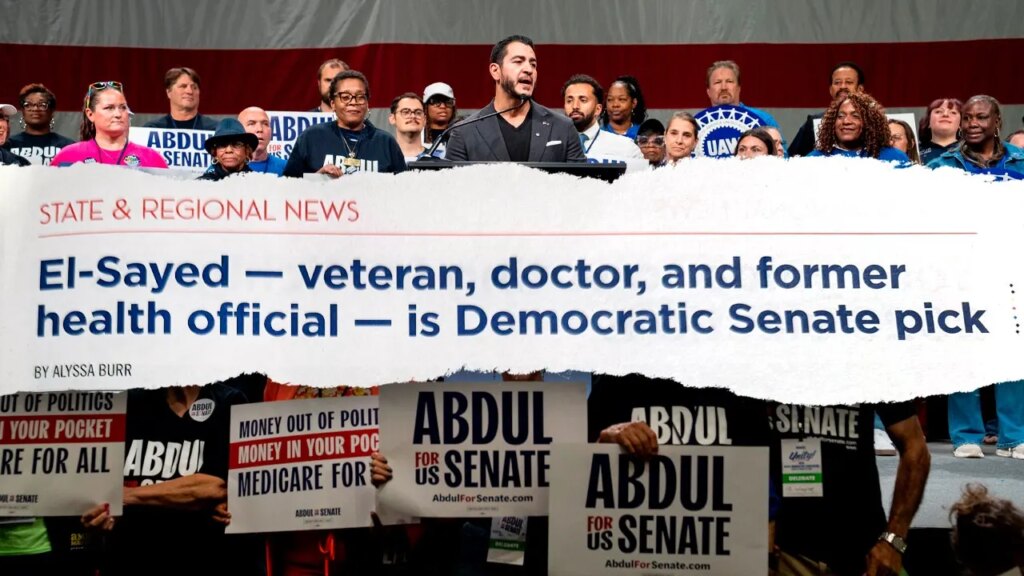
In a significant development following the Democratic primary election in Michigan, progressive candidate Abdul El-Sayed has secured a narrow victory over his opponent Haley Stevens. El-Sayed’s win positions him as a potential challenger in the upcoming Senate race, aiming to appeal to a broader voter base amid growing scrutiny of his background and political alignment. Complications have arisen from misleading claims about his military status made by a local publication, raising questions about the transparency and credibility of media outlets promoting his campaign.
| Article Subheadings |
|---|
| 1) El-Sayed’s Primary Victory and Its Implications |
| 2) Media Controversy Surrounding El-Sayed’s Background |
| 3) Soros and the Funding Behind Michigan Independent |
| 4) El-Sayed’s Response to Misrepresentation |
| 5) The Broader Context of Michigan’s Political Landscape |
El-Sayed’s Primary Victory and Its Implications
On August 29, 2026, Abdul El-Sayed achieved a notable victory in the Michigan Democratic primary, securing his position as the party’s nominee for the U.S. Senate. El-Sayed’s triumph against incumbents and well-known figures within the party, such as Haley Stevens, represents a pivotal moment for progressive politics in Michigan and the Democratic Party as a whole. His platform, which aligns closely with the Democratic Socialists of America, aims to address crucial issues such as healthcare reform and immigration policy.
The primary victory in itself is a signal of a shifting political climate in Michigan, particularly among younger voters who prioritize progressive values. El-Sayed’s campaign, noted for its grassroots strategy, capitalized on the desire for change in the face of ongoing economic and social challenges that the state encounters. His election is particularly significant as Michigan often serves as a battleground state, with implications that extend beyond its borders.
El-Sayed’s ability to galvanize voter support is critical as he prepares for the upcoming general election in November, where he will face off against Republican candidates who are likely to challenge his positions aggressively. The need to reach moderate voters will be paramount, and El-Sayed’s campaign is initiating strategies aimed at appealing to a wider demographic, signaling an understanding of the complexities within state-wide elections.
Media Controversy Surrounding El-Sayed’s Background
In a troubling turn of events, Abdul El-Sayed has found himself embroiled in a media controversy following the publication of a misleading article by a local newspaper, The Michigan Independent. The headline claimed El-Sayed to be a “veteran, doctor, and former health official,” which has provoked backlash as the candidate has never served in the military. This representation raises questions about the credibility of the publication, which is linked to significant political funding from known progressive benefactor, George Soros.
The article, distributed widely across Michigan, did not provide any context or substantiate the claim that El-Sayed holds veteran status. Although El-Sayed possesses a medical degree (M.D.), he has never practiced as a physician, leading to additional scrutiny about the accuracy of his claims and the impact of such misrepresentations on his campaign.
As the story gained traction on social media, the fallout prompted many to question not only the motives behind the misleading article but also the broader implications for media ethics in political reporting. Many observers noted that such practices can skew public perception and potentially influence election outcomes based on inaccuracies.
Soros and the Funding Behind Michigan Independent
The Michigan Independent has drawn attention due to its connections with George Soros and his foundation, which contributed a substantial grant supporting various media outlets perceived to have a progressive bias. According to IRS disclosures, the American Independent Foundation, which oversees The Michigan Independent, received a $500,000 grant from Soros’ Foundation to Promote Open Society in 2024.
The funding link has raised eyebrows among critics who argue that Soros’s financial influence might steer the editorial direction of the publication. El-Sayed’s campaign has condemned the publication and the presentation of misinformation as harmful to the democratic process. Such allegations contribute to ongoing debates about media accountability and the influence of significant financial backers in shaping narratives that can affect political dynamics.
Moreover, revelations that The Michigan Independent is just one of several iterations of publications funded by Soros reveal a network of nearly a dozen media entities positioned in strategic locations across critical swing states. These outlets often share narratives and themes that could notably affect voter sentiments as the election nears.
El-Sayed’s Response to Misrepresentation
In light of the impactful false representation, Abdul El-Sayed‘s campaign swiftly issued a statement disavowing the claim that he has ever declared himself a veteran. Campaign spokesman Cole Wozniak stated, “Abdul has never claimed to be a veteran, he never would out of his respect for those who served, and any outlet or group writing about our campaign should do their homework and not allow this to happen again.”
This response highlights both the campaign’s commitment to integrity and the expectations they have of media covering their platform. Such miscommunication could cost the candidate valuable support, particularly among voters who prioritize honesty and transparency in politics.
While the campaign tries to navigate through the fallout, El-Sayed faces a dual challenge; tackling potential voter skepticism arising from the controversy while simultaneously maintaining momentum from his primary success. The effectiveness of his response and how well he can manage the narrative going forward will play a critical role in shaping his upcoming election campaign.
The Broader Context of Michigan’s Political Landscape
The events surrounding Abdul El-Sayed and The Michigan Independent encapsulate wider concerns within Michigan’s electoral significance and the increasing division in American politics. The state, known for its swing voter demographic, remains a focal point for both the Democratic and Republican parties in the lead-up to November’s midterm elections. Campaign strategies and media influence are pivotal to securing voter bases.
With key issues at stake, including healthcare, taxation, and social justice, each candidate’s ability to articulate clear, honest positions will be essential. El-Sayed’s campaign represents a sensitive balance between progressive ideals and the need for attracting moderates. As Michigan’s political landscape evolves, candidates may also harness media influence to amplify their visibility and connect with constituents meaningfully.
The coming months will see heightened activity as candidates adjust their strategies in response to both strengths and weaknesses revealed in the current political climate. Furthermore, the role of independent media will be under scrutiny as stakeholders demand accountability and transparency in reporting, especially when so much is at stake.
| No. | Key Points |
|---|---|
| 1 | Abdul El-Sayed won the Democratic primary for U.S. Senate in Michigan, defeating Haley Stevens. |
| 2 | A Michigan publication published an inaccurate claim labeling El-Sayed as a veteran. |
| 3 | The flawed reporting has raised questions about the influence of George Soros and his funding of media outlets. |
| 4 | El-Sayed’s campaign quickly condemned the misrepresentation regarding his military status. |
| 5 | The controversy highlights broader debates about media accountability in political reporting. |
Summary
The recent developments surrounding Abdul El-Sayed‘s primary victory illustrate the complexity of modern electoral politics, particularly in battleground states like Michigan. The interplay between media representation and campaign strategies can significantly influence voter perceptions and election outcomes. As El-Sayed advances towards the general election, his ability to address controversies and align his messaging will be crucial in connecting with an increasingly diverse electorate.
Frequently Asked Questions
Question: Who is Abdul El-Sayed?
Abdul El-Sayed is a progressive Michigan politician who recently won the Democratic primary for the U.S. Senate, positioning him as a significant candidate in the upcoming elections.
Question: What controversy arose following El-Sayed’s primary victory?
A local newspaper published an inaccurate headline labeling El-Sayed as a veteran, which his campaign strongly condemned as misleading and damaging.
Question: What influence does George Soros have on Michigan’s media landscape?
George Soros has financially supported various media outlets, raising concerns about potential bias and the effects of funding on reporting, particularly in relation to progressive candidates like El-Sayed.