
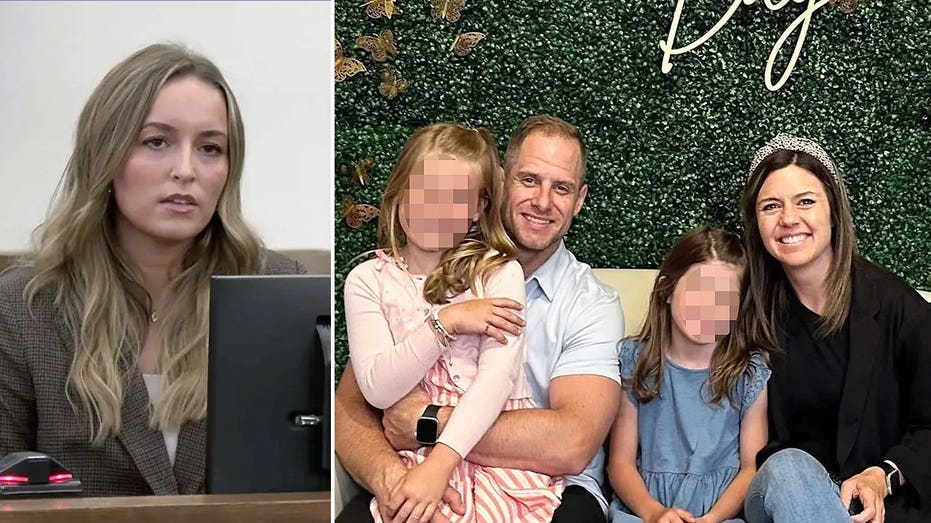
Alleigha Botner spent two days testifying about her affair with Caleb Flynn and more than 107,000 messages exchanged during their relationship. Prosecutors say several messages included statements about the death of Flynn’s wife, Ashley Flynn, who was killed inside the couple’s Ohio home on Feb. 16, 2026. A former prosecutor said the testimony could give jurors a possible explanation for why Flynn allegedly killed his wife. Flynn has pleaded not guilty to aggravated murder and other charges.
| 1) | Testimony centers on an alleged affair |
| 2) | Messages describe hostility toward Ashley Flynn |
| 3) | Texts take on importance near the killing |
| 4) | Defense points to context and missing evidence |
| 5) | Motive remains central for jurors |
Testimony centers on an alleged affair
Alleigha Botner testified in an Ohio courtroom that she and Caleb Flynn maintained an affair for roughly a year and a half before Ashley Flynn was killed. Her testimony covered the couple’s communications, including explicit and emotionally charged exchanges. Prosecutors presented the messages as evidence of the relationship and as a possible window into Flynn’s state of mind before the shooting.
The case concerns the death of Ashley Flynn, a substitute teacher and volleyball coach in the Tipp City school system. Prosecutors allege she was shot twice in the back of the head while inside the family home, and that the scene was staged to appear as though an intruder had entered. Caleb Flynn denies the charges.
Messages describe hostility toward Ashley Flynn
Among the messages discussed at trial were statements in which Caleb Flynn allegedly said he wanted his wife dead and had considered ways to kill her without going to jail. In one exchange, he allegedly asked Alleigha Botner to hire someone to kill Ashley Flynn. Botner also acknowledged writing that she wanted Ashley dead, followed by Flynn’s alleged response that the feeling was mutual.
Former prosecutor and defense attorney Josh Ritter said the significance of the evidence lies in its content rather than simply the existence of an affair or the large number of messages.
The messages could provide jurors with a reason for why prosecutors say this man would murder his wife, Ritter said.
The prosecution’s theory is that the exchanges show more than ordinary marital frustration and support a motive involving the affair, the desire to leave the marriage and possibly financial considerations.
Texts take on importance near the killing
The timing of the messages became a major focus as testimony moved toward Feb. 16. Alleigha Botner said Caleb Flynn had discussed telling relatives about a divorce and obtaining a burner phone. After midnight, he allegedly wrote that it was happening and referred to Feb. 16 as a day he would never forget.
Botner replied that he was about to be free, and Flynn allegedly responded that he chose her. The messages were sent shortly before Ashley Flynn was found dead. Prosecutors argue that the timing connects months of alleged hostility with the date of the killing, while the defense can argue that Flynn was referring to leaving his wife rather than harming her.
Defense points to context and missing evidence
Flynn’s attorneys are expected to emphasize that the messages came from an intense relationship involving more than 100,000 communications. They can argue that prosecutors selected the most damaging statements and removed them from the broader context of arguments, exaggeration and emotional language between the two people.
The defense also points to evidentiary gaps. The alleged murder weapon has not been recovered, there was no eyewitness to the shooting, and investigators did not find gunshot residue on Flynn. Botner testified that Flynn had shown her a gun kept in the center console of his truck, but she could not describe its appearance. Ritter said the absence of the weapon gives the defense an issue to raise, even though it does not by itself resolve the case.
Motive remains central for jurors
The prosecution must persuade jurors that the messages, the timing and the physical evidence support the charges against Caleb Flynn. Ritter said the testimony gives prosecutors a response to a question jurors often consider in a murder case: why would the accused commit the crime?
The defense can counter that Caleb Flynn never explicitly told Alleigha Botner that he would carry out a killing. It can also argue that investigators focused too quickly on the affair and did not adequately pursue other explanations for the death. The jury will ultimately weigh those competing interpretations against the full record presented at trial.
| 1 | Botner testified about an affair and extensive messages with Flynn. |
| 2 | Prosecutors say messages about Ashley Flynn’s death help establish motive. |
| 3 | The defense disputes the interpretation and highlights missing physical evidence. |
| 4 | Flynn has pleaded not guilty to aggravated murder and other charges. |
Summary
Testimony from Alleigha Botner has supplied prosecutors with potentially important evidence about Caleb Flynn’s alleged motive in the killing of Ashley Flynn. The defense is expected to focus on the context of the messages, Flynn’s lack of an explicit admission that he would act, and the absence of a recovered weapon and other physical evidence. Jurors will decide whether the communications and surrounding circumstances prove the charges beyond a reasonable doubt.
Frequently Asked Questions
Who is Alleigha Botner?
Botner testified that she had an affair with Caleb Flynn for roughly a year and a half and exchanged more than 107,000 messages with him.
What do prosecutors say the messages show?
Prosecutors say the messages show hostility toward Ashley Flynn and may establish a motive for her killing.
What is the defense expected to argue?
The defense can argue that the messages were taken out of context, that Flynn did not explicitly say he would commit the killing, and that key physical evidence is missing.
What charges does Caleb Flynn face?
Flynn has pleaded not guilty to aggravated murder and other charges related to his wife’s death.