
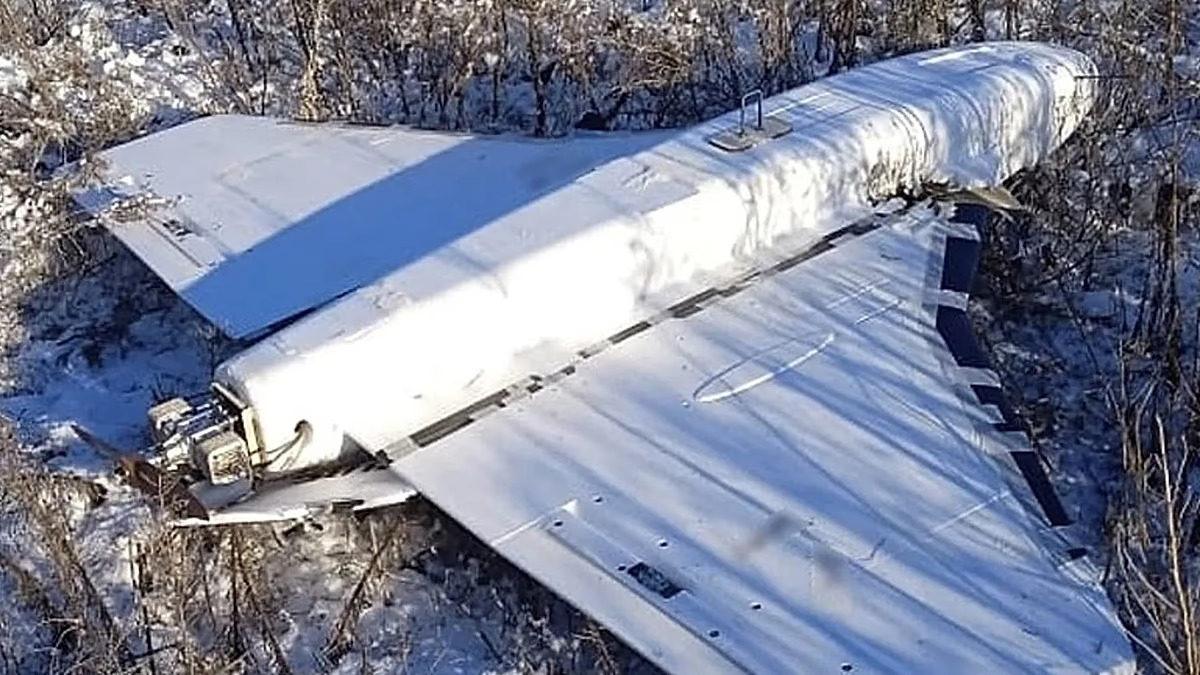
In a puzzling turn of events, authorities in Moldova were called to action when a local resident mistakenly brought home a grounded drone, mistaking it for a toy. This incident occurred in the village of Pepeni, located near the Ukrainian border, raising concerns about the ongoing threats posed by aerial devices, especially in the context of Russia’s military activities in Ukraine. Though the drone was determined not to be explosive, it underscores the heightened awareness and vigilance required as drone incursions in the region become more frequent.
| Article Subheadings |
|---|
| 1) The Discovery of the Drone |
| 2) The Response from Authorities |
| 3) History of Drone Incursions in Moldova |
| 4) Europe’s Airspace Vulnerability |
| 5) The Broader Implications of Drone Technologies |
The Discovery of the Drone
The incident in Pepeni, a village situated approximately 100 kilometers north of Chișinău, unfolded when a resident encountered a grounded drone and, misidentifying it as a toy, took it home. Local officials, including the village’s mayor, Oleg Cernei, promptly acted upon discovering the drone’s presence within the community.
“A citizen thought it was a toy…and brought it into the locality of Pepeni,”
stated Mayor Cernei. After realizing the potential implications, he contacted the appropriate state institutions to investigate the matter further.
The police were alerted four days after the drones’ discovery, leading to the timely arrival of bomb disposal experts to assess the situation. Initial findings indicated that the drone, classified as a Gerbera-type device commonly employed for reconnaissance or improvised attacks, had already been dismantled by the local resident who found it. This drew attention to the fact that such aerial devices are not just ordinary gadgets but can be linked to larger geopolitical tensions, particularly given Moldova’s geographic proximity to Ukraine and recent conflicts involving Russia.
The Response from Authorities
Upon arriving at the scene, police confirmed that the drone did not contain any explosives and did not pose an immediate danger to the community. However, authorities urged the public to exercise caution and not to touch or transport fallen drones or similar objects in the future. The refreshing transparency exhibited by law enforcement in addressing the community’s safety concerns is commendable. It highlights the necessity of proactive measures in educating the public about the potential risks associated with unidentified aerial phenomena.
Moldovan officials have emphasized the importance of vigilance in light of the increased drone activity in their airspace. The police indicated that, although this particular incident may not have resulted in a direct threat, it reflects a growing trend of drone invasions. As a response to such occurrences, local law enforcement plans to enhance their collaboration with national security agencies to monitor the situation more closely.
History of Drone Incursions in Moldova
This discovery is not an isolated incident. Since the onset of Russia’s full-scale invasion of Ukraine in 2022, Moldova has witnessed a notable increase in airspace violations and drone discoveries. Official reports detail several instances where drones have been detected breaching Moldovan airspace, especially coinciding with attacks on Ukrainian targets. Just last week, multiple incursions were reported during Russian assaults across Ukraine, leading to heightened tensions in the region.
In February, the situation escalated further when two drones exploded over Moldovan territory after a military strike on a Ukrainian port situated adjacent to the border. Such events have prompted Moldovan authorities to rethink their security protocols and response strategies. Experts believe that the presence of drones linked to Russia’s military operations poses significant risks to Moldova’s sovereignty and stability.
Europe’s Airspace Vulnerability
As the frequency of drone incursions continues to rise, European countries are on high alert. Specifically, in September, drone flyovers into NATO airspace reached unprecedented levels, prompting European leaders to devise plans for constructing a “drone wall” along their borders to better detect, monitor, and intercept offending drones. The collective security measures highlight the serious attention being paid to the threats posed by drone technologies.
In November, NATO military officials confirmed the deployment of a new anti-drone system aimed at bolstering defenses along the eastern flank of the alliance. The Eastern Sentry programme, recently announced by NATO Secretary General Mark Rutte, aims to deter further incursions from Russian aerial devices. While these systems are designed to enhance security, the effectiveness of such measures raises further questions about NATO’s preparedness and counter-drone strategies, particularly in light of ongoing tensions with Russia.
The Broader Implications of Drone Technologies
The incident in Moldova serves as a microcosm of the larger geopolitical climate surrounding drone technologies. Drones have increasingly become tools of warfare and surveillance, further complicating international relations. The deployment of these devices is not limited to direct military use; their capabilities can include observing enemy movements or conducting psychological operations.
Given the ongoing conflict in Ukraine and Russia’s aggressive posture towards neighboring nations, the proliferation of drone technologies will likely continue. This situation sets a precedent for countries to reconsider defense strategies and invest in counter-drone technologies. Policymakers are urged to evaluate the implications of such devices on national security and public safety.
As drones become more readily available and technologically advanced, they pose a significant challenge for governments worldwide. The Pepeni incident serves as a sobering reminder that security concerns surrounding drones extend beyond military engagements, affecting civilian life and raising questions about the adequacy of current safety protocols.
| No. | Key Points |
|---|---|
| 1 | A resident in Pepeni mistook a grounded drone for a toy, leading to police intervention. |
| 2 | Authorities confirmed the drone was non-explosive but stressed the importance of public safety. |
| 3 | The discovery highlights a growing trend of drone incidents in Moldova amidst the Ukraine conflict. |
| 4 | NATO and European leaders are developing countermeasures against increasing drone incursions. |
| 5 | The incident reflects broader geopolitical concerns around drone technology and national security. |
Summary
The recent incident involving the grounded drone in Pepeni exemplifies the challenges faced by Moldova and its neighbors in an increasingly complex security landscape. As tensions with Russia persist and drone technology continues to advance, both regional authorities and international organizations are compelled to reassess their strategies to safeguard airspace and ensure public safety. The situation underscores the urgent need for comprehensive security frameworks to address the implications of drone usage in modern conflicts.
Frequently Asked Questions
Question: What type of drone was discovered in Pepeni?
The drone found in Pepeni was identified as a Gerbera-type drone, commonly used for reconnaissance missions or improvised attacks.
Question: Why is Moldova concerned about drone incidents?
Moldova is concerned about drone incidents due to its close proximity to Ukraine and the ongoing conflict with Russia, which has led to numerous airspace violations and security threats.
Question: What measures are being taken by European nations in response to drone threats?
European nations are developing security measures including the construction of a “drone wall” along borders and deploying new anti-drone systems to detect and intercept unauthorized drone flights.